1766
Royal Museums Greenwich states that the first Nautical Almanac appeared in 1766, a useful anchor for treating nautical art as navigation culture, not seaside decoration. According to Royal Museums Greenwich.
Current promotions: Buy 2 get 1 free | Sales up to 33% on select products | Delivery by: 15 October - 22 October if ordered today
Hanging the next room
Nautical wall art | Published 7 July 2026
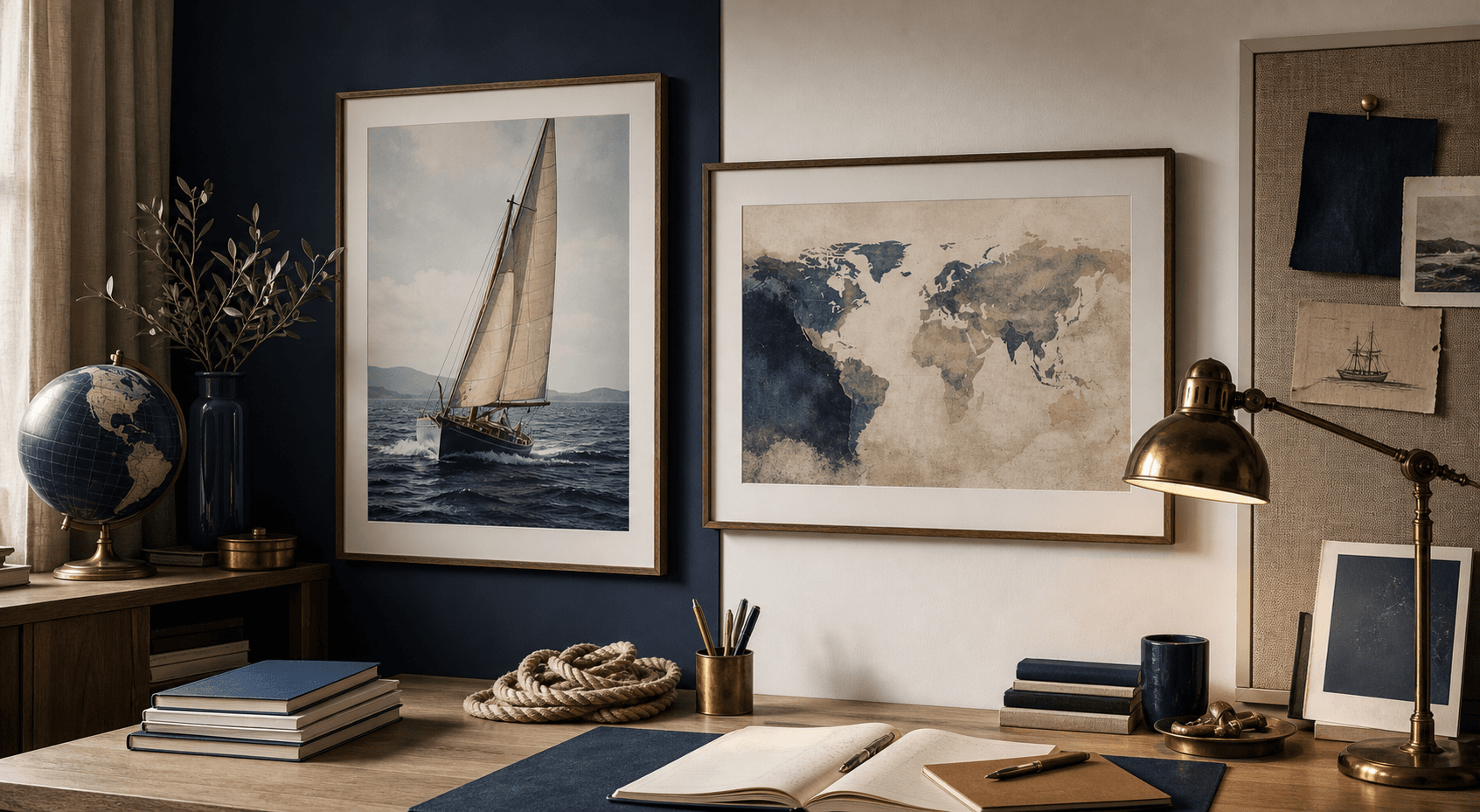
Modern nautical wall art works when it behaves like a design language: water gives depth, routes give memory, and objects give structure. Use horizon lines, map prints, sailboat geometry and weathered colour instead of filling the room with seaside props.
Last updated 7 July 2026.
TL;DR: choose nautical wall art with the water-route-object rule. Pick one water element for depth, one route element for memory and one object element for structure. A room feels modern when the maritime cue is specific, scaled and restrained.
1766
Royal Museums Greenwich states that the first Nautical Almanac appeared in 1766, a useful anchor for treating nautical art as navigation culture, not seaside decoration. According to Royal Museums Greenwich.
890+ miles
The National Trust says it cares for more than 890 miles of coastline, which supports using cliffs, paths and weathered shorelines as serious coastal subjects. According to National Trust coastal footpaths.
31 + 19
The Met Office shipping forecast uses 31 sea areas; its inshore waters forecast uses 19 areas around the UK coast. According to Met Office shipping forecast and Met Office inshore waters forecast.
1:50,000
BGS GeoCoast Premium provides Great Britain coastal datasets at 1:50,000 scale, a reminder that coastlines are form, route and change. According to British Geological Survey GeoCoast.
Direct answer
Choose nautical wall art by using one clear maritime idea at a time. A sailboat can give structure, a map can add travel memory, and an open-water horizon can add depth. If the room already feels coastal, compare it with the nautical wall decor guide before adding more objects, or return to the wall art subject, room and mood guide if you are still choosing between coast, maps, nature or monochrome art.
Nautical art is strongest when it borrows from navigation, not novelty. The Royal Museums Greenwich longitude gallery explains the historic search for longitude at sea, and Ordnance Survey on GOV.UK anchors map imagery in official British mapping rather than generic travel styling.
Nautical triangle
The nautical triangle is a simple way to keep maritime rooms designed rather than decorated. Use water for atmosphere, route for direction and object for shape. Most rooms need one dominant point of the triangle, not all three shouting equally.
Water gives the eye a horizon, tide line, wave path or open depth.
Route gives nautical art direction: maps, coast paths, shipping areas and travel memory.
Object gives structure: sail, hull, mast, pier, lighthouse, compass or bridge.
The same logic links nautical prints to maps and offices. The British Library collection includes maps among more than 170 million collection items, and the ONS geography guidance shows how geography also works as a system of boundaries, places and official areas.
Subject choice
Pick the nautical subject by what the room needs. A study often benefits from route and map logic; a living room can hold sailboat geometry; a bedroom usually needs quieter open water. For blue temperature decisions, use the blue-hour ocean canvas rule.
Room-ready subjects
Nautical imagery works best when the viewer can read one clear subject on the wall. Boats, lighthouses, cliffs, maps, compasses and open water each give a different room effect, so the print should be chosen by subject behaviour rather than by a generic coastal label.
Sailboats, masts and hull lines
Structure and vertical lift
Beacon shapes and coastline markers
A single object with purpose
Chalk, rock and weathered edges
British coastal mass without novelty
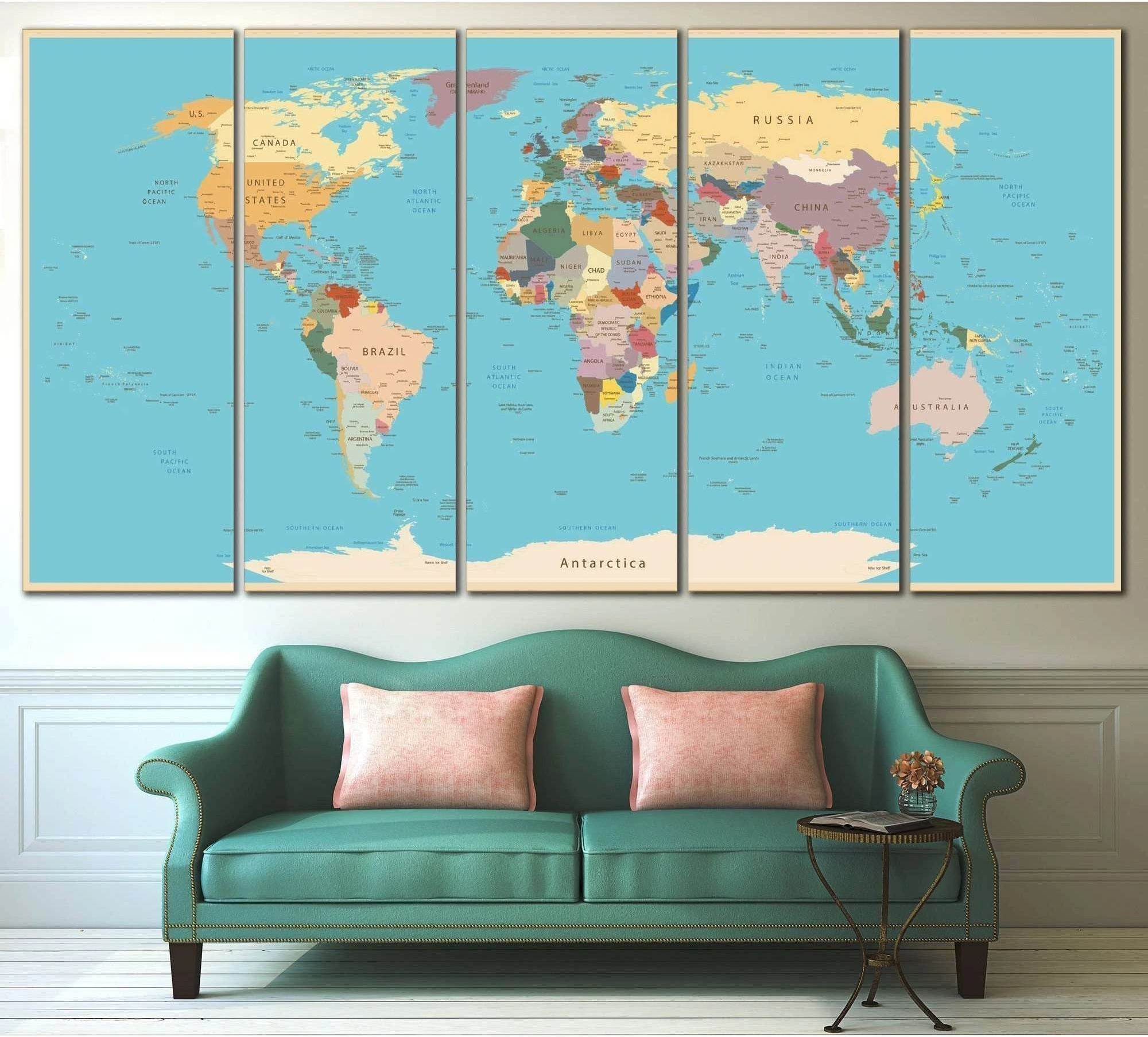
World maps, route marks and geography
Travel memory and study-wall depth
Direction, navigation and restrained geometry
Useful only when subtle
Horizon, sea areas and blue distance
Depth for calm rooms
Coastal context
British nautical style becomes more credible when it uses real coastal texture. Historic England says historic seascape characterisation maps cultural influences across marine areas and coastal land, according to Historic England seascape research.
Use that context visually: cliffs, piers, open water and maps can all sit in the same design system if the palette stays quiet. Start with nautical wall art for sails and route objects, map wall art for travel memory, and ocean wall art for horizon depth.
Live Zellart edits
These product grids use live Zellart collection data and group products by visible subject: boats, maps, shorelines and open water. The selection rule is subject fit, room use, current availability and whether the image has a clear composition at wall scale.
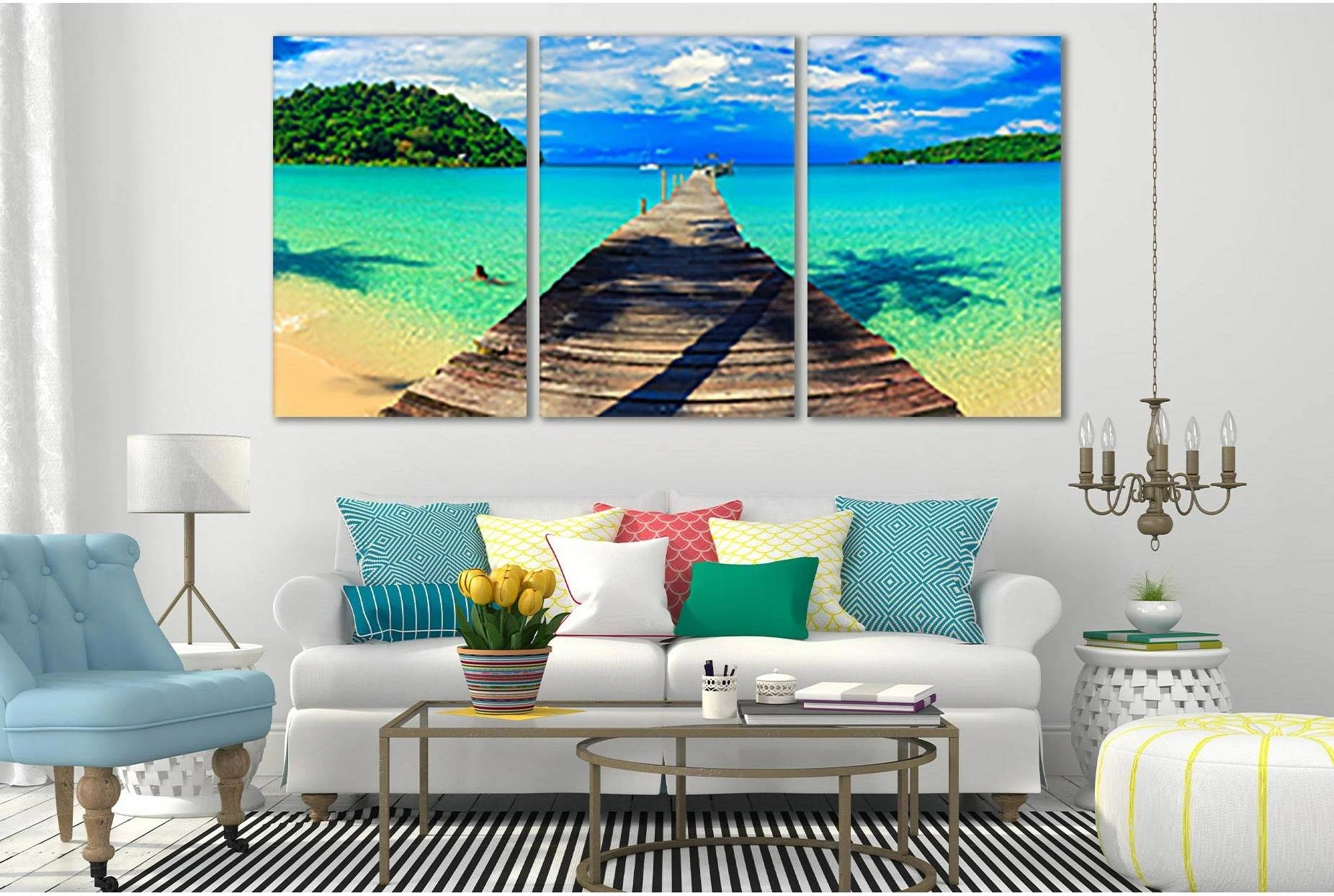
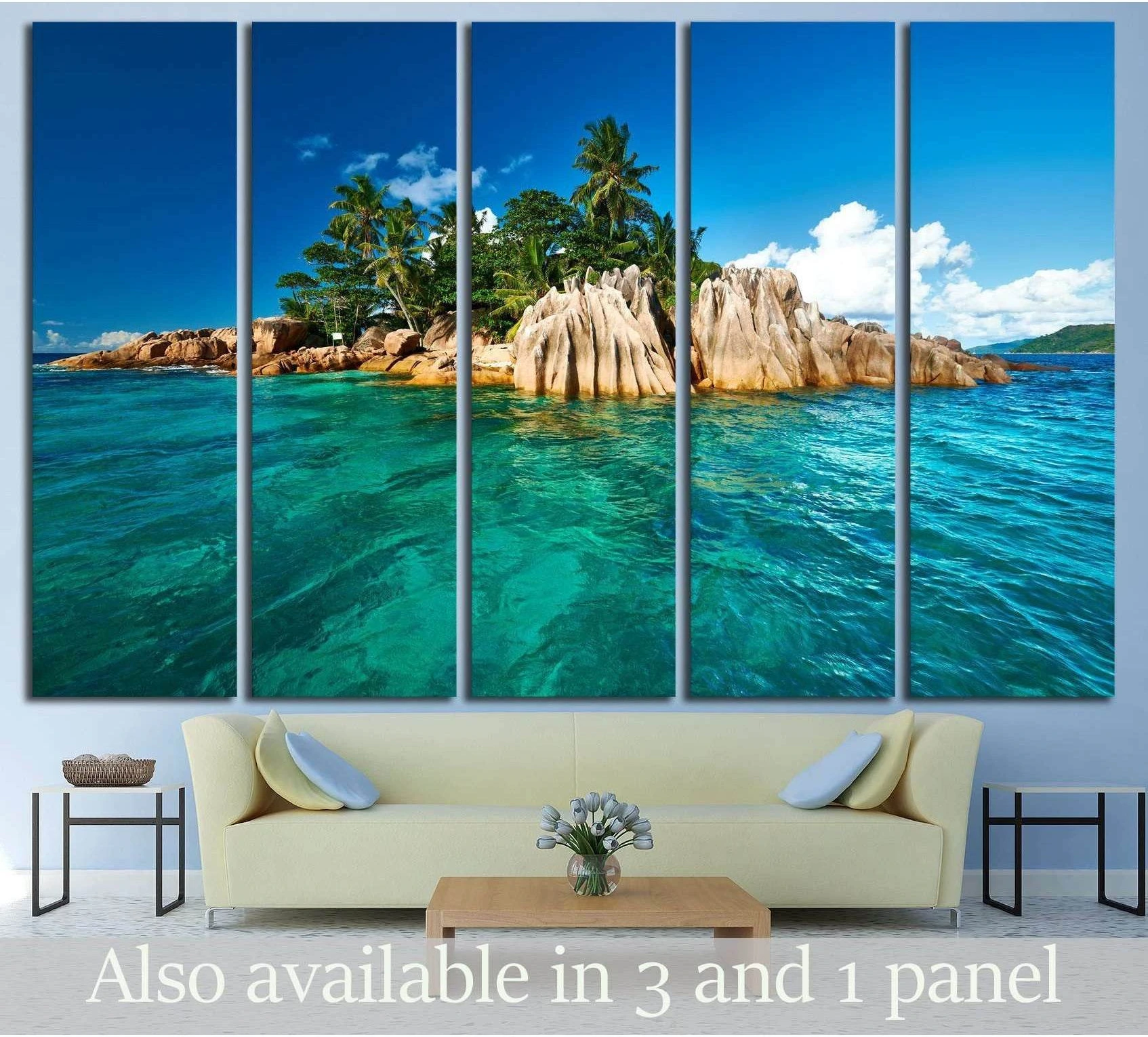
Sailboats, piers, bridges and route-like coastal objects for rooms that need structure.
Open collection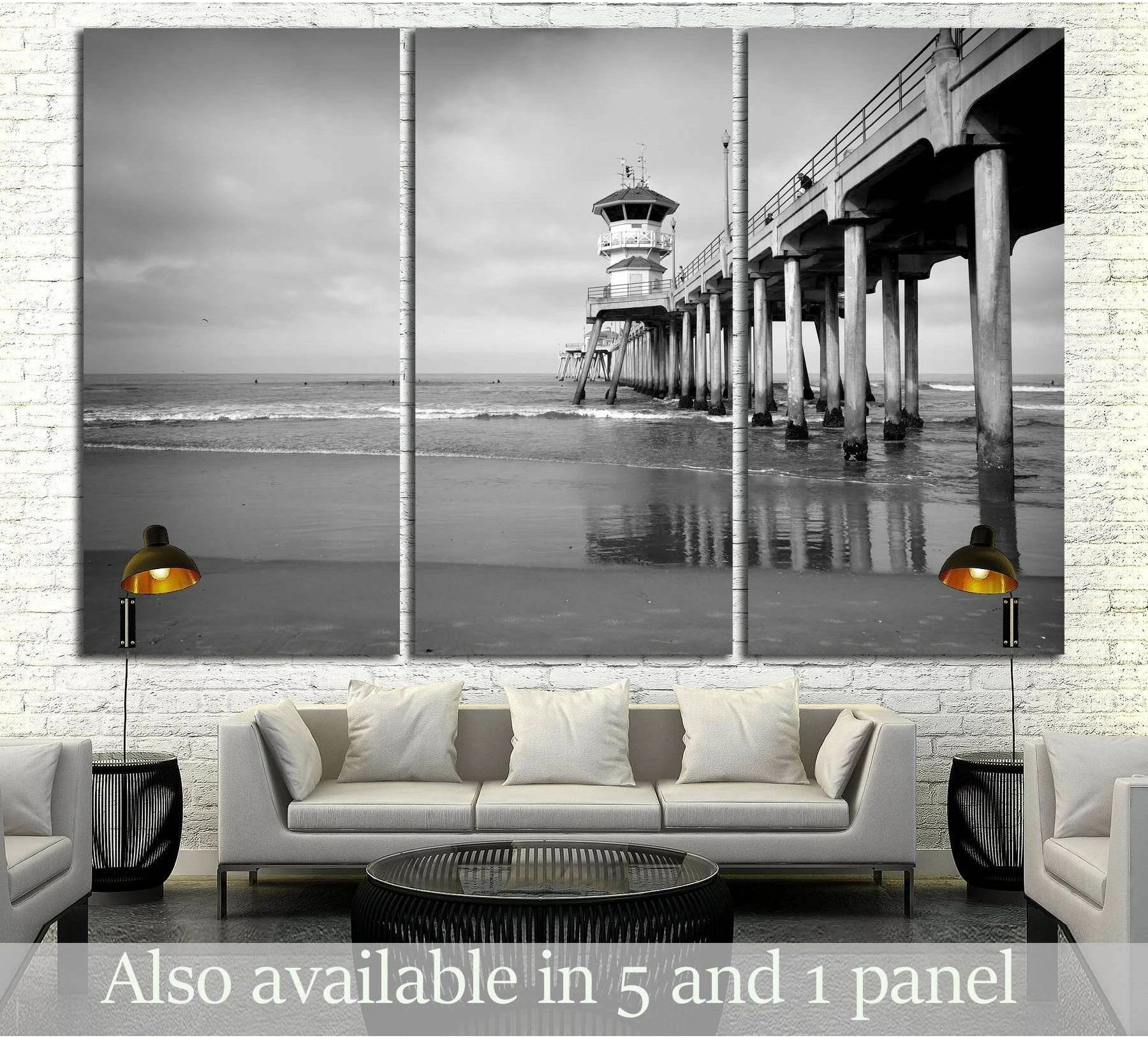 Sale
SaleSailboats and route objects
From £60.82
Size options on product page
 Sale
SaleSailboats and route objects
From £79.78
Size options on product page
 Sale
SaleSailboats and route objects
From £60.82
Size options on product page
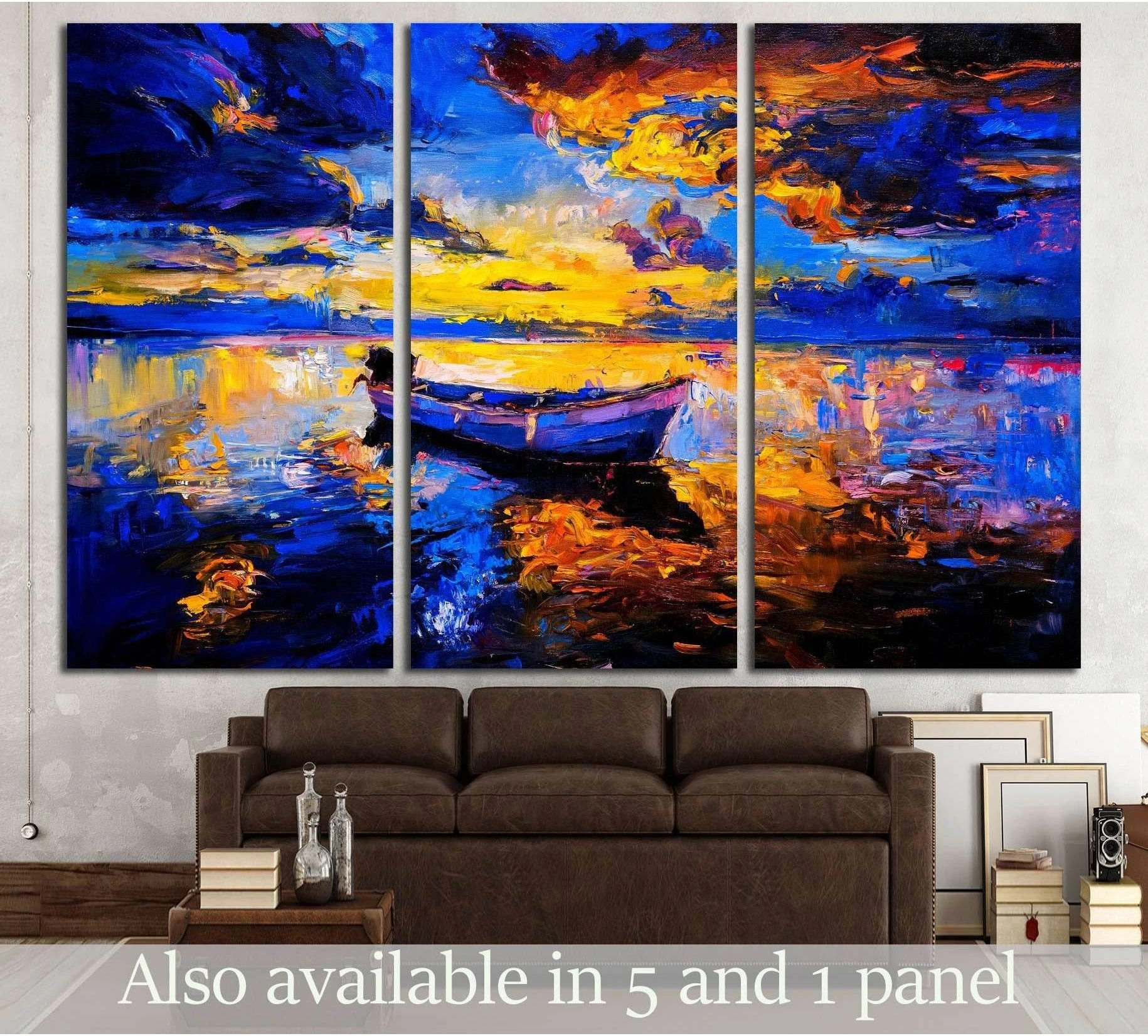 Sale
SaleSailboats and route objects
From £60.82
Size options on product page
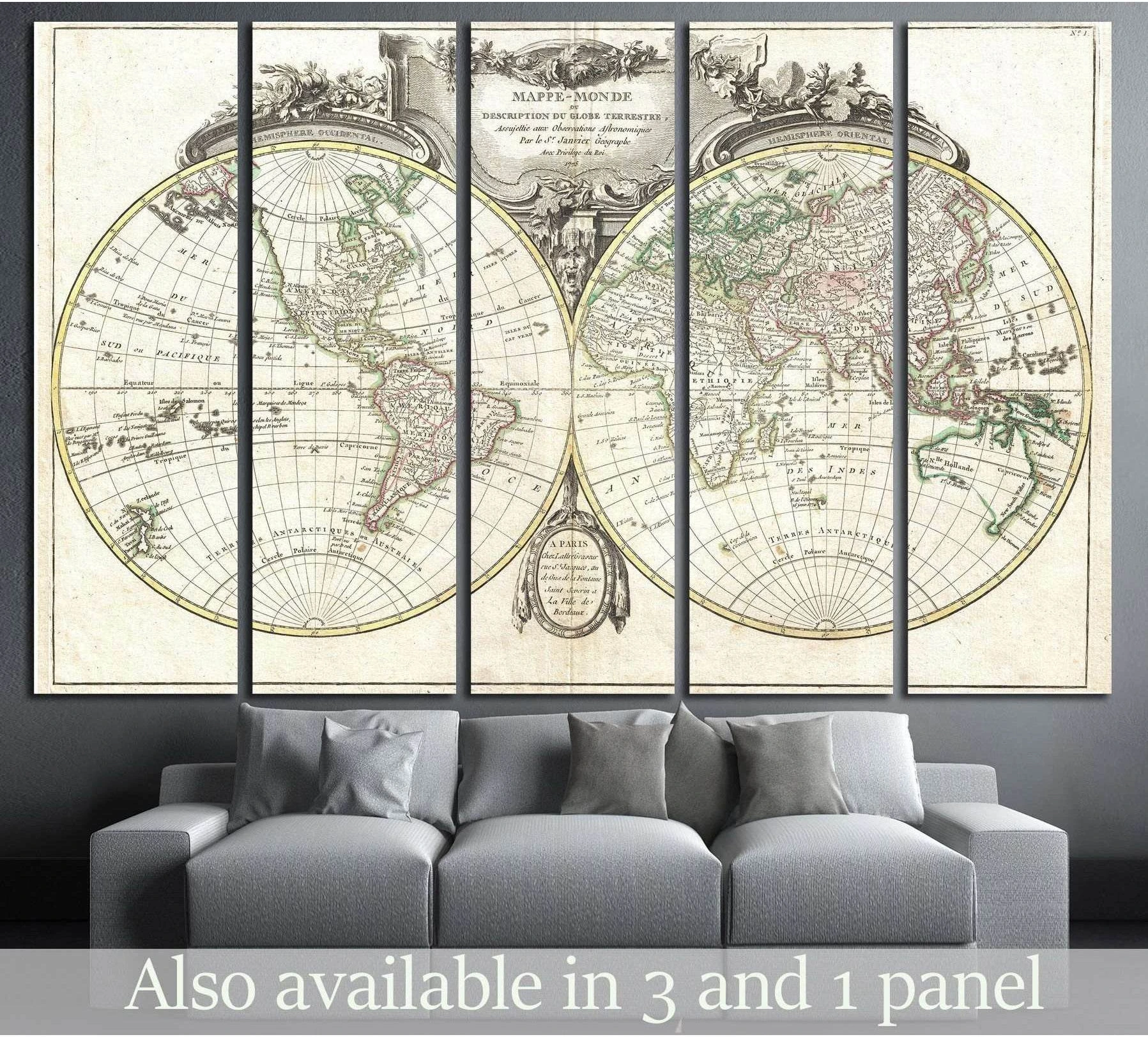
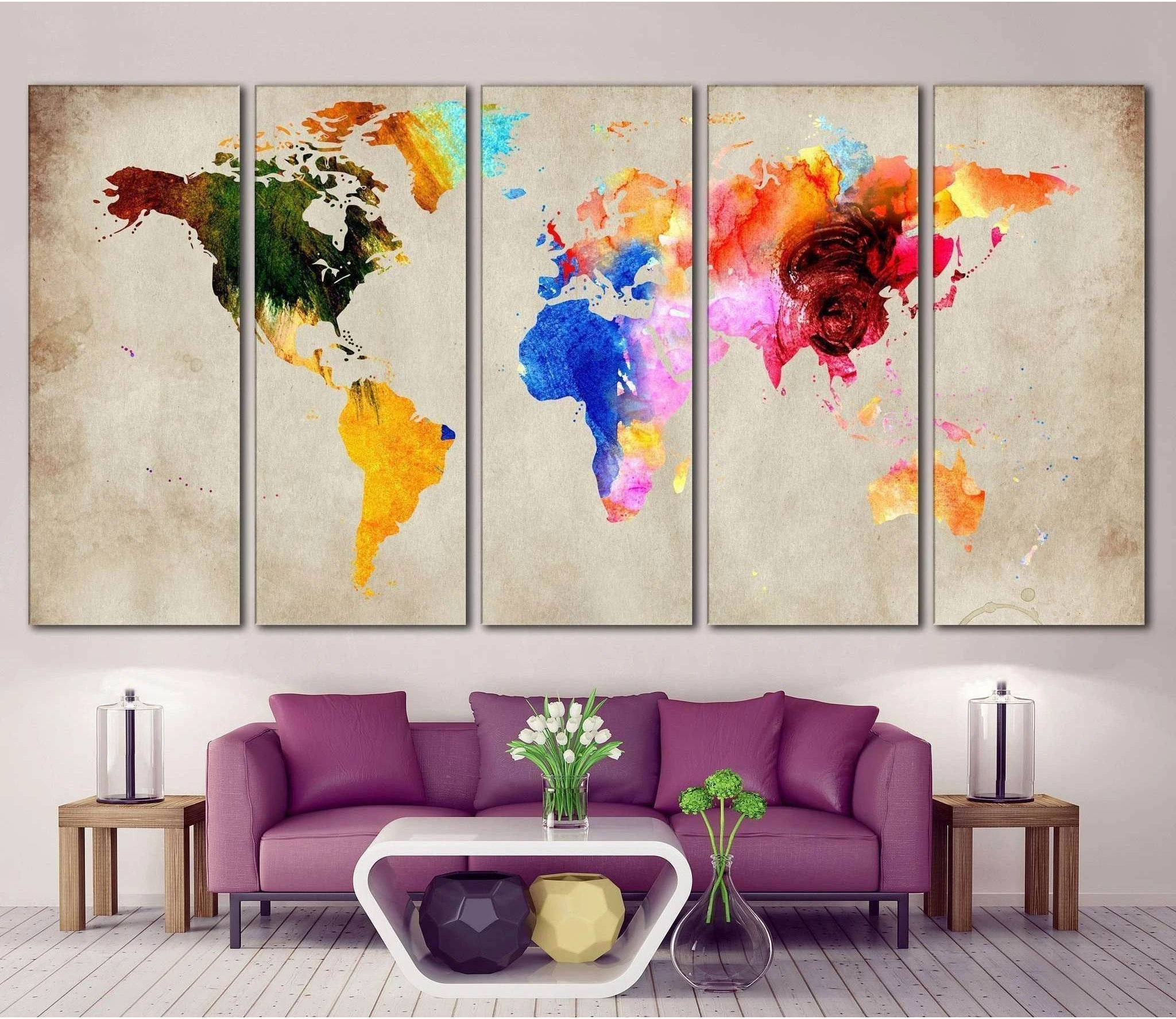
World maps and geography prints for offices, hallways and travel-memory rooms.
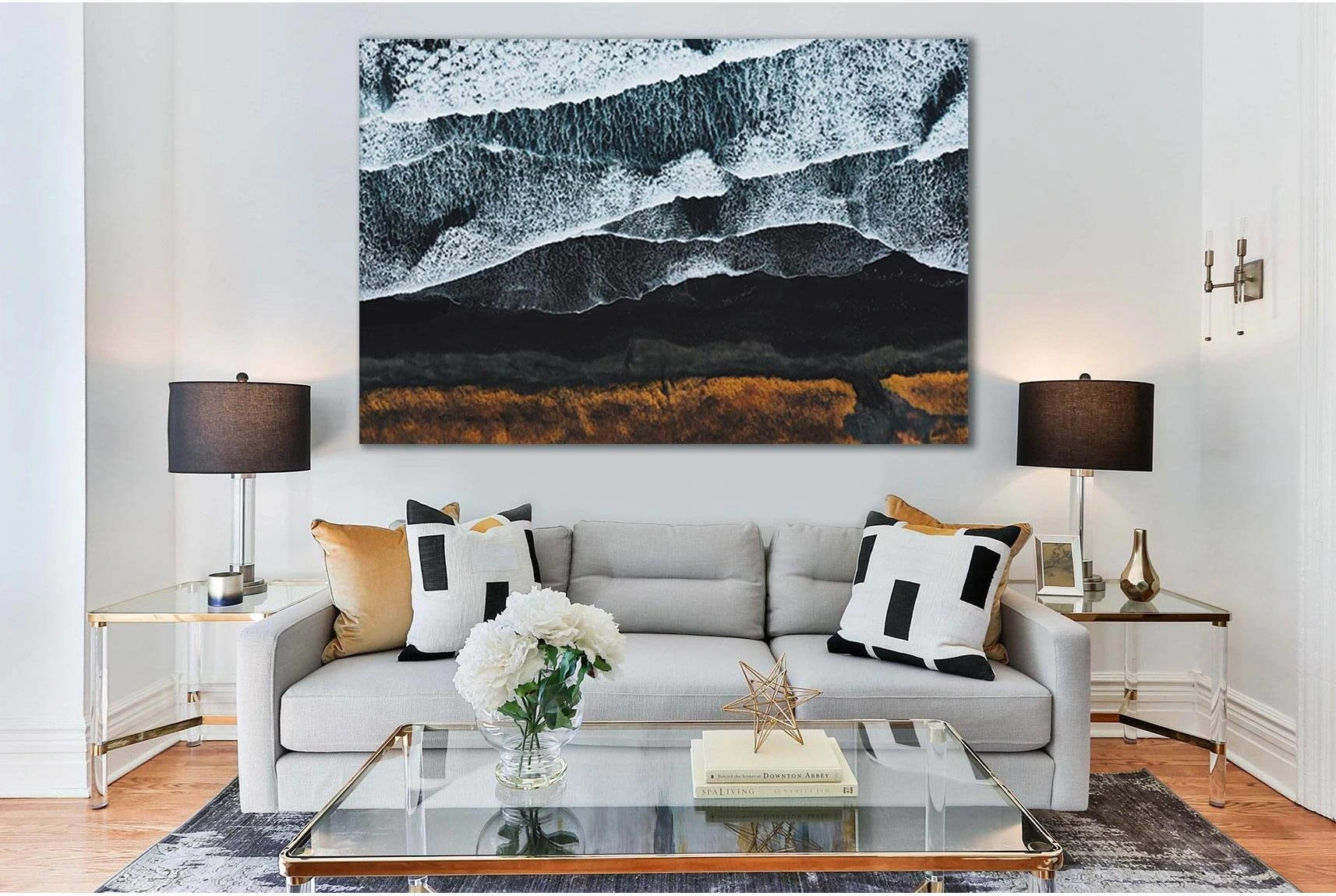
Open collectionCliffs, beaches, paths and weathered coastal edges that feel architectural.
Open collectionFAQ
Modern nautical wall art uses line, route and restrained colour rather than repeated seaside symbols. Choose horizon-led water, sailboat geometry, world maps, piers, cliffs and muted coastal abstracts. Avoid anchors, ship wheels and beach-sign typography unless the room is deliberately themed.
A sailboat print works best when the sail, mast or hull gives the wall structure. Use it above a sofa, desk or console where the shape can read clearly. Keep surrounding objects quiet so the sail does not become part of a busy theme display.
Maps work with nautical wall art when the room is about route, memory or study. A map print suits offices, hallways and reading corners better than soft bedrooms. Pair maps with one water or boat subject, not a full set of travel props.
Use navy, chalk, slate, linen, driftwood, muted sea green and warm brass. These colours make nautical art feel designed rather than themed. Bright primary blue and red can work, but only as a deliberate graphic decision with enough white space.
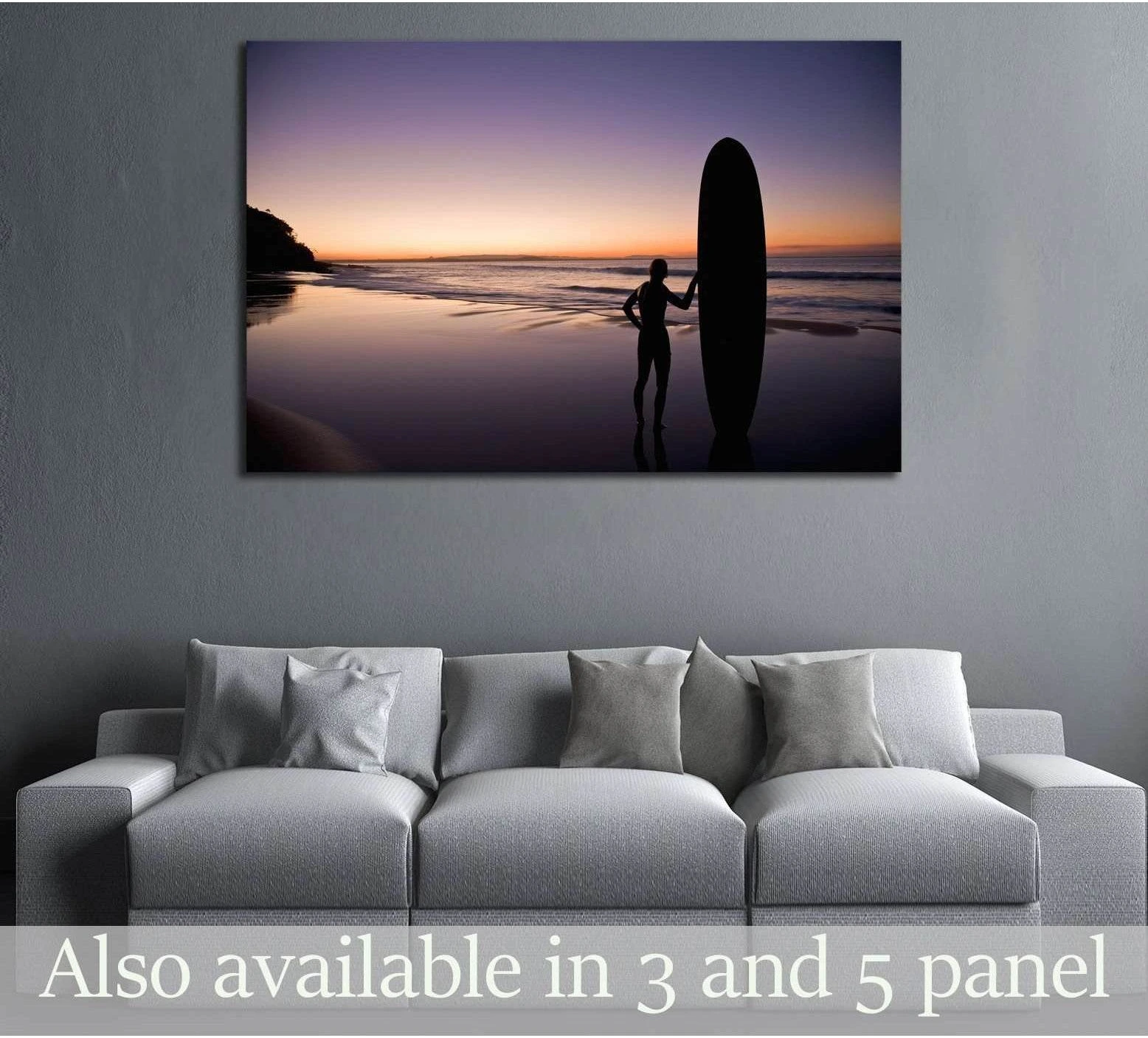
Open water and horizon prints are calmer than boat or harbour scenes. Choose them for bedrooms and quiet living rooms. Use boats, maps, piers and lighthouses where the room can take more object detail, such as studies, hallways and social spaces.
Start with one large nautical canvas if the wall is important. A gallery wall can work, but it needs a rule: one map, one water image and one object-led print. Without that system, nautical galleries quickly look like collected seaside souvenirs.
From £79.78
Size options on product page
Cliffs, piers and shorelines
From £60.82
Size options on product page