
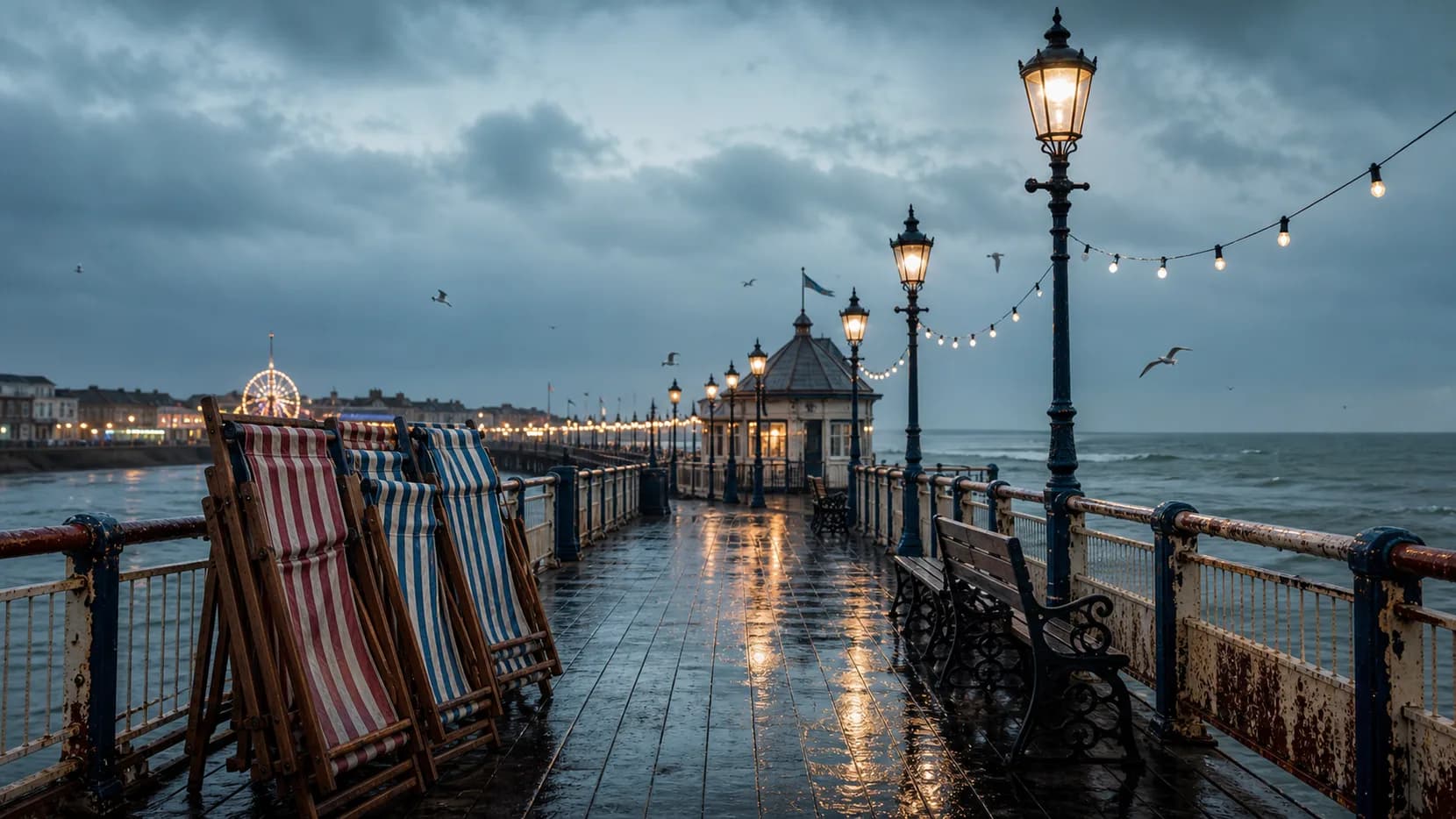
Why does the British seaside feel nostalgic rather than simply sunny?
The British seaside feels nostalgic because it carries several histories at once: aristocratic sea-bathing, Victorian railway tourism, working-class summer holidays, post-war mass leisure, late-20th-century decline and 21st-century creative regeneration.
Brighton's Royal Pavilion began as a seaside pleasure palace for George IV, and Brighton & Hove Museums connects the London to Brighton railway with the beginning of mass tourism at the resort.[4]
The British coast is not an escape from ordinary life; it is ordinary life made theatrical.
How did Victorian resorts make the coast part of British identity?
Victorian Britain turned the coast into a shared national stage by combining railways, promenades, piers, theatres, boarding houses and mass entertainment. Blackpool is the most concentrated example: Historic England calls it Britain's favourite seaside resort and documents its piers, Winter Gardens, Pleasure Beach, Tower and visitor culture.[5]
1780s
Brighton grows as a fashionable retreat around sea bathing and royal patronage.
Mid-1800s
Railways turn the seaside into a mass day-trip ritual.
1872
Hastings Pier opens as Victorian resort confidence reaches into the sea.
1970s
Overseas holidays accelerate long-term resort decline.
2011
Turner Contemporary opens as Margate becomes a cultural revival shorthand.
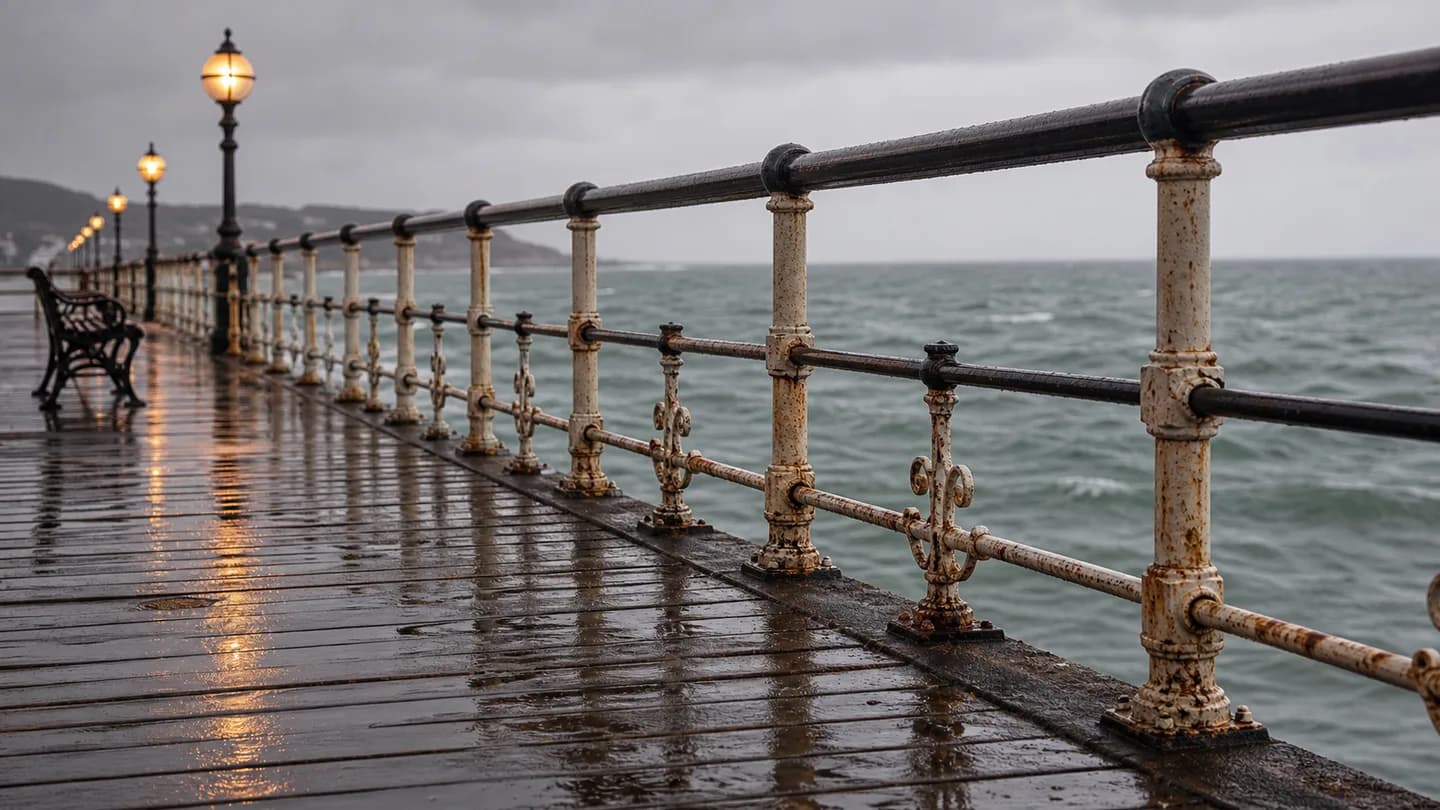
The visual language of British coastal art comes from built objects as much as from the water itself: railings, benches, lamps, huts, kiosks, pavilions, piers and wet promenades.
Why is the pier the strongest symbol of the British seaside?
The pier is the strongest British seaside symbol because it is both confident and fragile: a Victorian feat of engineering built out into the sea, constantly threatened by fire, storms, underinvestment and changing taste. The National Piers Society says almost 100 British piers existed at the turn of the last century, but only about half remain today.[6]
Hastings Pier shows the full story in one structure. Historic England records that Hastings Pier opened on 5 August 1872, later hosted major music acts, then suffered storm damage, neglect and unsafe closure before a community-led campaign fought to save it.[7]
What caused the decline of many British seaside towns?
Many British seaside towns declined because their economies were built around seasonal domestic tourism, then lost visitors when overseas holidays became affordable. The House of Lords states that long-term decline began in the 1970s as foreign holidays became viable for mass tourism.[2]
5.3m+
Residents live in coastal towns in England and Wales.
ONS
71%
Coastal towns with slower population and employment growth than average.
ONS
50%
Coastal towns with employment decline between 2009 and 2018.
ONS
This is why the faded seaside hotel, empty promenade and weathered pier are not merely aesthetic tropes. They reflect real economic change.[3]
Why did Margate become the model for seaside revival?
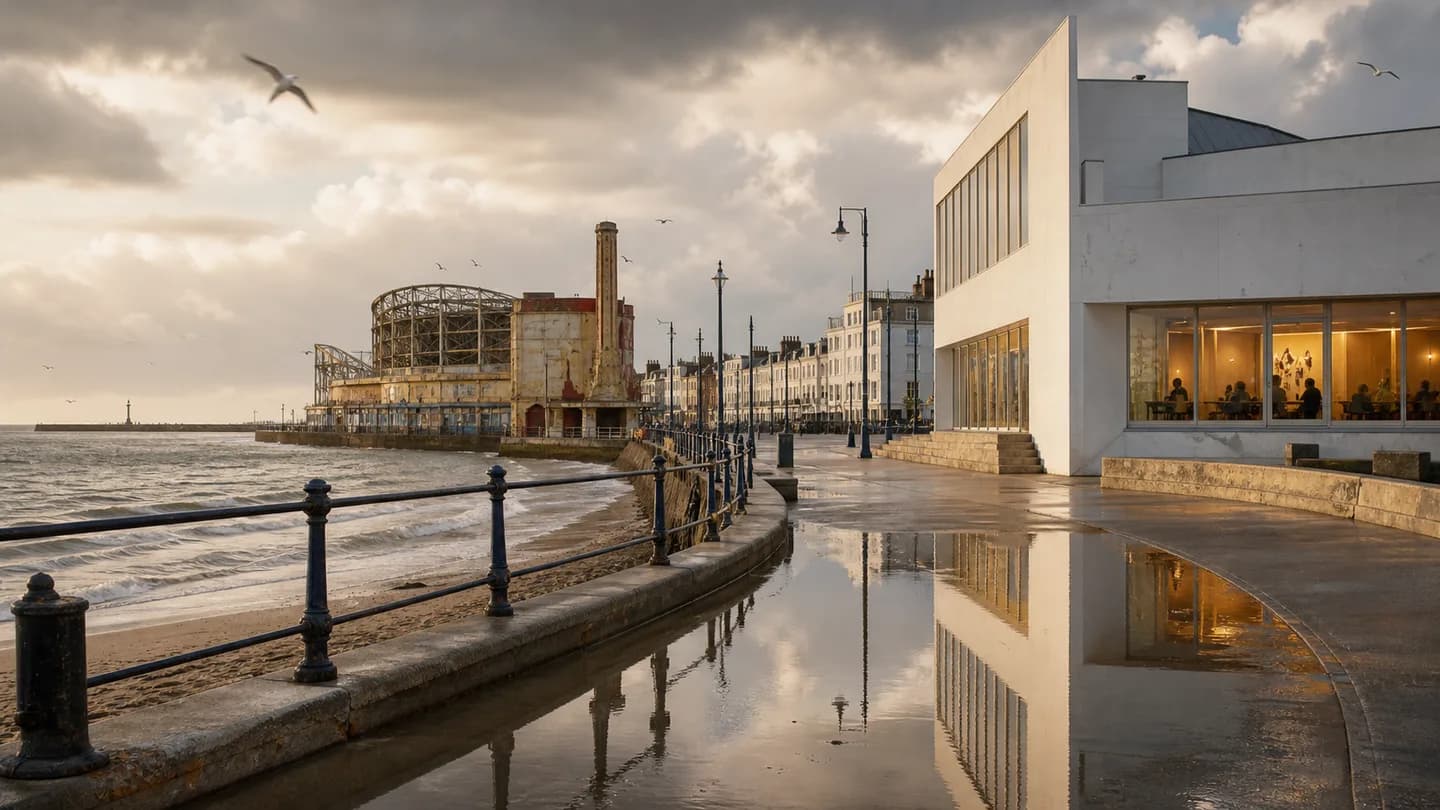
Margate became a shorthand for seaside revival because it joined heritage, contemporary art and community campaigning in one coastal story. The Local Government Association describes Margate as one of England's earliest seaside resorts and records Turner Contemporary opening in 2011 and Dreamland reopening in 2015.[8]
Turner Contemporary states that it has contributed GBP100 million to Margate's local economy and welcomed over 5 million visitors since opening. Turner also gives Margate a deeper art-historical claim: the National Gallery describes J. M. W. Turner's lifelong preoccupation with the changing character of sky and sea, and connects him with Margate.[9][10]
Why is British seaside humour so important?
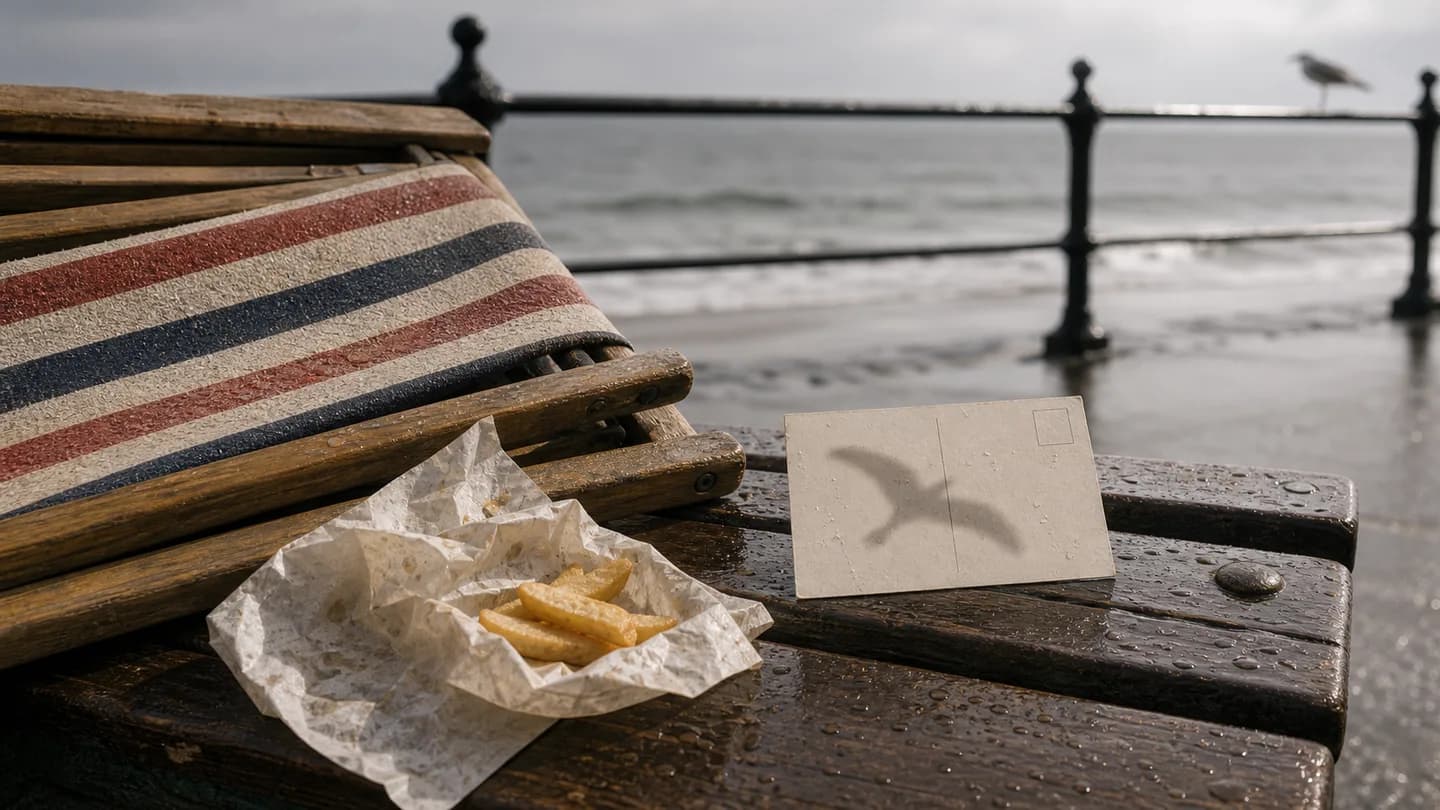
British seaside humour matters because the coast has always been a place where ordinary life becomes exaggerated. The V&A records Punch and Judy as a traditional puppet show whose Mr Punch has performed in the UK for over 350 years, with a first recorded English performance in 1662.[11]
Seaside postcards add another layer. Royal Museums Greenwich describes Bamforth seaside postcards as part of a quintessentially British experience, using bright, often lewd humour and pushing acceptability during the 1950s.[12]
How did documentary photography change the way Britain saw the seaside?
Documentary photography made the British seaside more ironic, colourful and socially observant. Magnum Photos describes Martin Parr's The Last Resort, photographed at New Brighton between 1983 and 1985, as a saturated-colour account of a country in decay but still finding pleasure on a concrete promenade.[13]
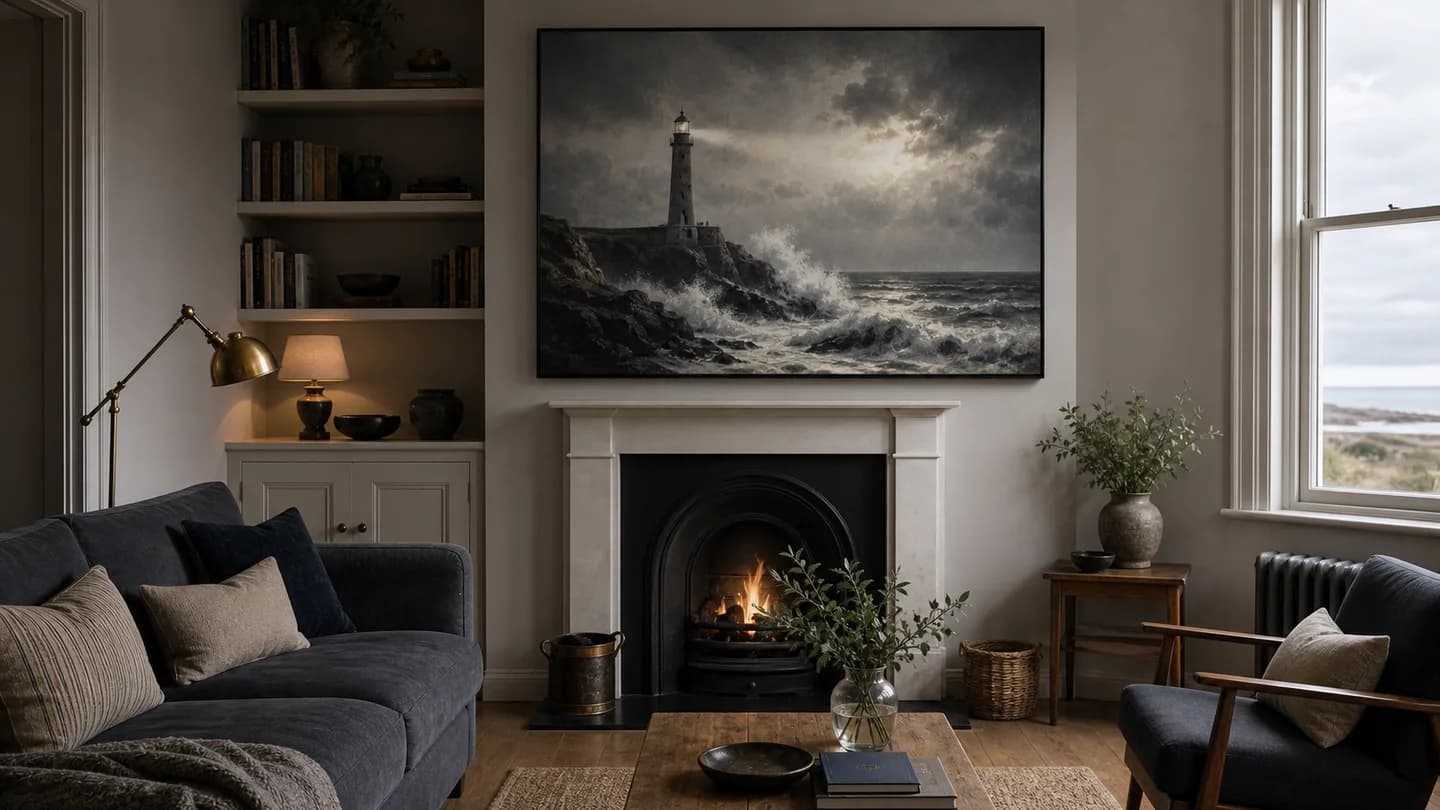
For UK homes, this is why a darker seascape, stormy lighthouse or wet promenade image can feel more emotionally accurate than an endless blue beach. It reflects a coast people recognise, not one sold to them.
How is British coastal art different from Mediterranean coastal art?
British coastal art usually codes as weather, memory and irony, while Mediterranean coastal art usually codes as heat, brightness and indoor-outdoor ease. Architectural Digest describes Mediterranean interiors as light, airy and tied to warm seaside locales, with sandy neutrals, blues, whites, terracotta and vivid accent colours.[14]
How should you choose British seaside wall art for a UK home?
Choose British seaside wall art by choosing the weather first. A UK coastal room usually looks more sophisticated when it starts with atmosphere - mist, storm light, wet sand, grey-green sea, navy water or a lighthouse in bad weather - rather than bright tropical colour.
For a living room, use one large storm seascape or lighthouse canvas as the visual anchor. For a bedroom, choose a quieter horizon, soft rain over water or muted ocean texture. For a hallway, a long pier, beach hut rhythm or narrow wave composition works well because it creates direction.
The strongest internal collection links for this article are Beach, Ocean & Waves Wall Art and Nautical Wall Art. Use Bedroom Wall Art for softer horizons and Extra Large Wall Art for one-room focal pieces.
Shop the mood
Recommended British coastal canvas prints
These product cards use live Shopify thumbnails, price and availability. They were chosen for storm seas, rain, lighthouses and Atlantic wave movement - the weathered side of coastal taste.
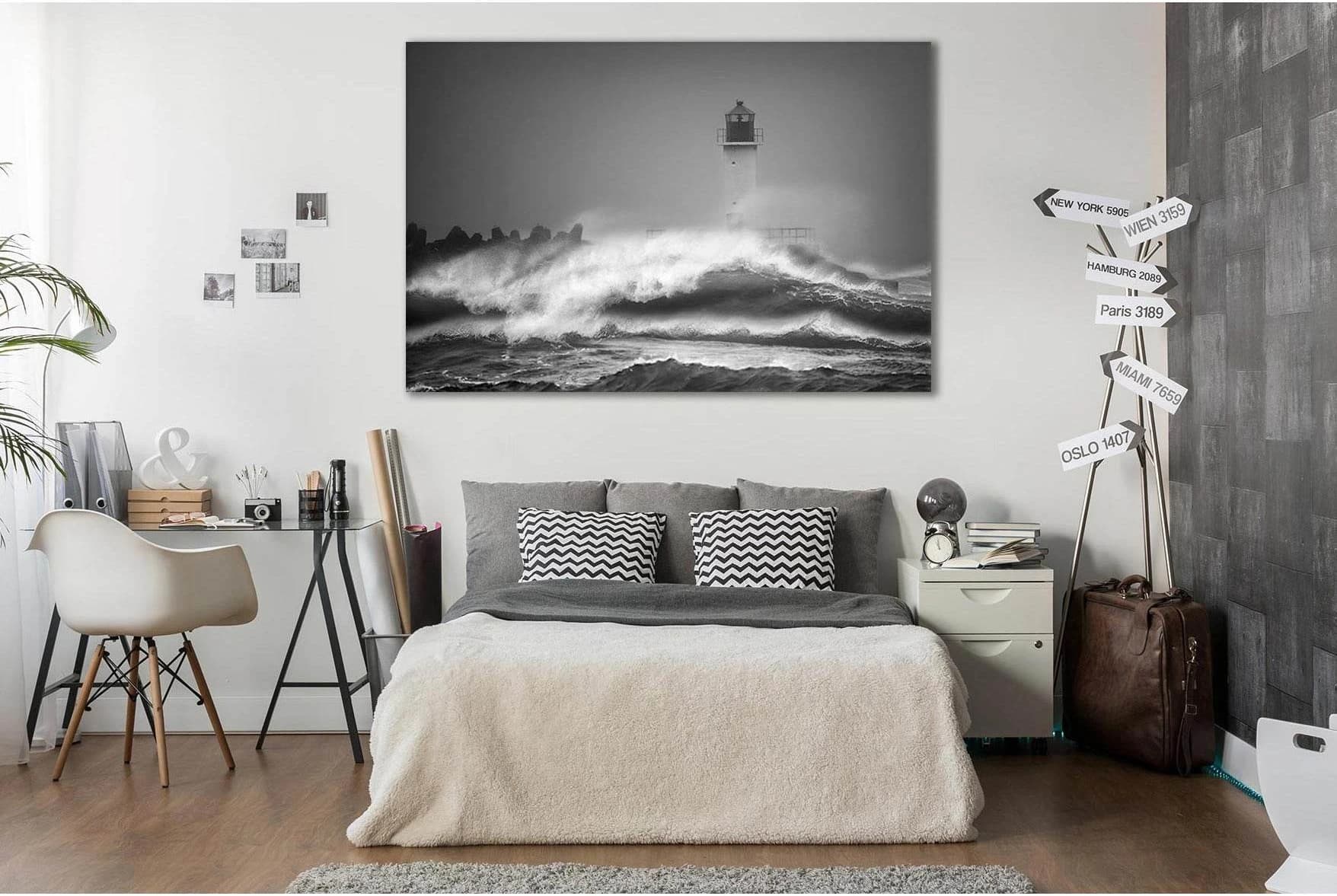
Storm lighthouse mood
Storm Waves And Lighthouse Canvas Print Wall Art
£60.82
Available now
Best for dramatic British coastal interiors: lighthouse, storm waves and weathered nautical atmosphere.
View print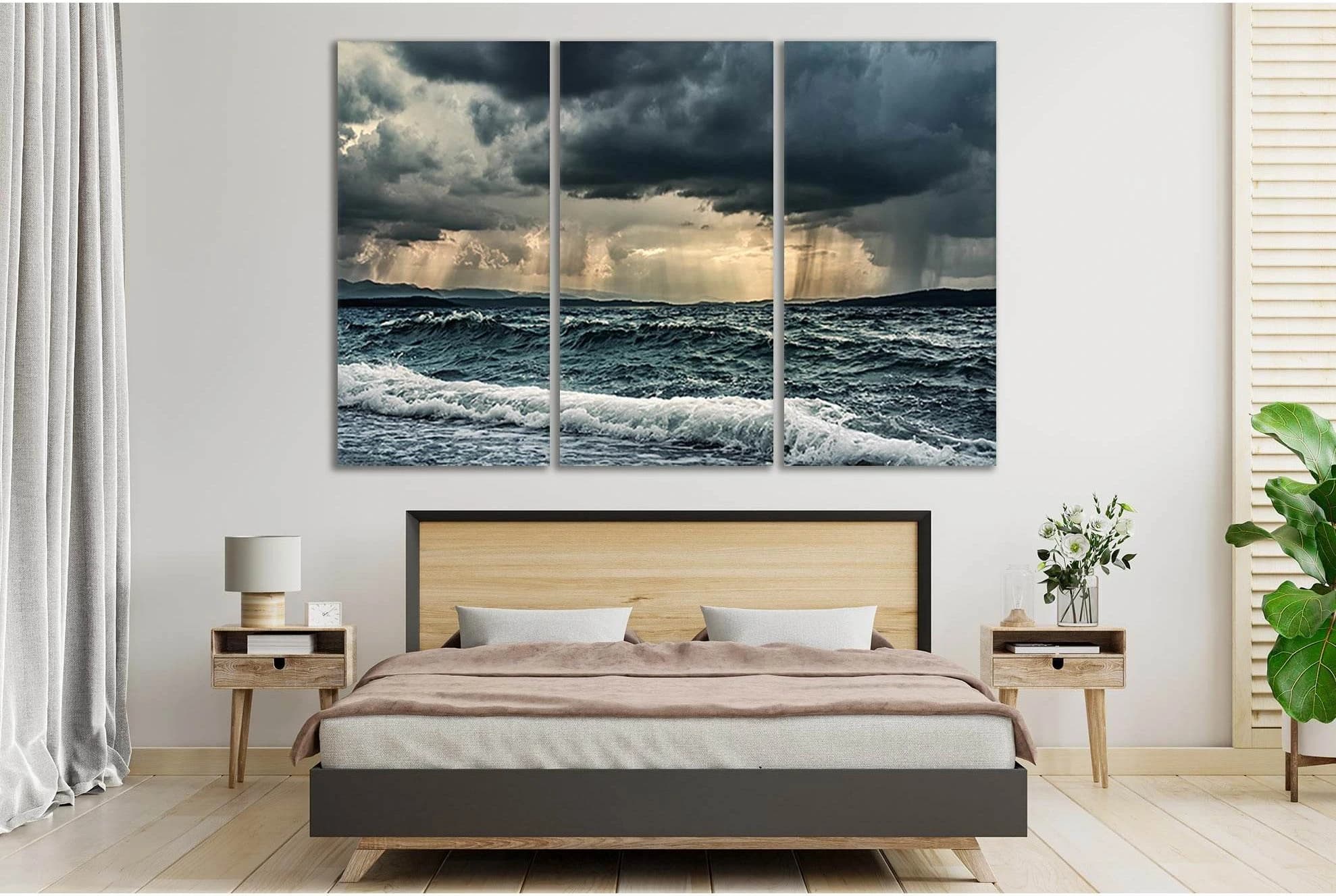
Rainy seascape
Stormy Ocean Rain Canvas Print Wall Art in Blue-Grey Tones
£60.82
Available now
A quiet, honest seascape for bedrooms, hallways and rooms that suit softer coastal drama.
View print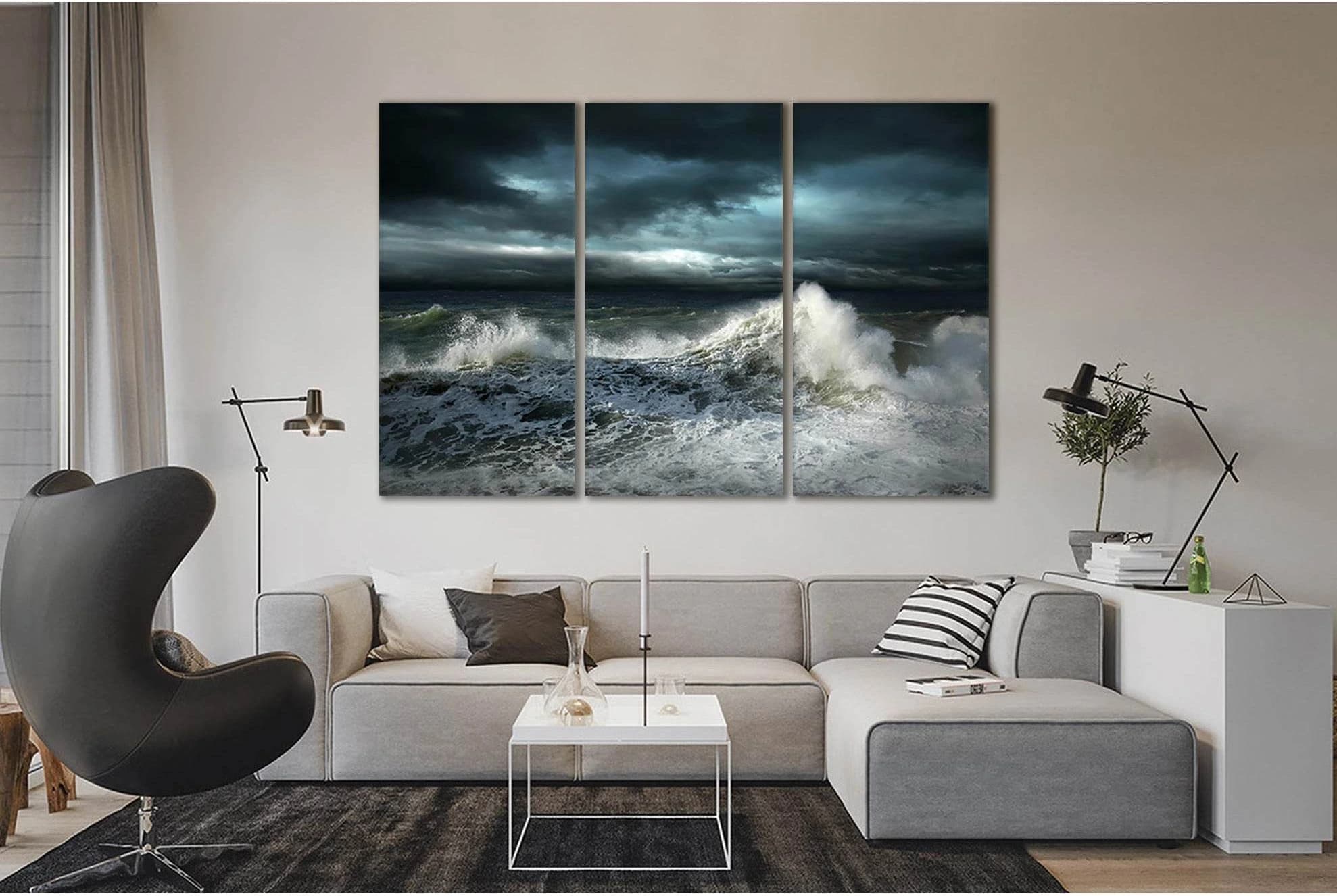
Modern moody coast
Stormy Seascape Triptych Canvas Print in Navy & Charcoal
£60.82
Available now
A cleaner storm-sea option for modern interiors that want coastal atmosphere without seaside props.
View print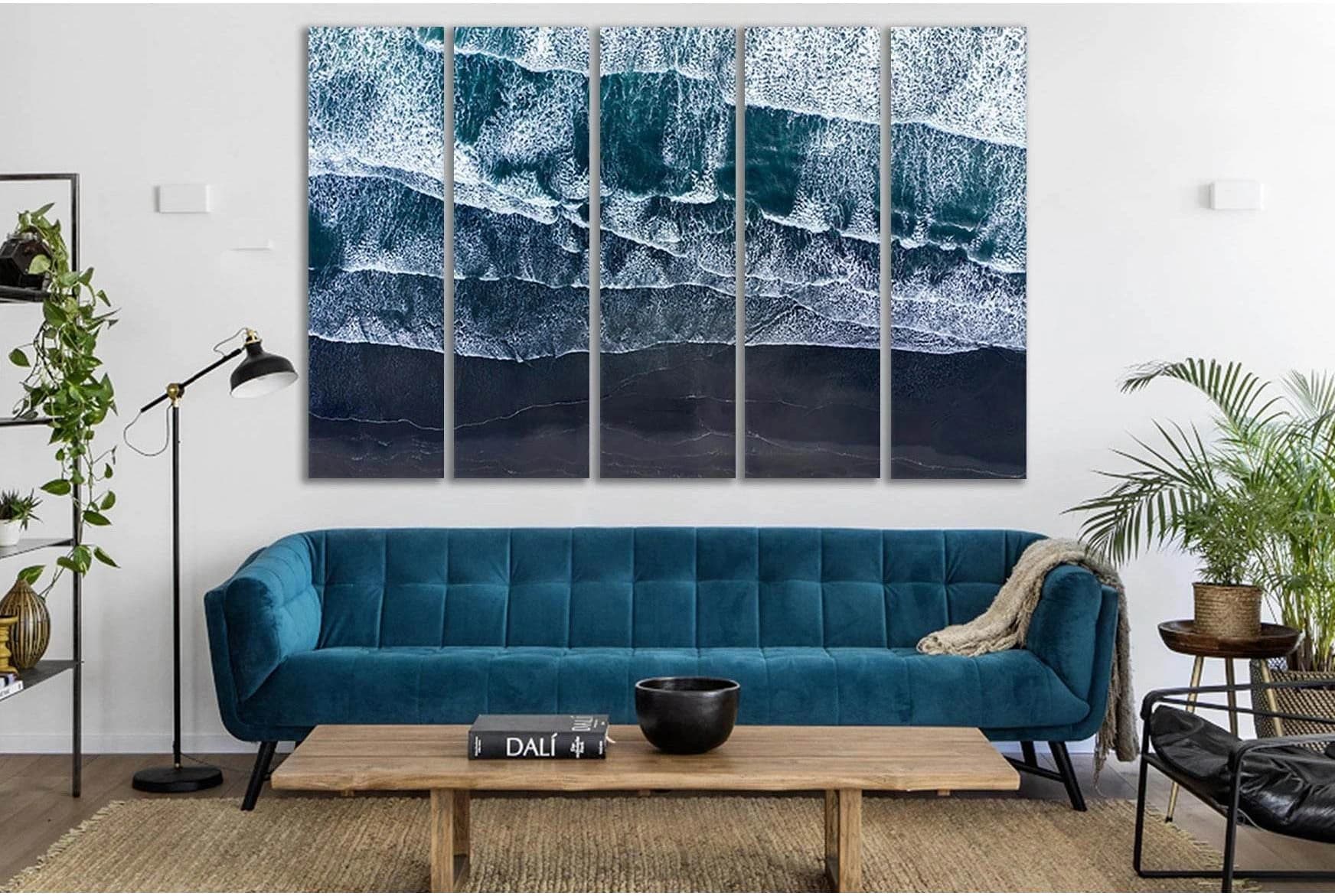
Navy wave texture
Ocean Waves Seascape Canvas Print in Deep Blue & White
£60.82
Available now
A contemporary nautical piece with deep blue water movement and graphic foam contrast.
View printWhat is the design rule for British coastal interiors?
FAQ
Why do British seaside pictures often look melancholy?+
British seaside pictures look melancholy because they combine holiday memory with visible decline. Many seaside towns were built for 19th-century domestic tourism, but the House of Lords dates long-term decline to the 1970s, when overseas holidays became viable for mass tourism.
Why are piers so important in British coastal art?+
Piers are important because they are uniquely British symbols of leisure, engineering and vulnerability. The National Piers Society says almost 100 British piers existed at the turn of the last century, but only about half remain, which makes every pier image feel nostalgic and fragile.
Is Margate really a seaside revival success story?+
Margate is a major cultural revival case, but not a simple problem solved story. Turner Contemporary says it has contributed GBP100 million to the local economy and welcomed over 5 million visitors since opening, while the Local Government Association links the revival to Dreamland, community campaigning and cultural investment.
What colours suit British coastal wall art?+
The most convincing British coastal colours are slate blue, navy, pewter grey, off-white, wet-sand beige, charcoal, weathered timber and small accents of faded red or yellow. These colours echo piers, storm waves, beach huts and old promenade lights without making the room look like a novelty seaside theme.
What is the difference between beach wall art and nautical wall art?+
Beach wall art usually focuses on shorelines, sand, waves, horizons and relaxed coastal atmosphere. Nautical wall art is more maritime: lighthouses, boats, piers, sails, storm seas and navigation imagery. For British interiors, nautical pieces often feel more grounded because they include weather, structure and coastal history.
How do I use seaside art without making a room look themed?+
Use one strong coastal artwork and keep the rest of the room restrained. A storm wave, lighthouse or grey horizon canvas can carry the theme by itself. Avoid adding too many anchors, ropes, shells, signs or novelty objects; those turn a sophisticated British coastal room into a souvenir shop.
Should a UK home use Mediterranean coastal colours?+
A UK home can use Mediterranean coastal colours, but they create a different mood. Mediterranean interiors often use bright whites, sandy neutrals, terracotta and vivid blues because the style is tied to warm seaside climates and indoor-outdoor living. British coastal rooms usually feel more natural with cooler, weathered colours.
Sources
Zellart editorial
Read more
Three related Zellart essays to keep the thread going.

Art & Design
The Beige International
How Airbnb, staging and ecommerce taught rooms to look the same, and why walls still need to argue for someone.
Read article
Wall Art
Painting for Grey
A practical guide to choosing warm, steady art for north-facing British rooms and winter light.
Read article
Art & Design
The Room That Stares Back
A case for dark, human maximalism through AI images, deep-ocean life, Medusa, protest graphics and Tokyo vintage.
Read article