
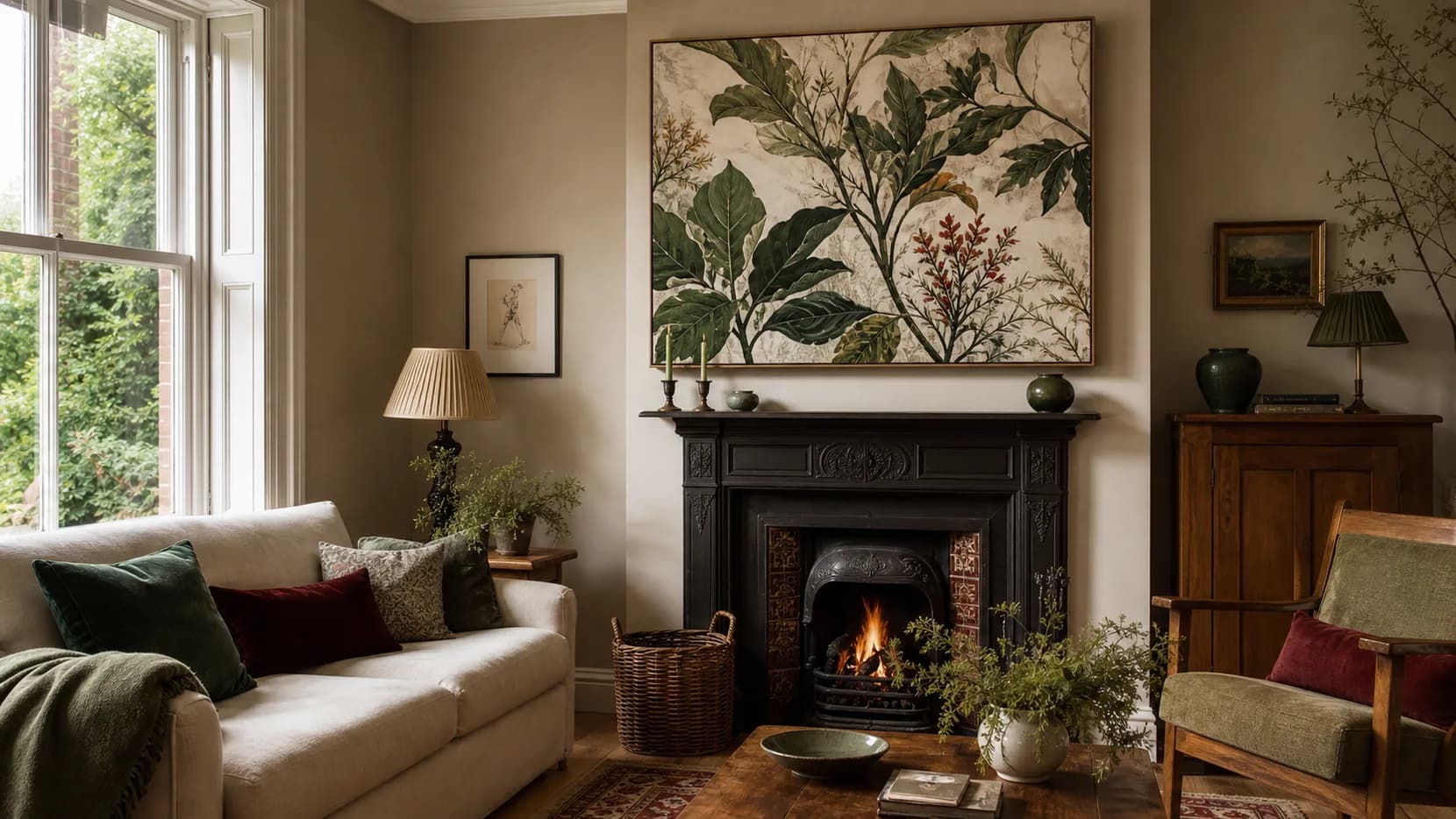
Explore the pattern language
Why did William Morris make pattern a moral position?
William Morris made pattern a moral position because he believed the objects in a home should improve life, not merely fill space. His design thinking joined beauty, usefulness, labour, and social reform, which is why a Morris-style floral pattern carries more meaning than simple prettiness.
The Met describes Morris as seeking to unite the arts of the home through nature and simplicity, while the V&A's account of his wallpapers shows how his plant forms became a disciplined domestic language.[1][3]
"Have nothing in your houses that you do not know to be useful or believe to be beautiful."
William Morris, The Beauty of Life
In the Morris tradition, a floral print is a small domestic argument: that a room should not surrender to cheapness, blankness, or lifeless utility.
Why was Arts and Crafts a British rebellion against industrial ugliness?
Arts and Crafts was a British rebellion because it began in the world's most industrialised Victorian society and answered factory ugliness with craft, nature, and honest materials. The Met connects the movement to anxieties about industrial life and the revaluation of handcraft.[3]
That distinction matters for modern interiors. Morris was not saying every home should become a medieval cottage. He was saying that domestic things should have purpose, material honesty, and human feeling. Pattern became one of the most visible ways to make that argument inside a room.
How did Red House turn the British garden into an interior language?
Red House turned the garden into an interior language because Morris's own home treated house, garden, furniture, wall decoration, and craft as one connected world. The National Trust describes Red House as the only house commissioned, created, and lived in by Morris, while National Trust Collections records that Philip Webb's design was complete in 1860.[4][5]
The first Morris wallpaper makes the point almost literally. The V&A says Trellis, designed in 1862, was suggested by the rose trellis in the garden of Red House, and The Met notes that Philip Webb supplied the birds for the design.[1][3]
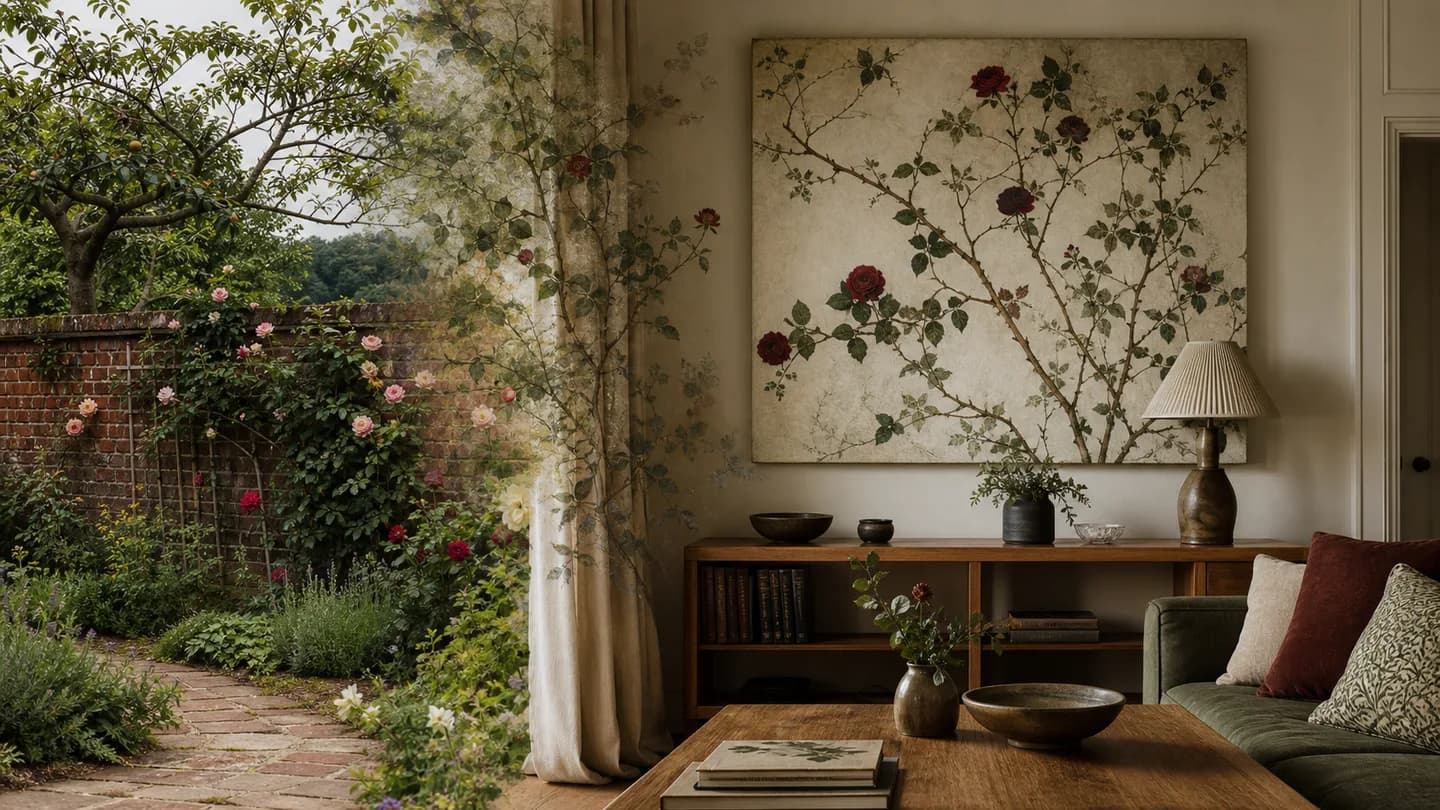
Why are Morris patterns so often botanical?
Morris patterns are so often botanical because plants gave him a design language that was natural, structured, repeatable, and domestic. The V&A notes that his wallpaper designs centre on plant-based forms and that they are stylised evocations of nature rather than literal botanical transcriptions.[1]
This is the useful lesson for wall art. A botanical canvas does not need to imitate Morris to be Morrisian. It needs to do what his best patterns did: organise nature into a visual rhythm that makes a room feel considered.
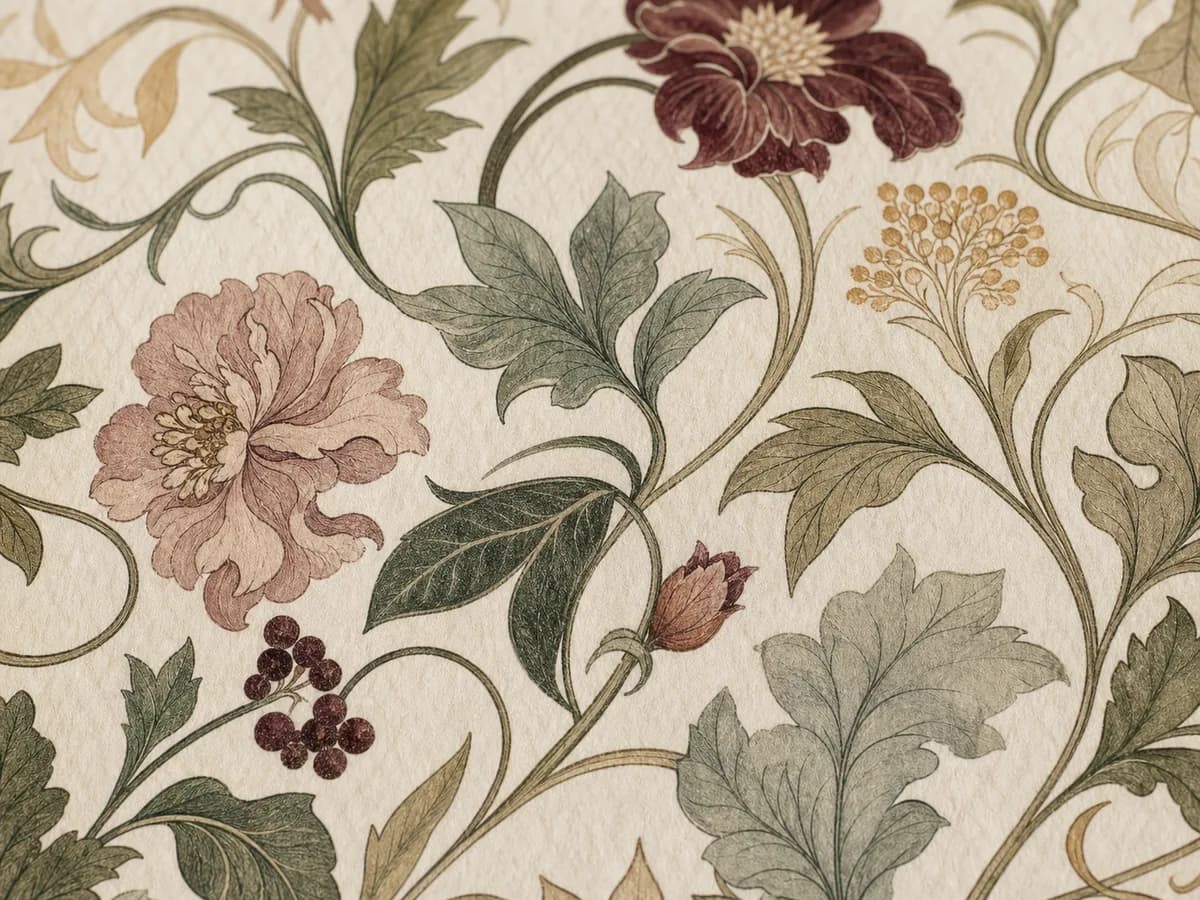
Why is floral not automatically twee in British interiors?
Floral is not automatically twee in British interiors because Britain's floral tradition is tied to reform, craft, gardens, textiles, and domestic seriousness. Twee means floral used as harmless sweetness. Morrisian floral has structure, principle, and history.
The William Morris Gallery describes Morris as a revolutionary designer and craftsman who introduced an instantly recognisable visual aesthetic into British interiors, with designs continuously produced ever since.[6]
That is why floral and botanical wall art works especially well in British homes. It speaks to a long domestic habit: the terraced sitting room with a garden beyond it, the Victorian fireplace with a patterned wall, the cottage with climbing roses, and the flat that needs softness against hard modern furniture.
Why did Britain never really stop loving pattern?
Britain never stopped loving pattern because Morris's design philosophy moved from elite handcraft into wallpaper, textiles, retail, museums, heritage houses, and ordinary homes. Morris & Co. says its wallpapers are drawn from 19th-century archive designs and crafted in a UK factory for contemporary audiences.[7]
The appetite is still visible. The William Morris Gallery's Morris Mania exhibition described how Morris's botanical patterns appear across homes, shops, waiting rooms, popular culture, and everyday objects. Its Women in Print exhibition, produced with Liberty Fabrics, examines 150 years of Liberty textiles and women textile designers.[8][9]
1860
Red House completed as Morris and Jane Morris moved into their garden-linked home.
1862
Trellis designed, inspired by rose trellises at Red House.
1875
Morris & Co. reorganised under Morris as sole manager.
1887
Arts and Crafts Exhibition Society founded in London.
2025-26
Morris Mania and Liberty textile exhibitions keep the pattern argument current.
What is the Morris test for choosing wall art today?
The Morris test for choosing wall art is simple: does the piece make the room more useful, more beautiful, or both? A canvas is useful when it gives a wall focus, corrects a cold room, softens hard furniture, or gives a small space visual intention. It is beautiful when the image rewards repeated looking.
For Zellart, this is where floral & botanical wall art naturally belongs. The collection includes roses, tulips, poppies, palm leaves, leaf textures, cactus scenes, and black-and-white botanical photography.
How should modern British homes use Morris's lesson without copying Morris?
Modern British homes should use Morris's lesson by choosing botanical art with purpose, not by turning every room into a Victorian museum. Morris's principle is not copy my wallpaper. It is make domestic life richer through beauty, nature, and craft.
Chosen for botanical rhythm, not Morris reproduction
Modern botanical wall art with a Morrisian logic
These are contemporary floral and botanical canvas prints. They are not William Morris reproductions; they are chosen because each uses plant form, rhythm, colour or contrast with clear purpose.
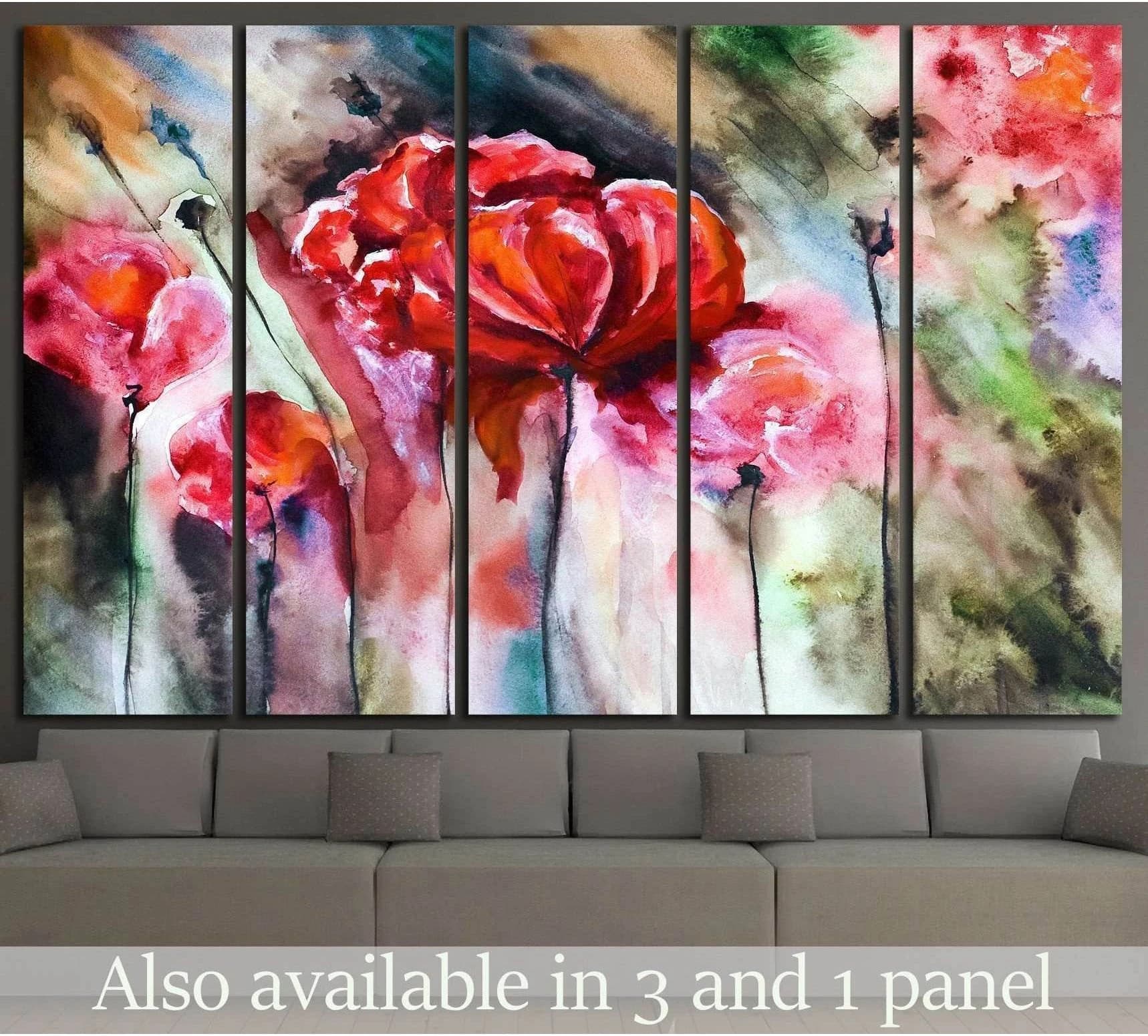
Soft colour
Blossoming poppy drawn by water color №1334 Ready to Hang Canvas Print
£60.82
Available now
Soft colour for a neutral room
Watercolour poppy colour adds human softness without heavy wallpaper-style pattern.
View canvas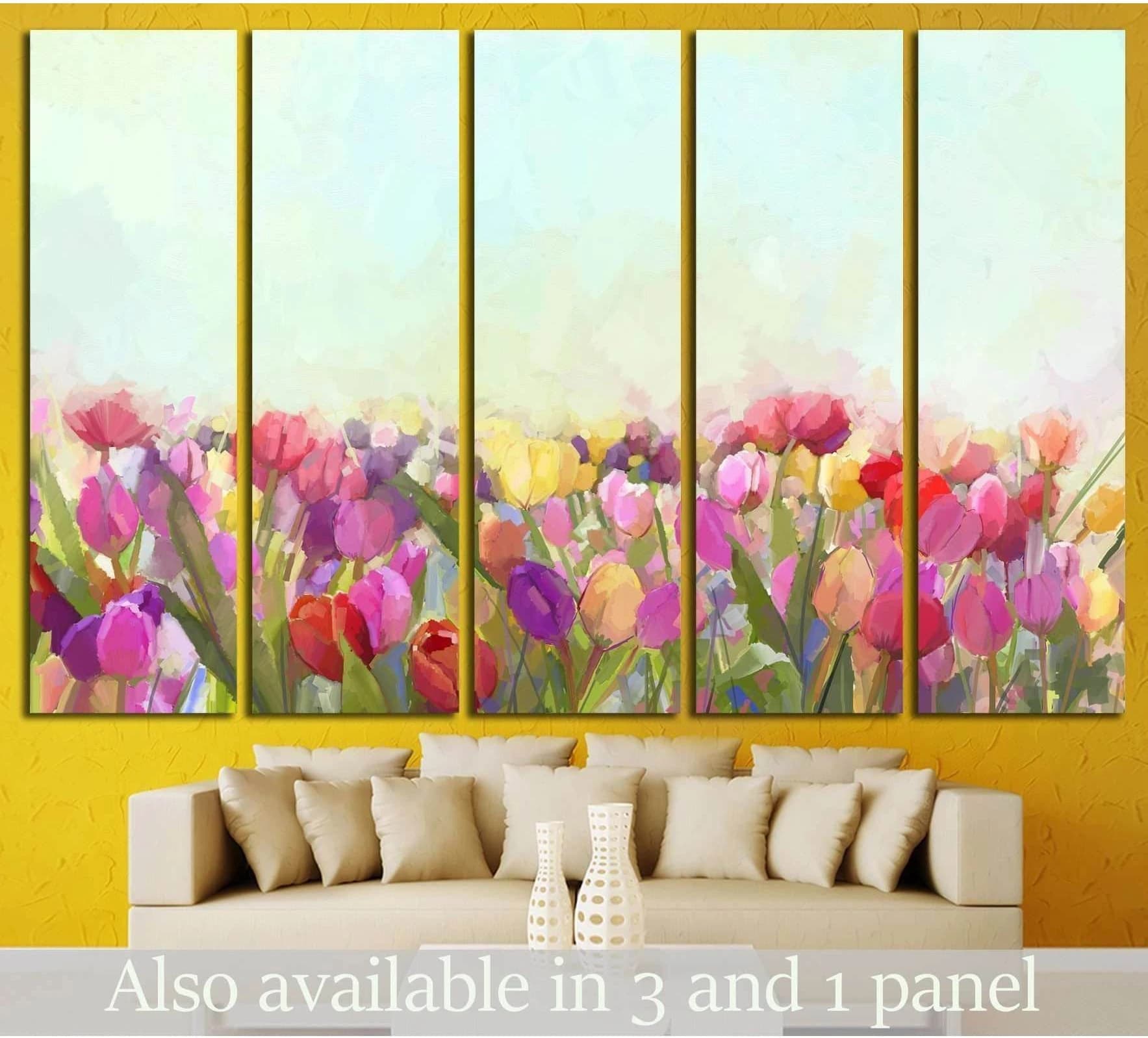
Garden colour
Oil painting yellow, pink and red Tulips flowers №1346 Ready to Hang Canvas Print
£60.82
Available now
Classic garden-room colour
Tulips create a classic garden-room feeling without turning the wall into a museum copy.
View canvas
Bedroom floral
beautiful flowers made with color filters №1356 Ready to Hang Canvas Print
£60.82
Available now
Gentle bedroom floral
Soft rose tones make floral intimate and restful rather than sugary.
View canvas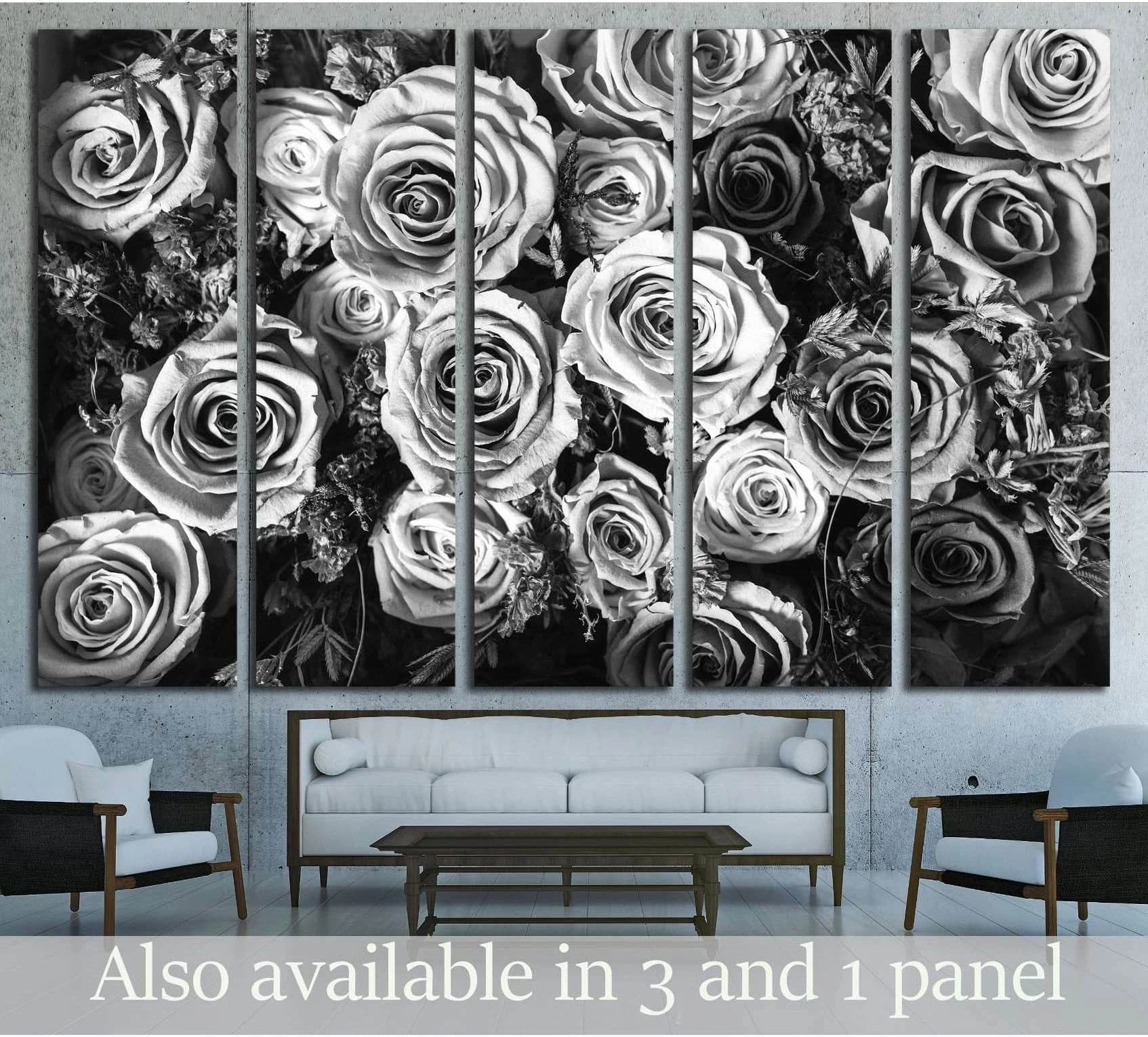
Not twee
Black and white background of flowers roses №2840 Ready to Hang Canvas Print
£60.82
Available now
Floral without sweetness
Monochrome keeps the botanical form while removing the sweetness risk.
View canvas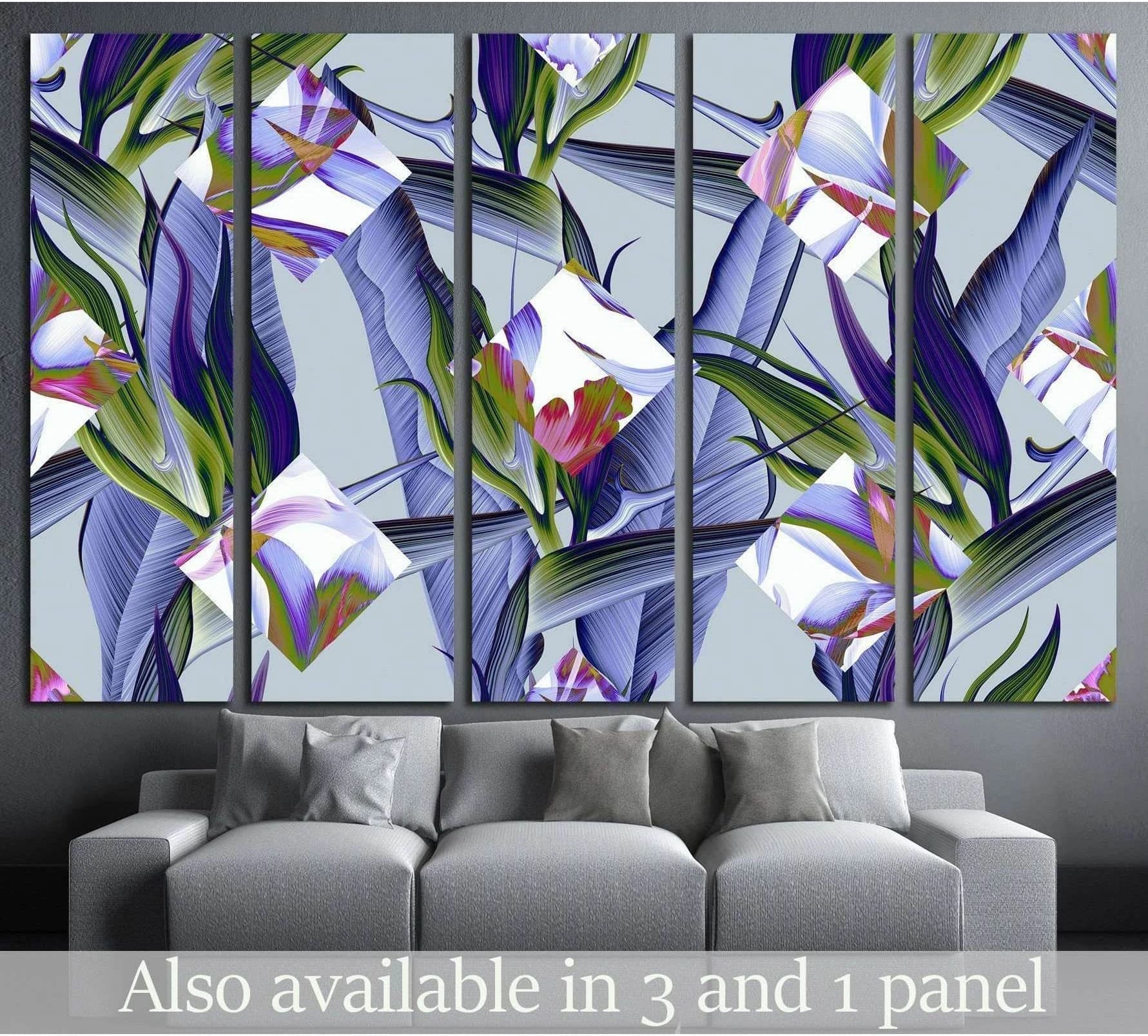
Leaf rhythm
Tropical colorful palm leaves in Hawaiian style №1352 Ready to Hang Canvas Print
£60.82
Available now
Graphic botanical rhythm
Strong leaves give the wall pattern energy in a clean contemporary room.
View canvasUse watercolour wall art when a room needs softness, oil painting wall art when it needs painterly depth, and extra large canvas prints when the wall needs one confident pattern statement.
What makes botanical wall art feel British rather than generic?
Botanical wall art feels British when it connects the room to garden culture, craft tradition, and layered domestic life. A generic floral print says pretty. A British botanical print says house, garden, weather, textile, memory, and room belong together.
Choose scale with confidence. One large botanical canvas often feels more intentional than a cluster of small safe pieces.
Let the plant form lead. Stems, leaves, branches, petals and trellis-like movement should structure the composition.
Avoid matching everything. A botanical canvas should converse with cushions, curtains, wood, stone and wall colour.
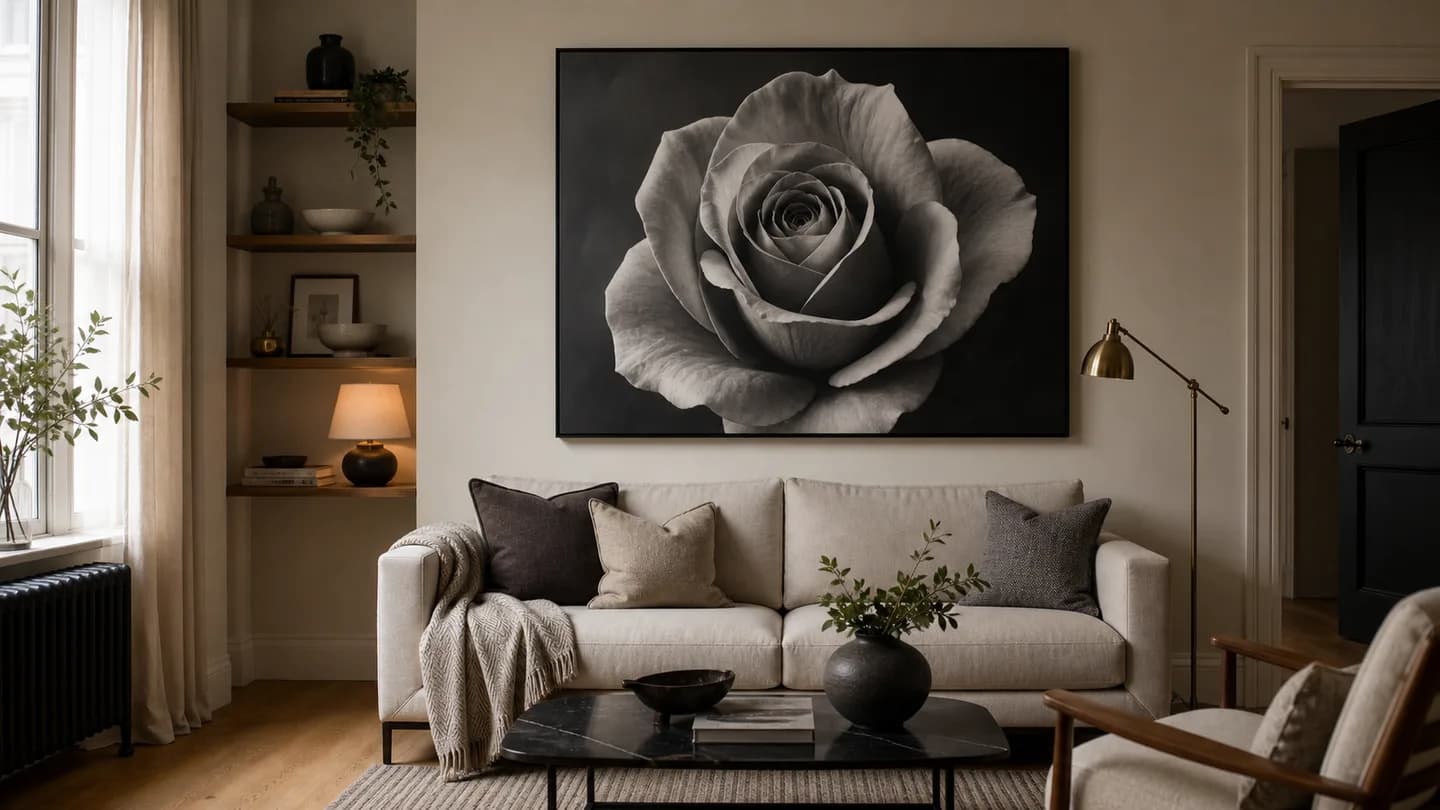
Use monochrome when the room is already busy. Black-and-white flowers keep the botanical idea without adding sweetness.
Use colour when the room lacks warmth. Poppies, roses, tulips and warm floral tones can make grey British light feel more humane.
Is William Morris still relevant to contemporary interiors?
William Morris is still relevant because his core concerns - overproduction, ugly mass goods, worker disconnection, environmental harm, and the need for beauty in ordinary life - have become modern concerns again. The William Morris Gallery keeps this legacy active through exhibitions about his influence, commodification, and textile history.[6][8][9]
A botanical canvas can never carry the full politics of Arts and Crafts by itself. But it can carry the same instinct: a refusal to make the home lifeless.
FAQ
Why did William Morris say homes should contain useful or beautiful things?+
Morris believed domestic objects shaped daily life. His rule asked people to reject useless clutter and ugly mass goods, and to choose things that either served a purpose or gave real beauty. The sentence comes from his lecture The Beauty of Life, published in Hopes and Fears for Art.
Was William Morris against all machines?+
William Morris was not against every machine. He objected more strongly to the division of labour, repetitive factory work, and the social and environmental damage of Victorian industrial production. His goal was not anti-modern nostalgia; it was meaningful work and better-made everyday objects.
Why are William Morris designs so full of flowers and leaves?+
Morris used flowers and leaves because plants gave him a structured language for bringing nature into domestic space. The V&A states that his wallpapers centre on plant-based forms and stylised evocations of nature.
Is floral wall art old-fashioned?+
Floral wall art is old-fashioned only when it is chosen passively. In British interiors, botanical imagery has a strong design lineage through Morris, Arts and Crafts, Liberty textiles, garden culture, and modern museum interest. Used with scale, contrast, and intention, floral art feels historical and contemporary at once.
How do I use floral art without making a room look twee?+
Use floral art with structure, contrast, and scale. Choose one large botanical canvas, monochrome flowers, watercolour stems, or strong leaf forms instead of small scattered florals everywhere. Pair botanical art with oak, linen, stone, matte black, plaster, brass, or simple modern furniture.
Does botanical wall art need to match wallpaper or curtains?+
Botanical wall art does not need to match wallpaper or curtains. It should relate to the room through colour, rhythm, or material mood. A poppy canvas can warm a neutral wall; black-and-white roses can calm a busy scheme; palm leaves can add graphic rhythm to a clean modern room.
Sources
Zellart editorial
Read more
Three related Zellart essays to keep the thread going.

Art & Design
The Beige International
How Airbnb, staging and ecommerce taught rooms to look the same, and why walls still need to argue for someone.
Read article
Wall Art
Painting for Grey
A practical guide to choosing warm, steady art for north-facing British rooms and winter light.
Read article
Art & Design
The Room That Stares Back
A case for dark, human maximalism through AI images, deep-ocean life, Medusa, protest graphics and Tokyo vintage.
Read article