

The dominant wall principle is the practical design rule of choosing the wall that should be read first, then letting the artwork, lighting, furniture and colour palette support that visual decision. It combines interior design’s principle of emphasis, Kevin Lynch’s idea of environmental legibility, and set design’s habit of building a visual world before adding small details.[1][3]
For interiors, the dominant wall is not always the brightest wall or the wall behind the sofa. It is the wall that gives the room orientation. In an open-plan space, it works like a landmark: it tells the eye where the living zone begins, where attention should settle, and what emotional tone the room is meant to hold.
The dominant wall principle is why extra large canvas prints work differently from any other decor element. A small print decorates a wall. An XXXL canvas print can organise the room.
What is the dominant wall principle?
The dominant wall principle means choosing one wall or architectural plane as the room’s primary visual anchor. It is not a formal term coined by Kevin Lynch; it is a practical interior design synthesis of focal point theory, visual hierarchy and spatial legibility. A dominant wall gives the eye a first place to land.
Designers often call this emphasis or a focal point. Livingetc defines emphasis in interior design as a strategic way to focus viewers on a specific feature, while designer Dan Lovatt describes it as creating a point that commands attention and draws the eye around the room.[3]
In plain language: the dominant wall is the wall that answers the question, “What is this room about?”
“A finished room does not need every wall to be interesting. It needs one wall to be clear.”
Why does a room feel unfinished without a visual anchor?
A room feels unfinished without a visual anchor because the eye has no hierarchy to follow. Visual hierarchy works by making one element more prominent than others; Smashing Magazine explains that different levels of emphasis make important information more visually prominent and easier to understand quickly.[4]
The same principle applies to interiors. If the television, window, sofa, shelves, rug, pendant light and artwork all compete equally, the room becomes visually noisy. A clear dominant wall solves that by making one element lead and allowing the rest to become supporting structure.[5]
A blank room can look expensive and still feel unresolved. The issue is not always lack of furniture. Often, the problem is lack of visual grammar.
Decorated room
Many objects have been added, but each competes for the same level of attention. The room has taste, but the eye has no order.
Composed room
One surface leads and the rest of the room supports it. Furniture, colour, light and artwork belong to one visual argument.
How does Kevin Lynch’s city legibility translate into one room?
Kevin Lynch’s The Image of the City studied how people understand urban form and introduced “imageability” as a way to describe how clearly an environment can be recognised and mentally organised. MIT describes Lynch’s work as research into how residents perceived and navigated cities through structural elements including paths, edges, districts, nodes and landmarks.[1][2]
A room is not a city, but the analogy is useful. People still enter, scan, orient and remember. In a home, the sofa creates a node, a rug creates a district, a corridor creates a path, a partial wall creates an edge, and a large canvas print can become the landmark.
| Lynch element | City-scale meaning | Room-scale equivalent | Dominant wall effect |
|---|---|---|---|
| Path | A route people move through | Entry route, hallway view, sofa-to-kitchen sightline | The dominant wall catches the eye along the main route |
| Edge | A boundary or break | Wall plane, rug edge, partition, window line | The wall gives the room a visual boundary |
| District | A recognisable area | Living zone, dining zone, reading corner | Wall art helps each zone feel intentional |
| Node | A point of gathering | Sofa group, dining table, fireplace | The anchor wall strengthens the main activity zone |
| Landmark | A memorable point of reference | Large artwork, mural, fireplace, dramatic window | The room becomes easier to read and remember |
This is why one strong wall can make an open-plan room feel calmer. The artwork does not simply fill empty plaster. It gives the room a landmark.
How do film and theatre set designers build a dominant wall?
Set designers build rooms from meaning before decoration. Vectorworks defines set design as creating visual and physical elements that establish the world of a production, while Kosmorama notes that visual fiction relies on costumes, props, furniture and sets arranged in real or simulated architectural spaces.[8][9]
That is the crucial lesson for interiors: a convincing room is not assembled object by object. It is composed around a visual idea.
In film production design, the wall behind a character might reveal power, isolation, wealth, decay, safety or tension before anyone speaks. In theatre, a back wall, doorway, painted flat or architectural opening can act like a visual sentence: it tells the audience where to look and what world they are entering.
Patrice Vermette’s work on Dune is a useful modern example. In a 2024 interview, Vermette explained how he and Denis Villeneuve developed the design language through pre-production, while TheWrap reported that the film’s production team built a visual bible before construction.[10][11]
Set designer method
Do not decorate a room; stage it.
- 1Choose the main camera angleStand where people enter the room and look at the first wall they see.
- 2Choose the lead surfaceDecide which wall should carry the room’s mood.
- 3Place the anchorUse large artwork, a mural, fireplace, shelving or an architectural feature.
- 4Subordinate the restLet sofas, rugs, lamps and smaller decor support the anchor.
- 5Light the decisionUse lighting, contrast or negative space so the eye understands its role.
Why do strong interior designers choose art before furniture?
Strong designers do not always buy the artwork before the furniture, but they often identify the anchor idea before the room is filled. Architectural Digest profiled Atelier 27 around the belief that art should not be treated as an afterthought and that it can help tell a building’s story alongside architecture and design.[6]
Corey Damen Jenkins gives a more literal example. In a Homes & Gardens feature, his Cohasset Garden Room was built around a sweeping mural that acted as a lead actor, with colour, texture and furniture choices orchestrated around it.[7]
That is why choosing wall art late can make a room harder, not easier. If the sofa, rug, cushions and paint are already fixed, the artwork is forced to match. If the artwork is chosen early, it can define the palette, energy, scale and emotional direction of the room.
For Zellart customers, this is especially important with extra large wall art. An oversized canvas print is not the final accessory. It can be the starting point.
Before
Furniture first
After
Dominant wall first
How does a visual anchor work in an open-plan space?
A visual anchor works in an open-plan space by creating orientation without adding walls. Open-plan rooms rely on visual signals instead of solid dividers; design guidance commonly treats rugs, furniture and lighting as tools for defining living, dining and study areas within one larger layout.[12][13]
Rugs
define the floor
Lighting
defines use
Large wall art
defines attention
In an open-plan living and dining room, the dining table may have a pendant light and the sofa may have a rug, but the largest wall still needs a landmark. Without it, the room can feel like a furniture showroom: technically complete, but emotionally unfinished.
A well-chosen XXXL canvas print gives the open plan a visual centre of gravity.
Why do extra-large canvas prints work differently from smaller decor?
Extra-large canvas prints work differently because they operate at architectural scale. A small print adds detail; an XXXL canvas can set the room’s proportions, colour temperature and emotional direction. Zellart’s Extra Large Wall Art collection is built around oversized canvas prints for living rooms, bedrooms, offices, entryways and large spaces that need impactful wall decor.
The dominant wall principle is why oversized canvas prints work differently from any other decor element: they establish the room’s visual grammar before anything else does.
A large forest print can make a long room feel grounded. A panoramic cityscape can make a loft feel cinematic. A soft abstract can give a neutral living room its colour logic. A coastal horizon can visually widen a narrow room.
For example, Zellart’s Autumn Landscape Large Wall Art №46 uses a panoramic woodland scene with warm golden light. The New York City Manhattan after sunset canvas print creates a more urban focal point through skyline, bridge and sunset atmosphere. The Thailand Seascape №SL72 canvas print works differently again, using turquoise water and limestone islands for a coastal visual anchor.
Wall art that can anchor a dominant wall
Choose scale, then choose mood
Collection cards use Zellart category data, while product cards use live product images, titles, prices and availability.

Best for blank walls
Extra Large Wall Art
Oversized scale for living rooms, bedrooms, offices and large blank walls.
Explore
Best for colour direction
Abstract & Watercolor Wall Art
Soft washes, expressive brushstrokes and statement pieces that set a palette.
Explore
Best for calm rooms
Nature Wall Art
Forests, mountains, lakes and landscapes for rooms that need depth and quiet.
Explore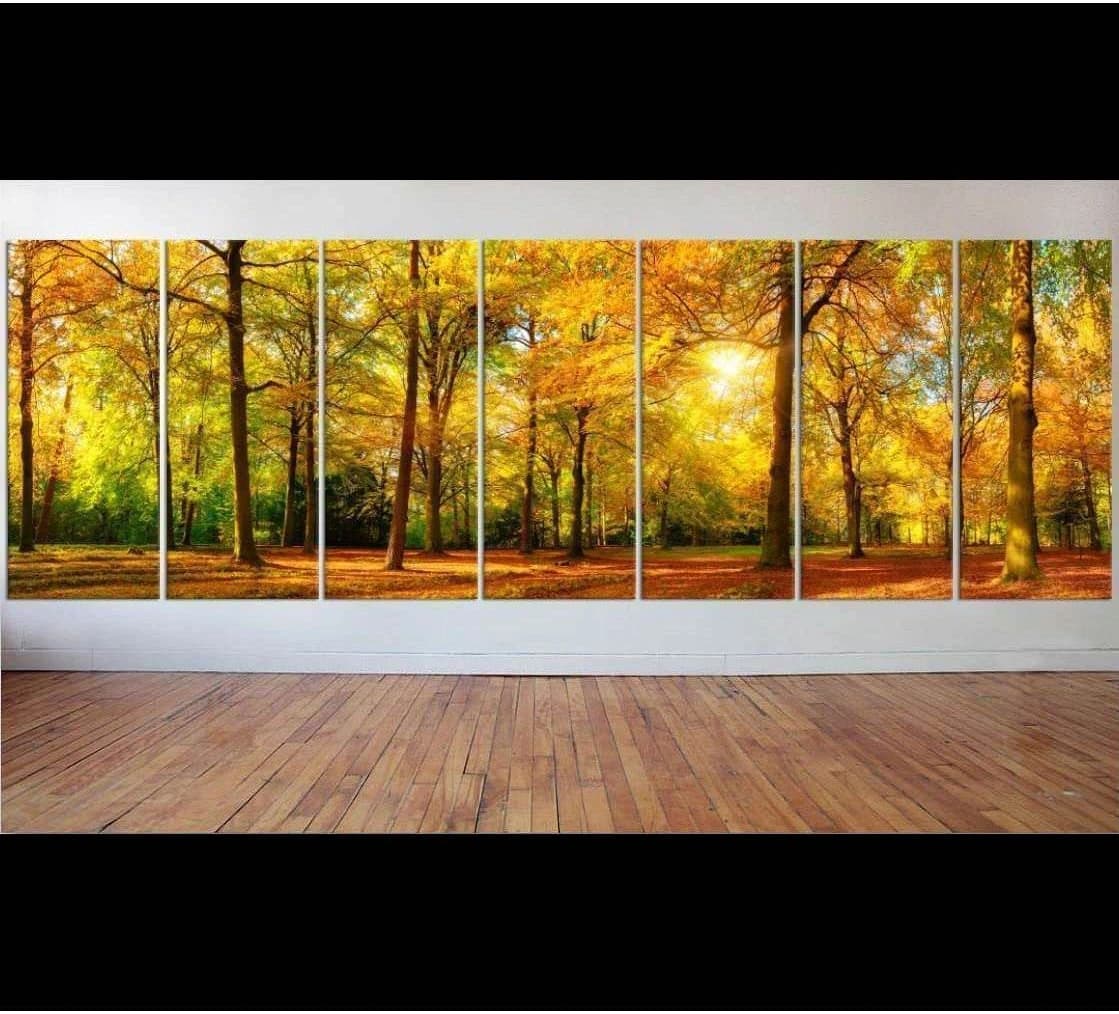
Best panoramic anchor
Autumn Landscape Large Wall Art №46 Ready to Hang Canvas Print
£505.59
Available now
Warm woodland depth can make a long dominant wall feel grounded and resolved.
View print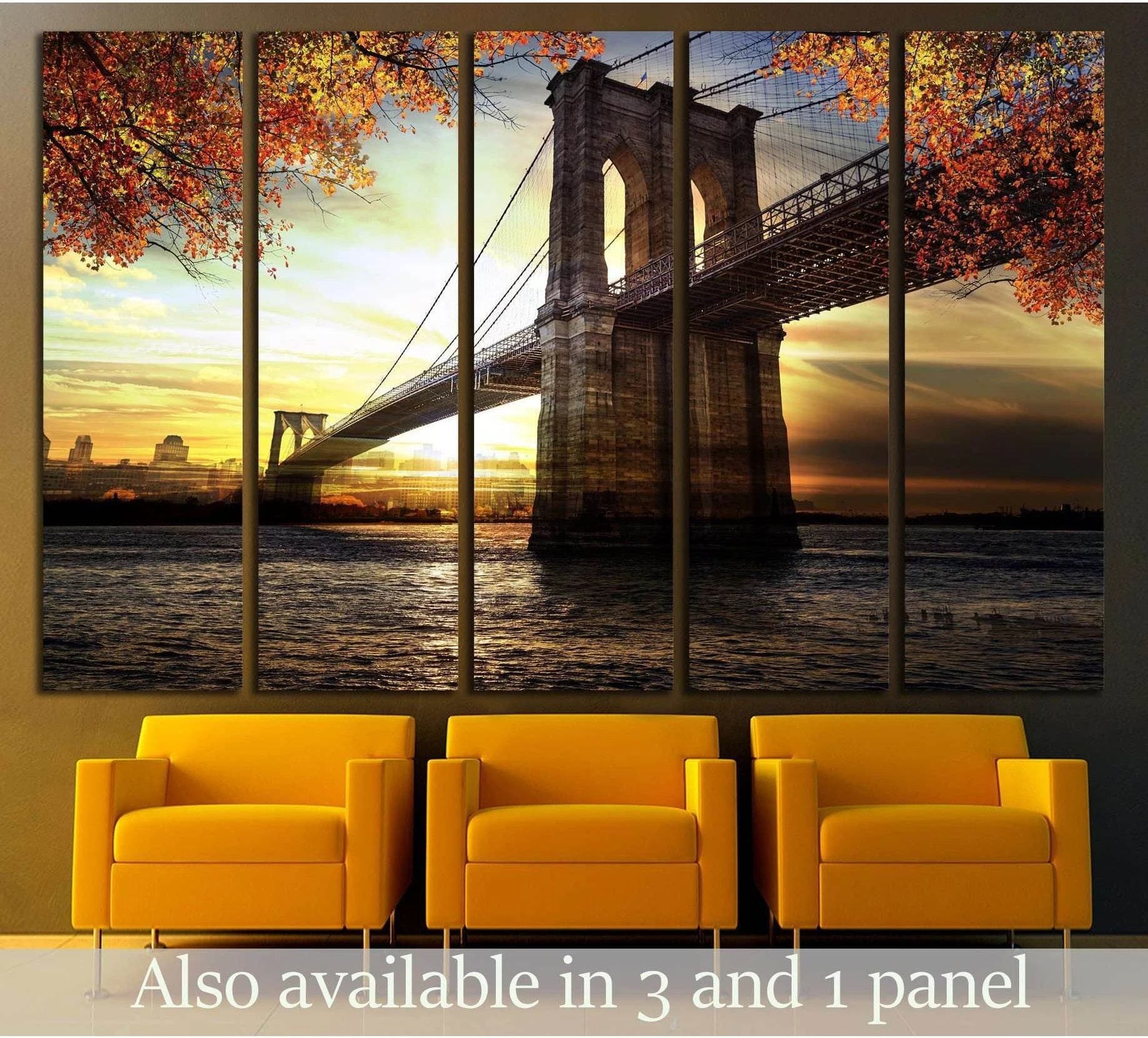
Best urban anchor
New York City - Manhattan after sunset - beautiful cityscape №2406 Ready to Hang Canvas Print
£60.82
Available now
Skyline scale, bridge structure and evening light create an architectural focal point.
View print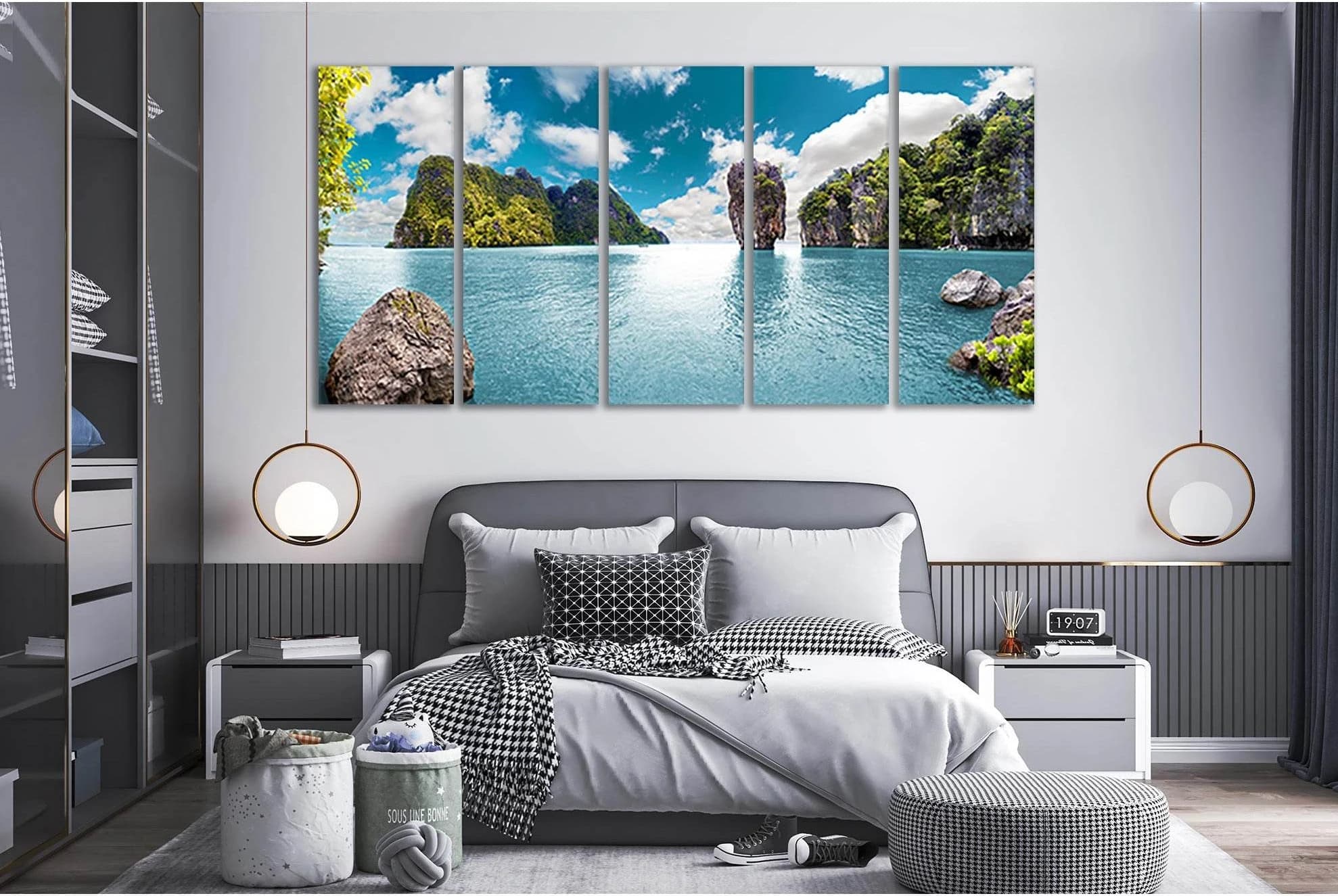
Best coastal anchor
Turquoise Ocean Seascape Canvas Wall Art with Islands, Cliffs and Blue Sky
£79.78
Available now
Turquoise water and limestone islands give the wall a broad, open-plan visual horizon.
View printWhich Zellart wall art categories work best for a dominant wall?
Different dominant walls need different visual roles. The strongest choice depends on whether the room needs calm, structure, drama, depth or colour.
| Room problem | Best wall art direction | Zellart link | Why it works |
|---|---|---|---|
| A large blank living room wall feels empty | XXXL canvas print | Extra Large Wall Art | Oversized scale gives the room a clear visual centre. |
| Neutral furniture feels flat | Abstract colour field | Abstract & Watercolor Wall Art | Abstract art can define palette without forcing a literal theme. |
| The room needs calm and depth | Landscape or forest print | Nature Wall Art | Forests, mountains, lakes, waterfalls and scenic landscapes bring visual depth to relaxed interiors. |
| Loft or office needs architectural energy | Skyline or bridge print | Cityscapes & Skylines Wall Art | Cityscape wall art uses bridges, streets, landmarks and city lights to create structure. |
| Bedroom or open-plan room needs visual air | Ocean horizon or beach print | Beach, Ocean & Waves Wall Art | Coastal canvas prints can make a room feel wider, lighter and more open. |
How do you choose the dominant wall in a real room?
Choose the dominant wall by finding the surface that naturally controls the room’s first impression. In most rooms, it is the wall seen from the entrance, the wall behind the sofa, the wall opposite the bed, the wall with the fireplace, or the long wall that visually connects an open-plan layout.
Stand at the entrance
The wall you see first is usually a strong candidate.
Check the architecture
Fireplaces, niches, tall ceilings, exposed brick and long walls already have visual weight.
Respect the main activity
A living room anchor should support conversation; a bedroom anchor should support rest.
Choose scale before colour
A tiny print on a large wall rarely creates dominance.
Let the artwork set the palette
Pull one or two colours from the canvas into cushions, rugs, lamps or ceramics.
For sizing, the common two-thirds rule is a useful starting point: artwork above furniture should span roughly two-thirds of the furniture width, according to Artfully Walls. Better Homes & Gardens also recommends that art above a sofa should fill at least two-thirds of the sofa width and should not be hung too high.[14][15]
What mistakes make a dominant wall fail?
A dominant wall fails when the room has too many competing visual claims or when the chosen anchor is too small for the architecture. Livingetc warns that emphasis should not overshadow the whole scheme; the focal point needs to command attention for the right reason while still letting the rest of the room breathe.[3]
| Mistake | Why it fails | Better fix |
|---|---|---|
| Three walls compete at once | The eye has no hierarchy | Choose one primary wall and make the others quieter |
| Artwork is too small | The wall still feels empty | Use one oversized canvas or a grouped arrangement |
| The TV becomes the default anchor | The room feels functional, not composed | Balance the TV with art, shelving, texture or a secondary wall feature |
| Furniture is chosen first with no anchor idea | The art is forced to match later | Choose the visual mood before finalising palette and textiles |
| Open-plan zones all use equal focal points | The room becomes fragmented | Give each zone a cue, but let one wall lead the whole space |
| No lighting on the wall | The anchor disappears at night | Add warm accent lighting or a picture light |
| Trend chosen over room logic | The wall looks styled but not resolved | Choose art that fits the room’s scale, sightline and emotional use |
Is a dominant wall the same as an accent wall?
A dominant wall and an accent wall overlap, but they are not the same. An accent wall is usually a wall made visually different through paint, wallpaper, texture or material. A dominant wall is broader: it is the wall that organises attention. It may be painted, but it may also be defined by artwork, lighting, shelving, a fireplace, a window or a large canvas print.
A painted accent wall can still fail if it does not face the room’s main sightline. A plain white wall can become dominant if it holds the right oversized artwork in the right position.
The dominant wall is not about decoration. It is about orientation.
What does the dominant wall principle mean for Zellart customers?
For Zellart customers, the dominant wall principle changes the way large canvas prints should be chosen. The question is not only “Do I like this artwork?” The stronger question is: “Can this artwork lead the room?”
Does it match the scale of the wall?
Does it create a clear first impression from the entrance?
Does it support the room’s function?
Does it give the furniture a colour or mood direction?
Does it create depth, calm, drama or energy?
Does it still work when viewed from across an open-plan space?
Does it feel intentional enough to hold the wall by itself?
This is why XXXL canvas prints are strongest on large blank walls, open-plan living rooms, office reception walls, dining rooms, above sofas and behind beds. They are not filler. They are room architecture made from image, colour and scale.
FAQ
What is a dominant wall in interior design?+
A dominant wall is the wall that acts as the room’s main visual anchor. It is the surface the eye reads first and the surface that sets the room’s mood, scale and direction. It can be created with large wall art, a fireplace, shelving, a mural, lighting or architectural texture.
Is the dominant wall always behind the sofa?+
The dominant wall is not always behind the sofa. It is usually the wall seen first from the entrance, the wall that faces the main seating area, or the wall with the strongest architectural presence. In open-plan rooms, the dominant wall may be the surface that visually connects the living and dining zones.
Is a dominant wall the same as a feature wall?+
A feature wall is usually a decorative wall treatment, such as paint, wallpaper or texture. A dominant wall is about visual hierarchy. A feature wall can become dominant, but only if it controls the room’s first impression and helps the rest of the furniture, lighting and decor feel organised.
Why are extra-large canvas prints good for dominant walls?+
Extra-large canvas prints are good for dominant walls because their scale can match the architecture of a large room. A small artwork decorates; an XXXL canvas print can set the colour palette, visual rhythm, emotional tone and first impression of the space.
How big should art be above a sofa?+
A useful starting point is the two-thirds rule: artwork or a grouped arrangement above a sofa should span roughly two-thirds of the sofa width. This proportion helps the art feel connected to the furniture rather than floating awkwardly on the wall.
Can a TV be the dominant wall?+
A TV can be the dominant wall, but it often makes the room feel more functional than composed. To make a TV wall feel designed, balance the screen with artwork, shelving, texture, lighting or a larger visual composition so the black rectangle is not the only point of attention.
Do open-plan rooms need more than one visual anchor?+
Open-plan rooms often need several zone cues, but only one primary visual anchor. Rugs, lighting and furniture can define each zone, while one dominant wall gives the whole space orientation. Without a primary anchor, open-plan rooms can feel scattered even when the furniture layout is practical.
Zellart editorial
Read more
Three related Zellart essays to keep the thread going.

Art & Design
The Beige International
How Airbnb, staging and ecommerce taught rooms to look the same, and why walls still need to argue for someone.
Read article
Art & Design
The Room That Stares Back
A case for dark, human maximalism through AI images, deep-ocean life, Medusa, protest graphics and Tokyo vintage.
Read article
Interior Design
What Hotel Lobbies Know About Art
What hotel lobbies understand about scale, mood, local reference and first impressions.
Read article