

Interior Design
The Neuroscience of Why Certain Images Calm You Down — And What It Means for Your Home
TL;DR
What images calm your nervous system fastest?
Certain images calm you down because they combine safe visual distance, soft natural attention and low-threat sensory order. Open horizons give the brain a sense of prospect, sheltered compositions give refuge, water scenes provide blue-space cues and forests create soft fascination that lets tired attention recover.
For the home, the most reliable calming wall art choices are ocean horizons, quiet lakes, misty forests, soft mountain views, bamboo paths, gentle waterfalls and spacious natural landscapes. These images work especially well in bedrooms because they give the eye depth without visual chaos.
Best Zellart starting points: Bedroom Wall Art, Beach & Waves Art, Nature Wall Art and Trees Wall Art.
What does the brain find calming in an image?
The brain finds an image calming when it can read the scene as safe, spacious, coherent and low in threat. The strongest calming images usually show a clear horizon, natural depth, gentle repetition, water, vegetation or a protected viewpoint.
Jay Appleton’s prospect-refuge theory, first proposed in his 1975 landscape work, explains why humans often prefer scenes that combine a view outward with a feeling of safety or shelter. In simple home-design terms, a wide sea horizon above a bed can provide prospect, while the bed, headboard and room itself provide refuge.[1]
Prospect
A visible horizon gives the eye distance, orientation and a low-threat place to travel.
Refuge
The bed, headboard and room edges provide shelter while the artwork opens the view.
Why do ocean and water images feel calming?
Ocean and water images feel calming because they combine visual depth, rhythmic pattern, horizontal stability and blue-space associations. Blue spaces are environments dominated by water, such as coasts, rivers, lakes and canals. Research reviews link blue-space exposure with mental health and wellbeing benefits, while noting that causal evidence varies by study design.[5]
A 2024 HERD study exposed participants to digital waterscapes for 20 minutes and found that digital blue-space exposure was effective in reducing stress measures; the study included 118 participants, with a cortisol subset of 26 people.[6]
This is why Beach & Waves Art is a strong bedroom recommendation: it adds a stable horizon, visual depth and blue-space cues at the exact moment the room should tell the nervous system that it is safe to downshift. Nautical Wall Art can work in the same way when the image stays quiet and spacious.
Why do forest images restore attention?
Forest images restore attention because they offer soft fascination: enough visual detail to gently hold the eye, but not so much intensity that the brain has to work hard. Kaplan’s Attention Restoration Theory describes restorative environments as settings that help directed attention recover through being away, extent, fascination and compatibility.[2]
Ulrich, Simons, Losito and colleagues tested stress recovery after participants watched a stressful film, then viewed natural or urban environment videos. Their 1991 study used physiological measures including heart period, muscle tension, skin conductance and pulse transit time, and found faster and more complete recovery during exposure to natural settings.[4]
For home design, a misty forest, bamboo path, woodland trail or quiet tree scene can work well where the room needs calm concentration: bedrooms, reading corners, home offices, therapy rooms and quiet living spaces. Explore Trees Wall Art and Nature Wall Art.
What image features make wall art feel calmer?
The calmest wall art is not just “pretty nature.” It usually has a specific visual structure: depth, softness, repetition, low threat and a clear resting point for the eye.
| Calming image feature | Why it works | Best room use | Zellart category |
|---|---|---|---|
| Clear horizon | Gives the eye distance and orientation | Bedroom, living room | Beach & Waves Art |
| Quiet water | Adds blue-space cues and rhythmic visual pattern | Bedroom, bathroom, spa-style spaces | Nautical Wall Art |
| Misty forest | Creates soft fascination and visual shelter | Bedroom, reading nook, office | Trees Wall Art |
| Lake or mountain depth | Makes a wall feel visually more spacious | Living room, hallway, above sofa | Mountains |
| Gentle waterfall | Combines motion cues with nature restoration | Bathroom, wellness corner, hallway | Waterfall Wall Art |
| Low visual clutter | Reduces cognitive load and helps the room feel settled | Bedroom, nursery, guest room | Bedroom Wall Art |
| Soft colour palette | Avoids overstimulation before sleep | Bedroom, quiet living room | Nature Wall Art |
Calming image feature
Why it works
Best room use
Zellart category
Calming image feature
Why it works
Best room use
Zellart category
Calming image feature
Why it works
Best room use
Zellart category
Calming image feature
Why it works
Best room use
Zellart category
Calming image feature
Why it works
Best room use
Zellart category
Calming image feature
Why it works
Best room use
Zellart category
Calming image feature
Why it works
Best room use
Zellart category
What does fMRI research say about natural images?
fMRI research suggests that natural and built environments can produce different brain-connectivity patterns, but the exact home-design translation should be treated carefully. A 2021 Scientific Reports study found differences in functional connectivity when participants viewed natural versus built photographs matched for scenicness, even though self-reported stress and emotional ratings did not differ in that experiment.[7]
That nuance matters. A canvas print is not a medical treatment, and no single bedroom artwork should be described as “lowering cortisol” unless that exact claim has been tested. The stronger evidence-based statement is this: natural images can support stress recovery and attention restoration when they provide low-threat, coherent, softly engaging visual cues.
Which calming wall art works best in a bedroom?
The best calming bedroom wall art shows a wide, stable, low-threat scene: ocean horizon, quiet lake, misty forest, soft mountains, pale sunrise or a spacious natural path. Bedrooms are where the visual field should feel settled, not demanding.
For most bedrooms, choose one large piece rather than many small competing prints. A single large ocean or forest canvas above the bed gives the eye one stable place to land. The room feels more intentional, and the wall becomes a visual anchor instead of visual noise.
Good bedroom choices
- Ocean horizon over the bed
- Misty forest opposite the bed
- Quiet lake above a chest of drawers
- Soft mountain panorama above a headboard
- Bamboo path in a guest bedroom
- Gentle waterfall for a spa-like bathroom-bedroom link
Avoid for sleep-first rooms
- High-contrast storm scenes
- Chaotic city lights
- Aggressive animal imagery
- Very sharp geometric abstracts
- Busy collage-style art
- Oversaturated red or neon-heavy prints
Calming bedroom picks from Zellart
Ocean horizons, quiet lakes, forests and soft landscapes
Selected for visual depth, low threat and restorative natural cues. Product images and prices are loaded from Zellart product data.
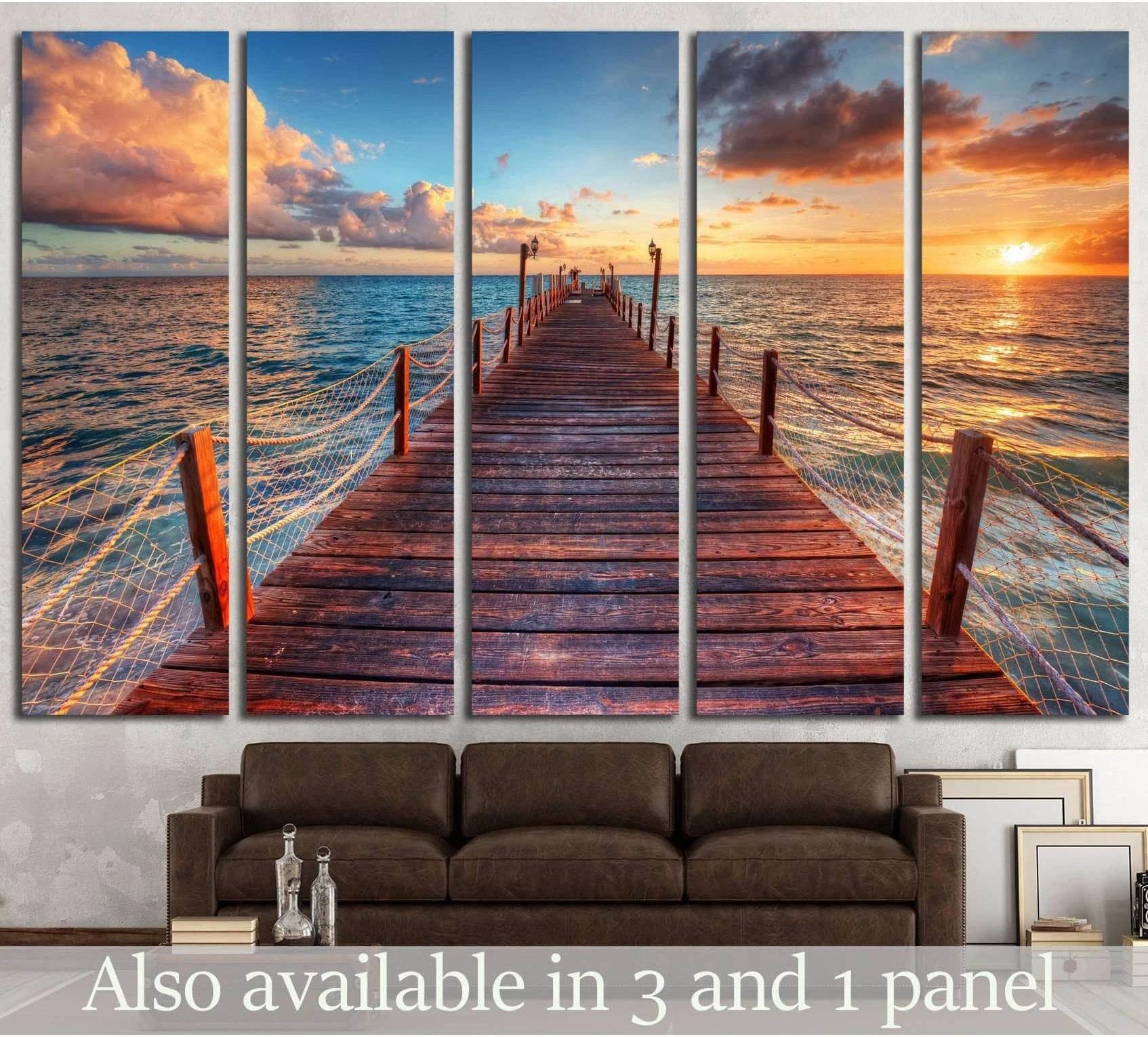
Best for ocean horizon
Brilliant sunrise on a sea pier with azure waters №1816 Ready to Hang Canvas Print
£60.82
A clear pier line and distant sea horizon create visual depth, making it ideal above a bed or opposite the bed.
View print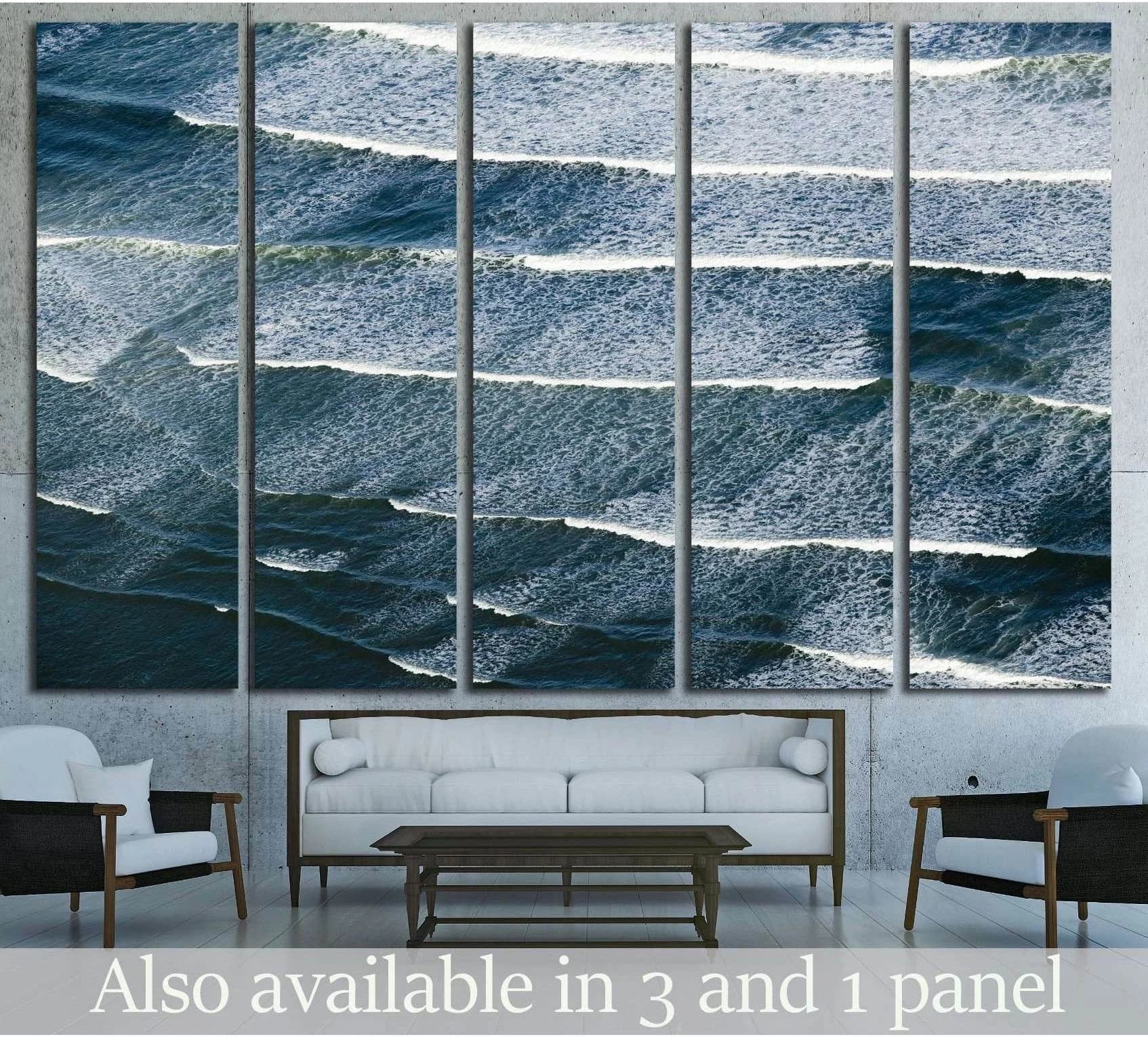
Best for water movement
Breaking ocean waves south of Portland, Maine №2543 Ready to Hang Canvas Print
£60.82
Soft wave rhythm adds blue-space energy without the visual clutter of a busy city or dense abstract composition.
View print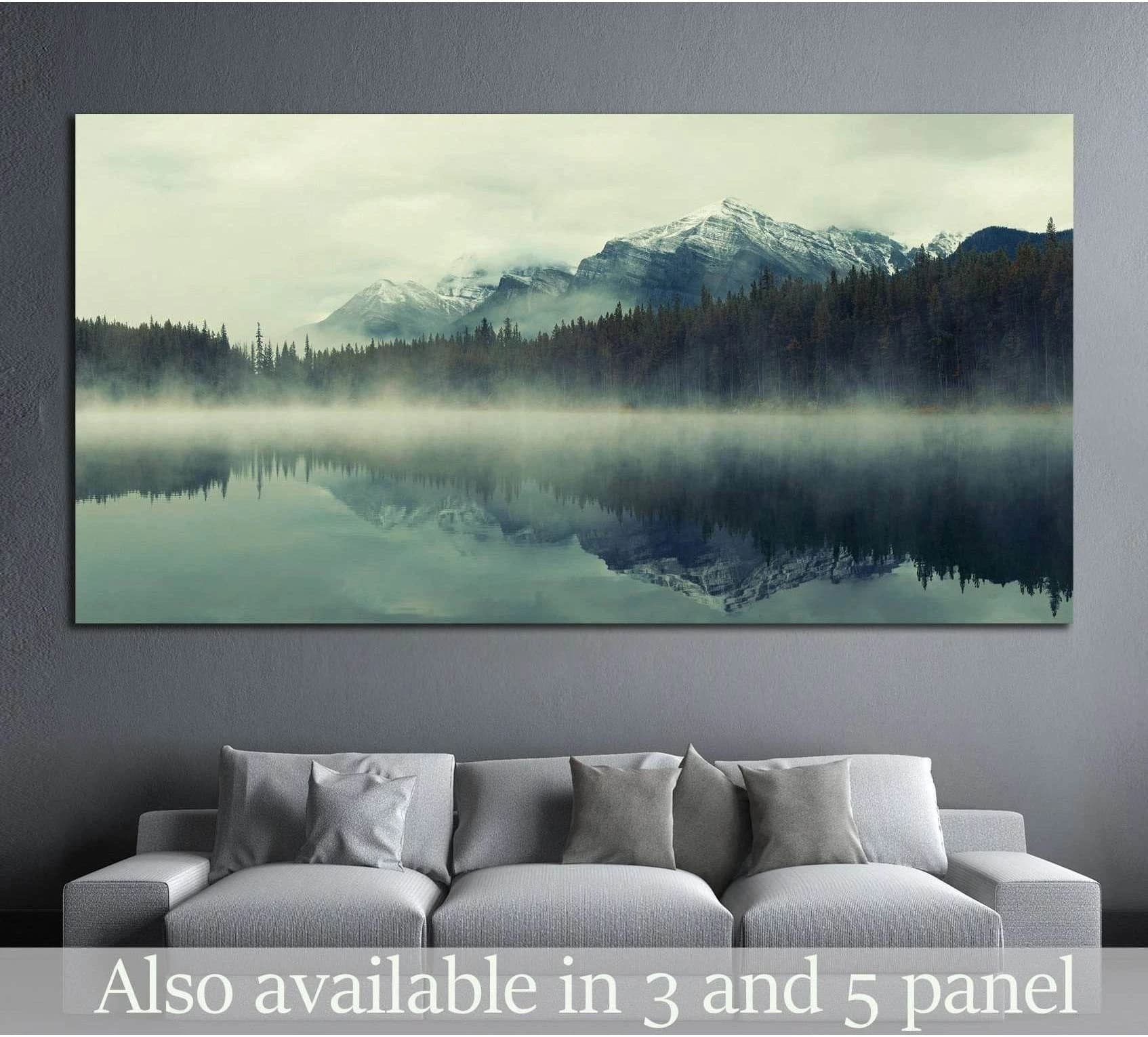
Best for quiet depth
Misty Mountain Lake Reflections Canvas Print, Cool Grey
£60.82
Lake, mountain and sky layers give the wall a spacious, settled feeling for bedrooms and calm living rooms.
View print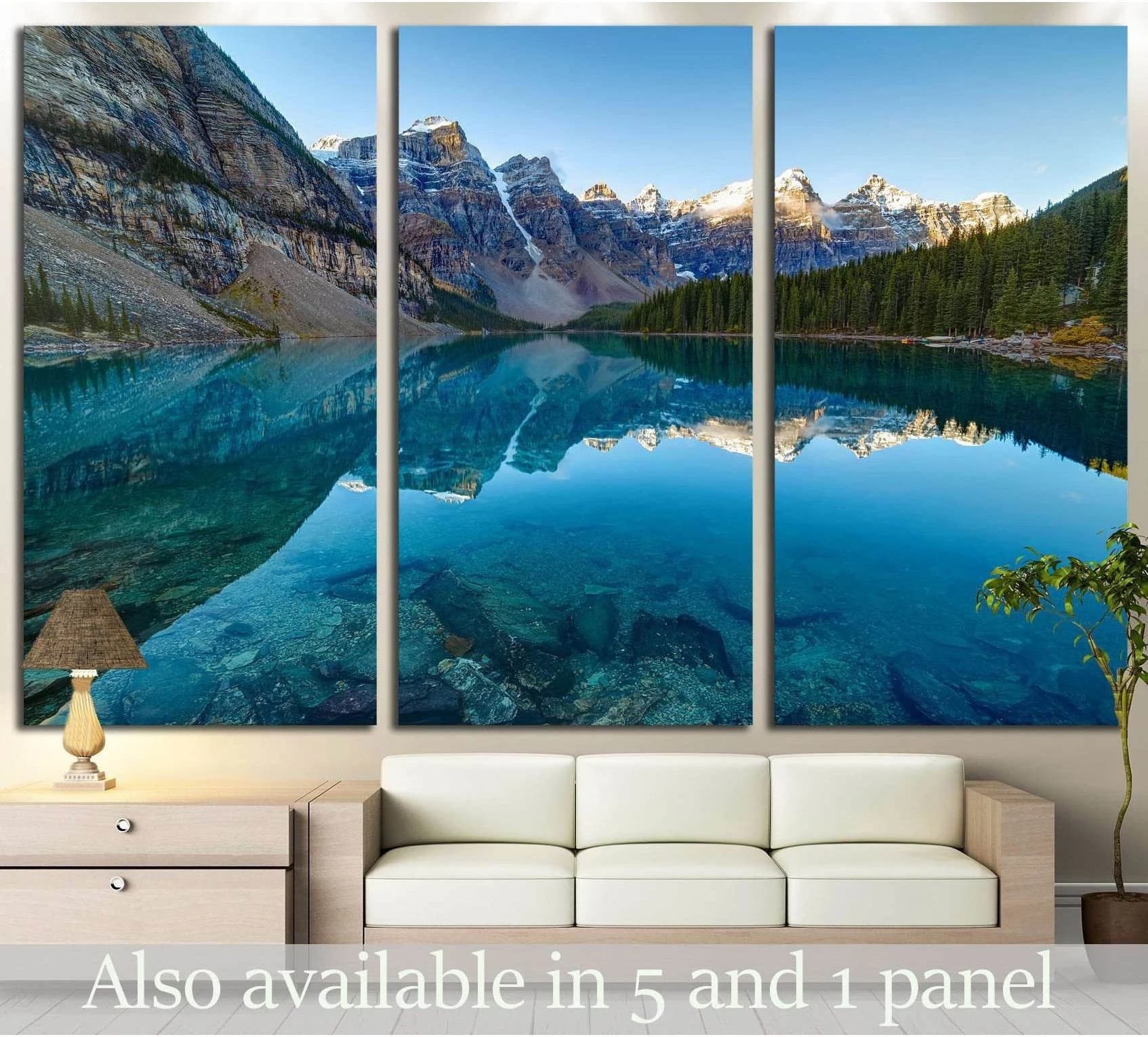
Best panorama
Moraine lake panorama in Banff National Park, Alberta, Canada №2009 Ready to Hang Canvas Print
£60.82
The wide landscape format helps a bedroom, hallway or sofa wall feel more open.
View print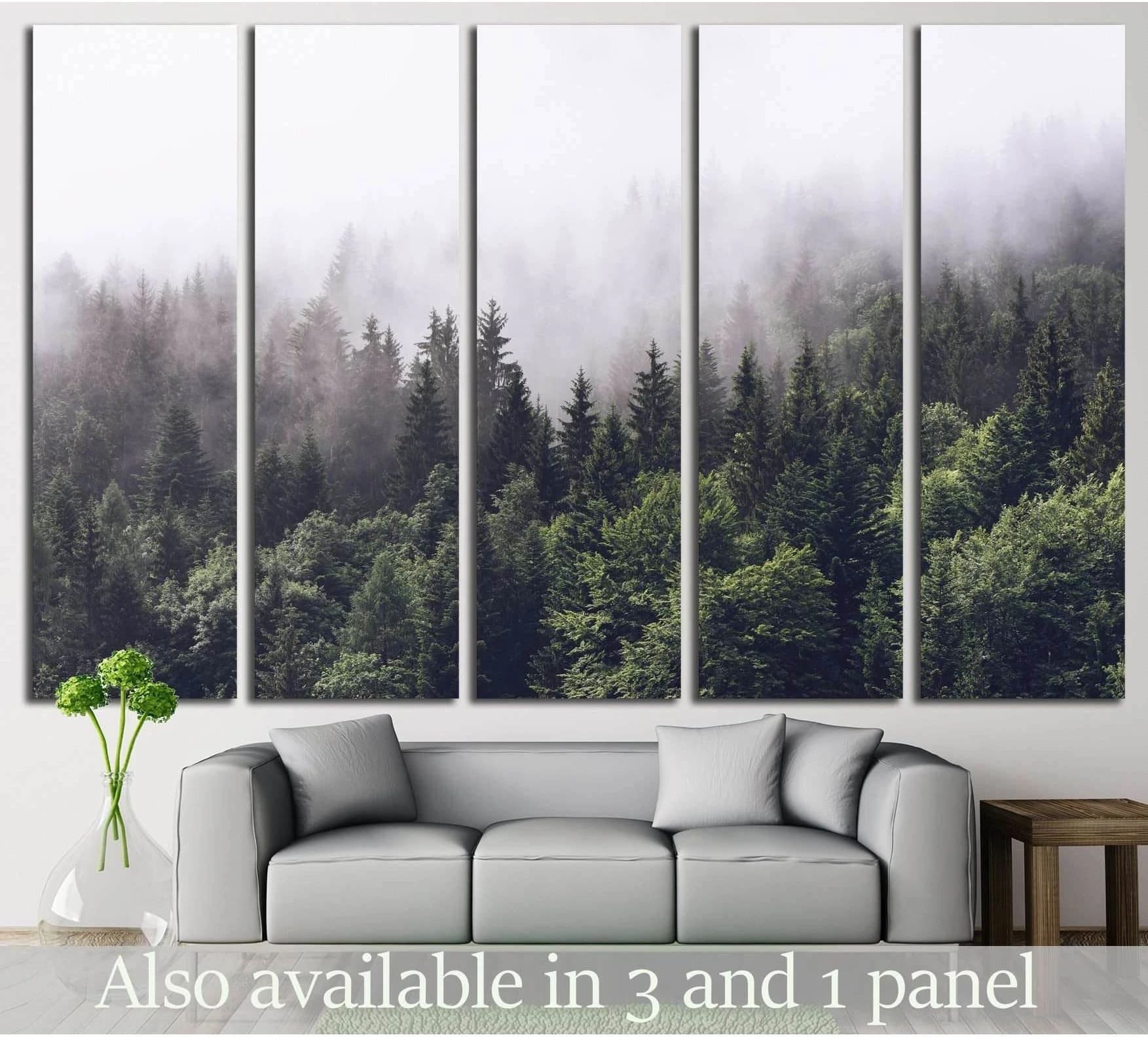
Best for refuge
Forest №715 Ready to Hang Canvas Print
£60.82
Tree density and natural shelter cues create a quiet, enclosed feeling without visual harshness.
View print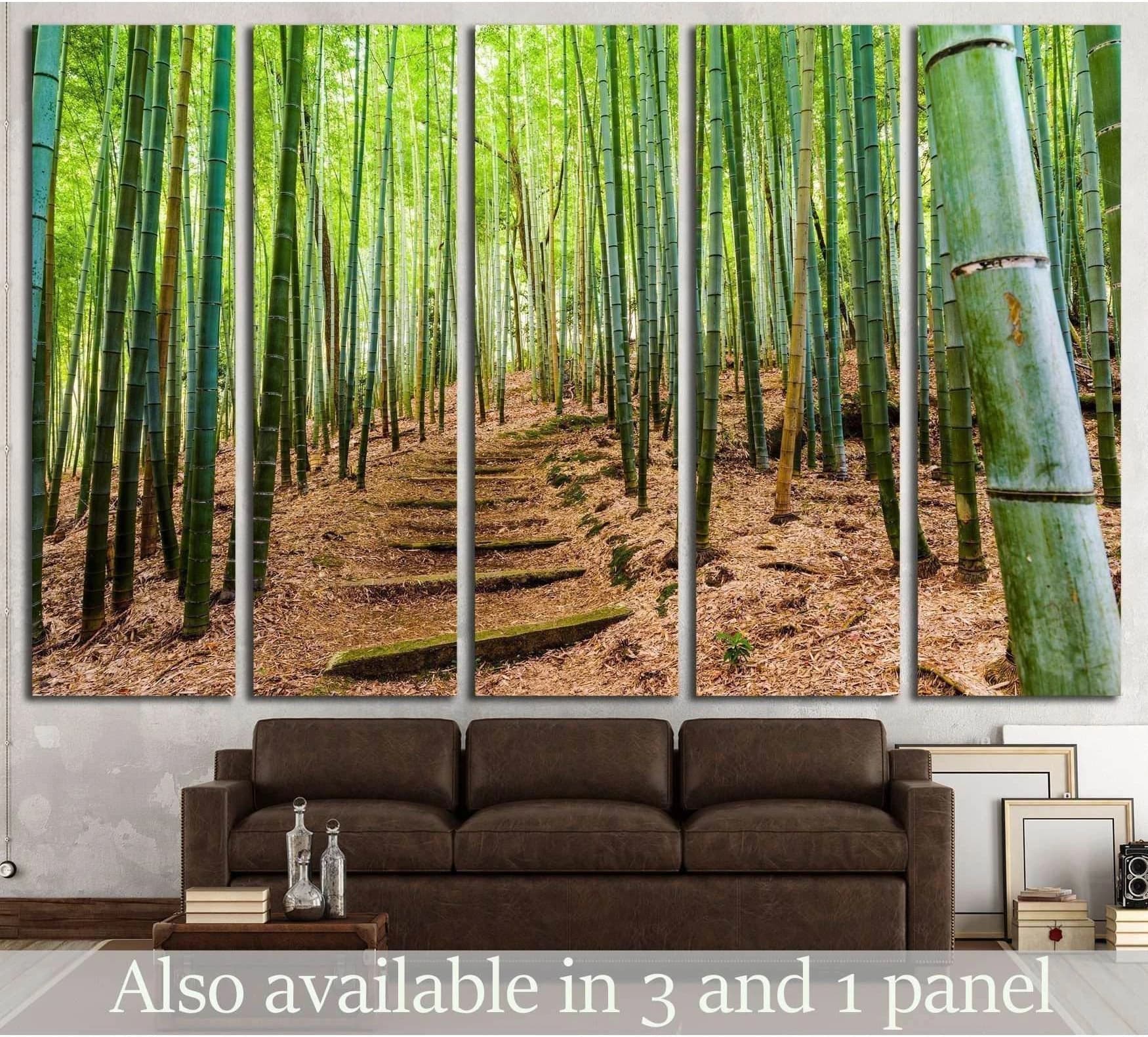
Best soft fascination
Kyoto, Japan bamboo forest №1987 Ready to Hang Canvas Print
£60.82
Bamboo repetition gently holds attention, making it strong for bedrooms, reading corners and home offices.
View print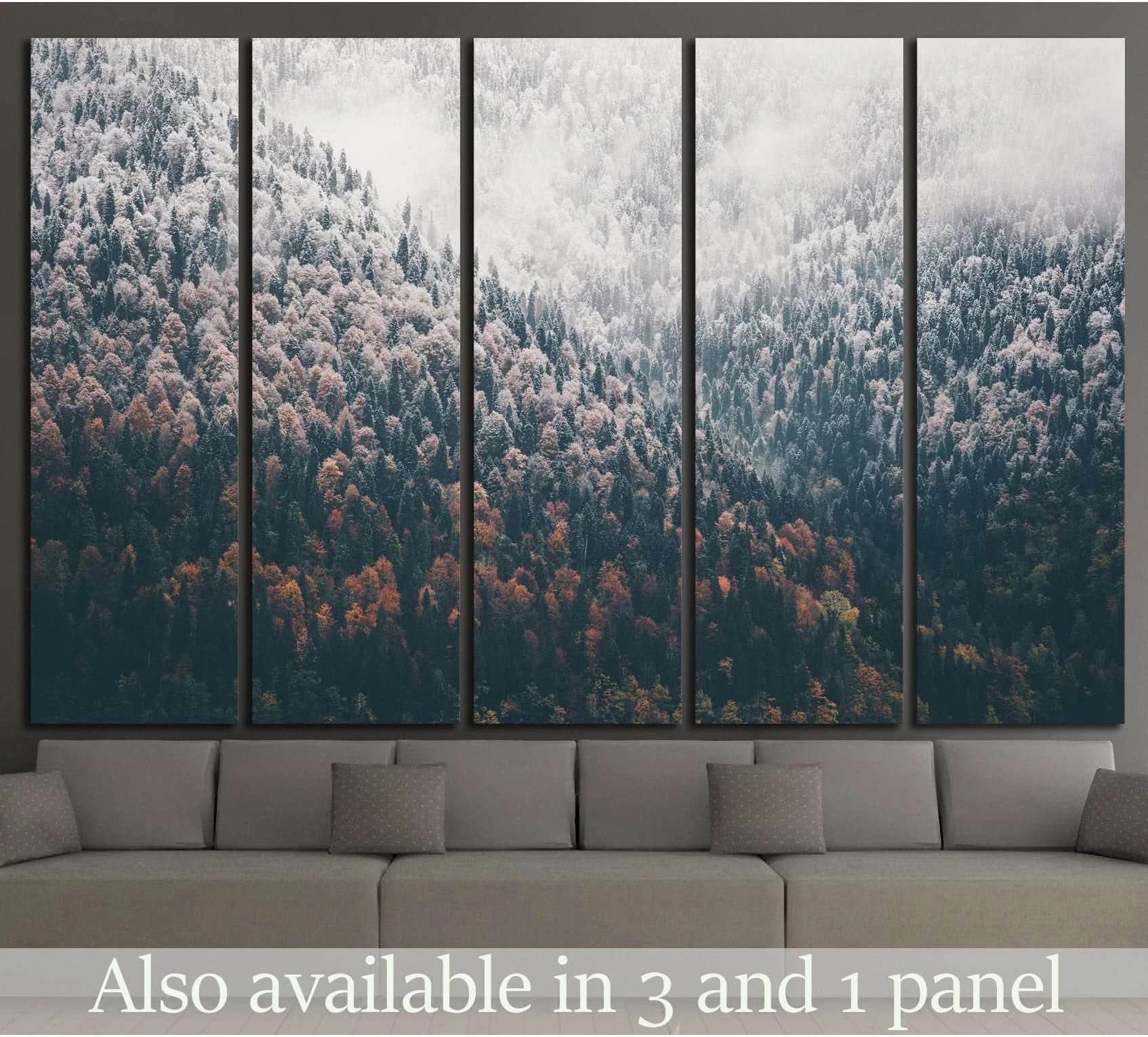
Best misty calm
Foggy Autumn Coniferous Forest Landscape №1320 Ready to Hang Canvas Print
£60.82
Fog lowers contrast and softens the scene, which helps the artwork feel restful rather than visually loud.
View print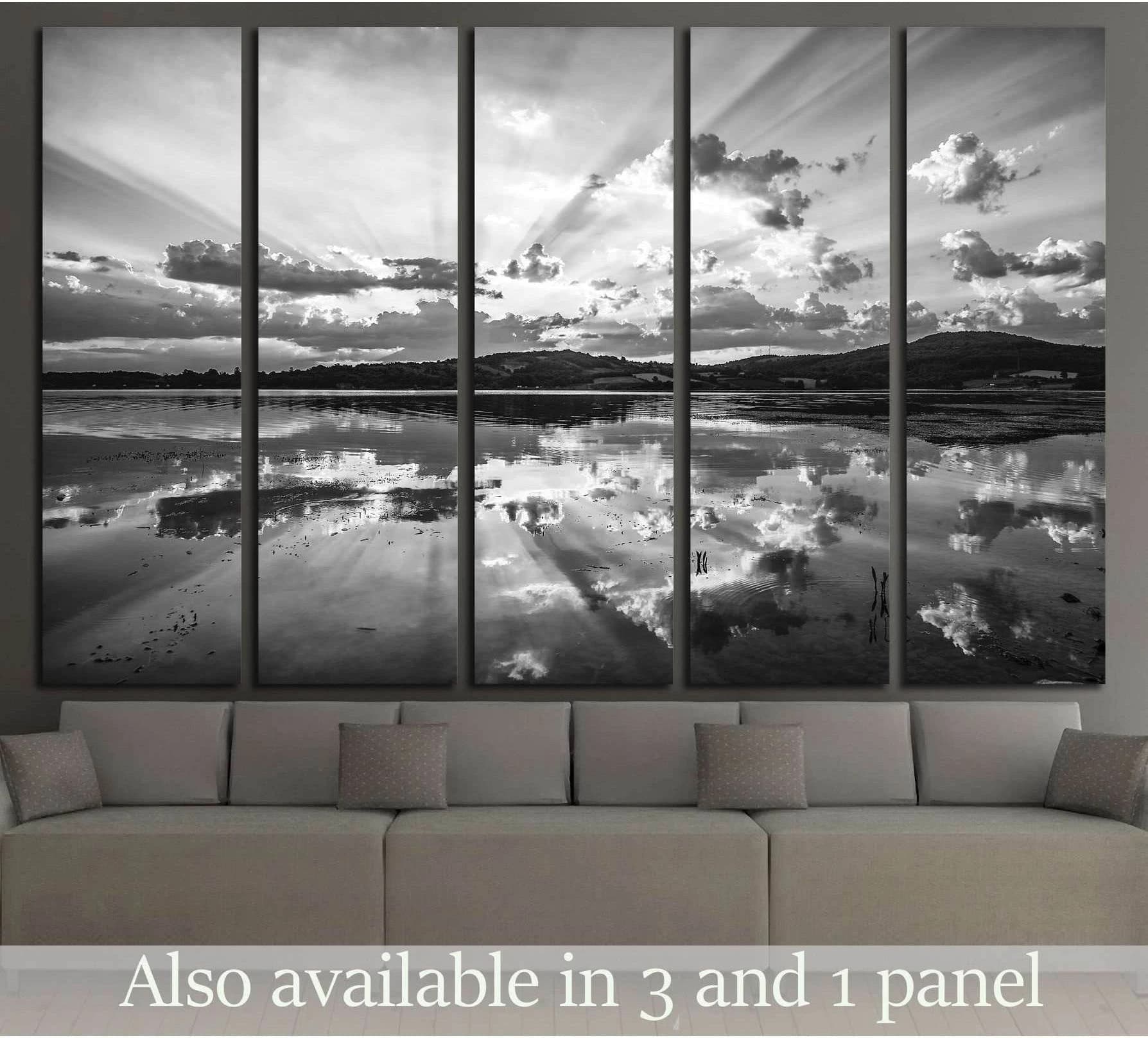
Best monochrome calm
Beautiful lake black and white №2693 Ready to Hang Canvas Print
£60.82
Black-and-white lake imagery keeps the natural depth cue while reducing colour stimulation.
View printHow should you choose calming art for each room?
Choose calming art by matching the room’s emotional job. A bedroom needs downshifting, a living room needs social ease, a home office needs attention recovery and a hallway needs a transition cue.
Bedroom
Living room
Office
Bathroom
| Room | What the brain needs | Best image type | Better to avoid |
|---|---|---|---|
| Bedroom | Safety, lower stimulation, visual spaciousness | Ocean horizon, misty forest, quiet lake | High contrast, busy abstracts, dramatic storms |
| Living room | Comfort, openness, conversation-friendly calm | Lake, mountains, soft landscape, botanical art | Art that dominates the whole room emotionally |
| Home office | Micro-restoration between tasks | Forest path, trees, bamboo, distant view | Overly sleepy images if focus is needed |
| Bathroom | Spa cue, freshness, water continuity | Waterfall, ocean, pale coastal art | Dark heavy scenes |
| Hallway | Transition and visual expansion | Long path, pier, mountain depth | Tiny scattered prints with no anchor |
| Guest room | Broad appeal and low emotional risk | Soft nature, neutral coastal, lake view | Very personal or intense imagery |
Room
What the brain needs
Best image type
Better to avoid
Room
What the brain needs
Best image type
Better to avoid
Room
What the brain needs
Best image type
Better to avoid
Room
What the brain needs
Best image type
Better to avoid
Room
What the brain needs
Best image type
Better to avoid
Room
What the brain needs
Best image type
Better to avoid
What colours make calming images work better?
Calming images usually work best when their colour palette stays within soft blues, muted greens, warm neutrals, misty greys, pale sand, soft ivory and gentle earth tones. These colours reduce the sense of visual urgency and make the artwork easier to live with every day.
For bedrooms, soft blue and green nature scenes are usually easier than red, orange, neon or high-contrast black-and-white. Strong warm colours can still work, but they should be used as small sunrise or sunset accents rather than dominating the whole wall.
Is abstract art calming too?
Abstract art can be calming when it has low contrast, slow movement, soft edges, balanced spacing and a limited colour palette. Abstract art becomes less calming when it uses sharp diagonals, high saturation, dense pattern or strong red/black contrast.
Nature art has an advantage because the brain can quickly identify the scene as landscape, water, forest, sky, horizon or shelter. Abstract art asks the viewer to interpret more. That interpretation can be beautiful, but it is not always restful.
For a sleep-first bedroom, choose Abstract & Watercolor Wall Art only when the composition feels spacious, soft and uncluttered. For stronger biological calm cues, start with Beach & Waves Art, Nature Wall Art or Trees Wall Art.
What is the safest formula for calming bedroom wall art?
The safest formula is: one large natural image, one clear resting point, low visual clutter and a palette that already exists in the room. The art should feel like an extension of the room, not a loud object competing with the bed, curtains, rug or lighting.
Ready to make the room feel calmer?
Start with Bedroom Wall Art for sleep-friendly choices, or go straight to Beach & Waves Art for horizon-led ocean prints.
Evidence strength: what can we honestly say?
The strongest evidence does not say that buying one print will medically reduce stress. It says that visual nature, blue-space exposure and restorative environmental cues can affect attention, stress recovery and perception. That distinction matters because good design advice should be useful without pretending to be medical treatment.
| Claim | Evidence strength | How Zellart should phrase it |
|---|---|---|
| Natural views can support recovery and reduce stress markers | Strong | Natural views are linked with recovery and stress reduction in environmental psychology research. |
| Forest and nature scenes can restore directed attention | Strong | Forest and nature imagery can support attention restoration through soft fascination. |
| Blue-space exposure is linked with wellbeing and stress reduction | Moderate to strong | Water imagery aligns with blue-space research on stress and wellbeing. |
| Digital waterscapes can reduce stress measures | Moderate | Digital waterscapes have reduced stress measures in controlled research. |
| A specific print lowers cortisol | Weak unless directly tested | Do not claim this. |
| Beach art outsells abstract in bedrooms | Only if Shopify data confirms | Use first-party analytics only. |
Claim
Evidence strength
How Zellart should phrase it
Claim
Evidence strength
How Zellart should phrase it
Claim
Evidence strength
How Zellart should phrase it
Claim
Evidence strength
How Zellart should phrase it
Claim
Evidence strength
How Zellart should phrase it
Claim
Evidence strength
How Zellart should phrase it
Ulrich’s 1984 study compared 23 surgical patients with tree views and 23 with brick-wall views; the tree-view group had a shorter average postoperative stay, fewer negative notes and lower use of moderate or strong analgesics.[3] Ulrich’s 1991 stress-recovery study then found faster and more complete recovery during natural-scene exposure than urban-scene exposure.[4]
FAQ
What kind of wall art is most calming?
The most calming wall art usually shows ocean horizons, quiet lakes, misty forests, soft mountains, bamboo paths, gentle waterfalls or spacious natural landscapes. These scenes combine visual depth, natural order and low-threat cues, which makes them easier for the brain to process than chaotic or high-contrast imagery.
Why does ocean wall art feel relaxing?
Ocean wall art feels relaxing because it gives the eye a stable horizon, rhythmic water patterns and a sense of distance. Blue-space research links water environments such as coasts, rivers and lakes with mental health and wellbeing benefits, although a specific print should not be described as a medical treatment.
Is forest wall art good for a bedroom?
Forest wall art is good for a bedroom when the image is soft, misty, spacious and not too dark. Forest scenes can create soft fascination, which means the image gently holds attention without demanding effort. That makes forest prints useful for bedrooms, reading corners and calm home offices.
Is abstract art calming or stressful?
Abstract art can be calming if it has soft colours, slow movement, low contrast and plenty of visual space. It can feel stressful when it has sharp shapes, dense pattern, neon colour or aggressive contrast. For sleep-first rooms, natural landscapes are usually the safer calming choice.
What colours are best for calming bedroom art?
Soft blues, muted greens, misty greys, warm neutrals, pale sand, ivory and gentle earth tones are usually best for calming bedroom art. These colours are easier to live with at night and create less visual urgency than bright red, neon orange or high-contrast black.
Should calming bedroom art go above the bed or opposite the bed?
Calming bedroom art can work above the bed when it anchors the room, but placing it opposite the bed makes it the first and last image you see. If the goal is relaxation, choose the wall that your eyes naturally land on when entering the room or lying down.
Can wall art reduce stress?
Wall art should not be marketed as a medical stress treatment. The safer evidence-based claim is that natural images, water cues and restorative visual environments can support stress recovery and attention restoration. Research on hospital views, natural-scene videos and blue-space exposure supports that broader design principle.
What is the best Zellart collection for calming wall art?
Start with Bedroom Wall Art, Beach & Waves Art, Nature Wall Art, Trees Wall Art, Waterfall Wall Art and Mountains. These collections contain the strongest natural cues for calm interiors.
Research sources
Named sources used in this article
This article is based on environmental psychology, attention restoration, biophilic design and healthcare-design research. Core sources include Jay Appleton’s prospect-refuge theory, Rachel and Stephen Kaplan’s Attention Restoration Theory, Roger Ulrich’s hospital-window and stress-recovery studies, blue-space wellbeing research, newer work on digital waterscapes and fMRI responses to natural versus built images.
- [1] Jay Appleton, The Experience of Landscape
- [2] European Centre for Environment and Human Health, Attention Restoration Theory
- [3] Ulrich, View through a window may influence recovery from surgery
- [4] Ulrich et al., Stress recovery during exposure to natural and urban environments
- [5] NIHR / NCBI Bookshelf, green and blue spaces and mental health
- [6] Lin, Shepley and Ong, Blue Space: digital waterscapes and stress
- [7] Kühn et al., Natural and built photographs and fMRI connectivity
Zellart editorial
Read more
Three related Zellart essays to keep the thread going.

Art & Design
The Beige International
How Airbnb, staging and ecommerce taught rooms to look the same, and why walls still need to argue for someone.
Read article
Wall Art Guides
The Dominant Wall Principle
How to choose the one wall that should carry the room, and why large canvas prints work when scale leads.
Read article
Art & Design
The Room That Stares Back
A case for dark, human maximalism through AI images, deep-ocean life, Medusa, protest graphics and Tokyo vintage.
Read article