
1746-1755
Canaletto makes the Thames look ordered, prosperous and civic.
Current promotions: Buy 2 get 1 free | Sales up to 33% on select products | Delivery by: 14 October - 21 October if ordered today
Hanging the next room
London skyline series
Published 14 June 2026 · Updated 14 June 2026 · By Zellart Editorial Team
TL;DR: Why is London skyline art never neutral?
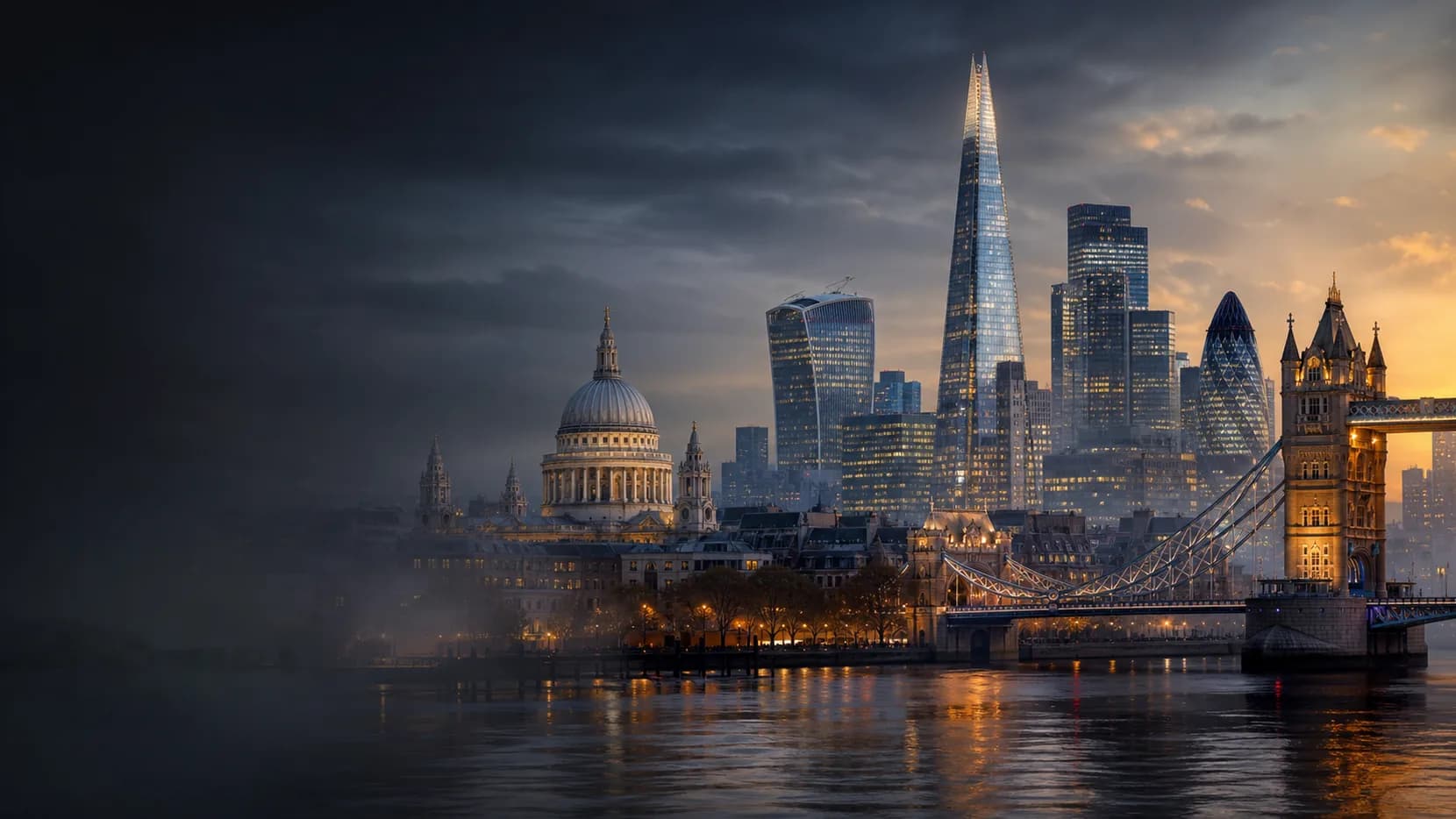
London skyline art is never neutral because London's skyline has been an argument for almost 300 years. Canaletto made the Thames look calm, ordered and civic; Monet turned Parliament into fog and atmosphere; St Paul's became a protected view; post-war London rebuilt upwards; and the Gherkin, the Shard and the Walkie-Talkie turned architecture into public controversy. Canaletto's English period began in 1746 and lasted almost ten years, while Monet produced nearly 100 Thames views between 1899 and 1901.[1][2]
That is why London cityscape wall art feels charged rather than decorative. Choosing the Shard over St Paul's, or Tower Bridge at dusk over Westminster in black and white, is quietly choosing which London you want to live with: historic London, financial London, cinematic London or the unresolved mix of all three.
Canaletto makes the Thames look ordered, prosperous and civic.
Monet dissolves Parliament into fog, reflection and changing light.
St Paul's becomes a view London formally protects.
Post-war rebuilding adds concrete, density and architectural compromise.
The Gherkin, Shard and Walkie-Talkie make height a public argument.
| London skyline image | What it says in a room | Best interior use |
|---|---|---|
| St Paul's / Westminster / Big Ben | Heritage, permanence, ceremony and old London. | Traditional living rooms, studies, offices and reception rooms. |
| Tower Bridge over the Thames | Landmark London with movement, water and cinematic atmosphere. | Hallways, living rooms, hospitality spaces and travel-led interiors. |
| The Shard and City cluster | Modern London, ambition, glass, finance and vertical energy. | Contemporary flats, offices, workspaces and modern lounges. |
| London at dusk or in fog | Mood, memory, romance, rain and atmosphere. | Bedrooms, reading corners, dining rooms and soft neutral interiors. |
| Black-and-white London cityscapes | Architecture, restraint and urban polish. | Minimalist rooms, offices, monochrome schemes and gallery walls. |
This article compares four kinds of evidence: museum records for Canaletto and Monet, official planning documents on protected views and tall buildings, architect/project records for modern towers, and public debate around the changing skyline. The City of London's planning material makes the point plainly: in the Square Mile, tall-building policy has to sit beside listed buildings, conservation areas, historic parks, scheduled monuments and designated views.[4]
London does not have one skyline. It has layers of skyline, and every layer disagrees with the one before it.
Planning and memory
London's skyline feels especially contested because its historic landmarks, protected views, medieval street pattern, global finance district and new towers all occupy the same visual field. The City Plan 2040 directs tall buildings towards areas including the City Cluster, Fleet Valley and Broadgate, while strategic and local views still inform development decisions.[4]
This means London does not behave like a city with one clean postcard silhouette. Manhattan reads as height. Paris reads as controlled historic order. London reads as negotiation: dome, bridge, river, clock tower, glass wedge, office cluster, protected view, planning objection, tourist photograph and commuter memory.
The ordered city
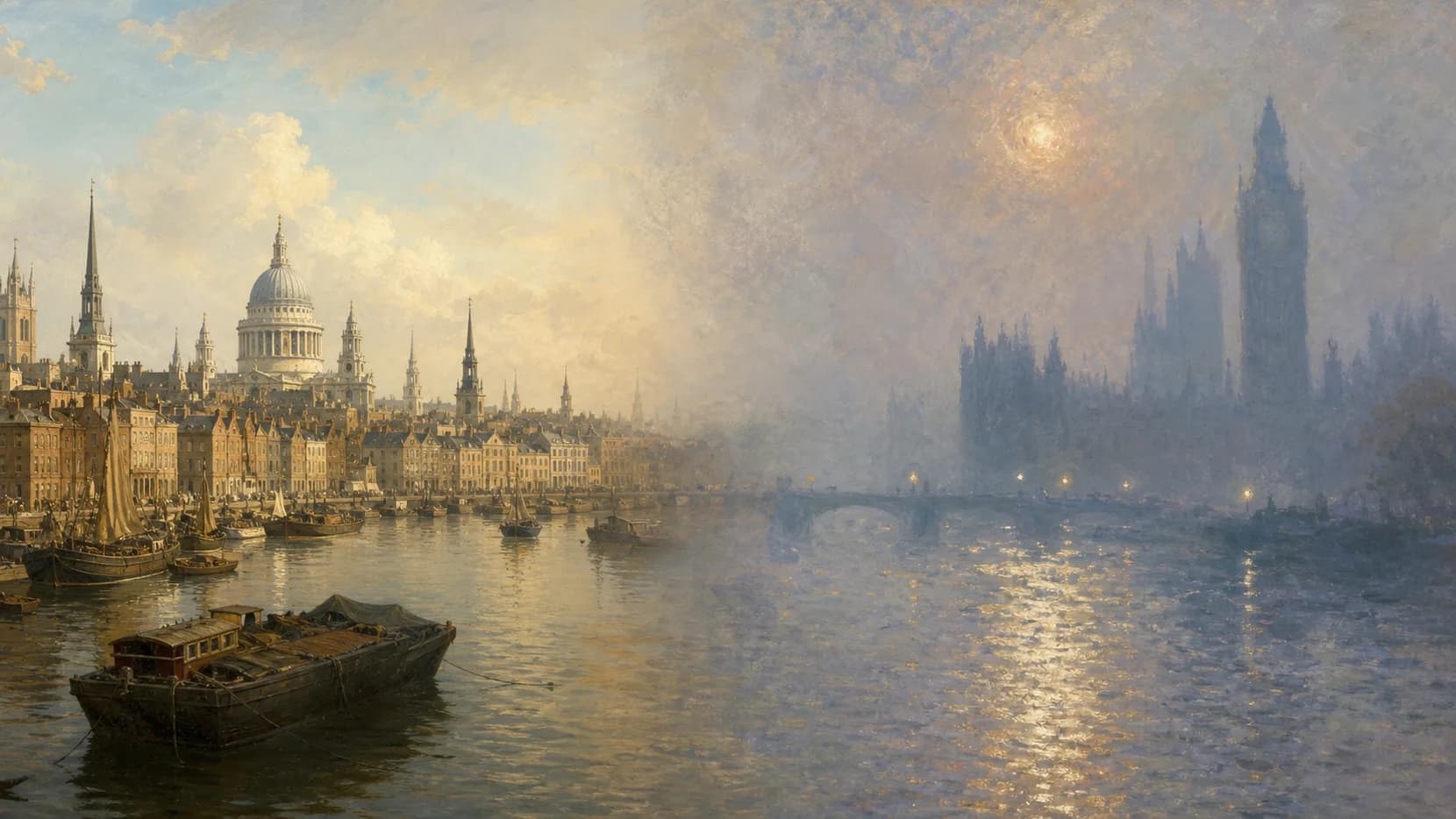
Canaletto taught Londoners to see the skyline as civic theatre: the Thames as a stage, bridges as procession routes, St Paul's as the anchor and river traffic as proof of a prosperous city. In the Courtauld's London view from Somerset House, painted around 1746-1755, the Thames is full of river traffic while St Paul's rises above a skyline of church spires.[3]
Canaletto came to England in 1746 after becoming popular with British patrons and tourists, and his English period lasted almost ten years. Yale Center for British Art describes the exhibition around that period as bringing together more than sixty paintings and drawings from his English stay.[1]
His London was not messy. It was composed. It turned the city into a view that could be owned, hung, admired and understood. That is the beginning of London skyline art as a cultural object: not just a record of buildings, but a statement about order.
The atmospheric city
Monet turned London's skyline into atmosphere by making fog, light and reflection more important than architectural detail. Between 1899 and 1901, Monet painted the Thames repeatedly from rooms overlooking the river, producing nearly 100 London views.[2]
That shift matters because Monet did not treat London as a crisp landmark map. He treated it as weather. A foggy Westminster scene does not say, "Here is a building." It says, "Here is memory, winter light, wet stone and the city half-disappearing."
This is why London skyline canvas prints with reflections, soft blue-grey skies or amber evening light often feel more interior-friendly than harsh daylight city shots. They soften the argument. They let the room enjoy London's drama without turning the wall into a tourist postcard.
The protected city
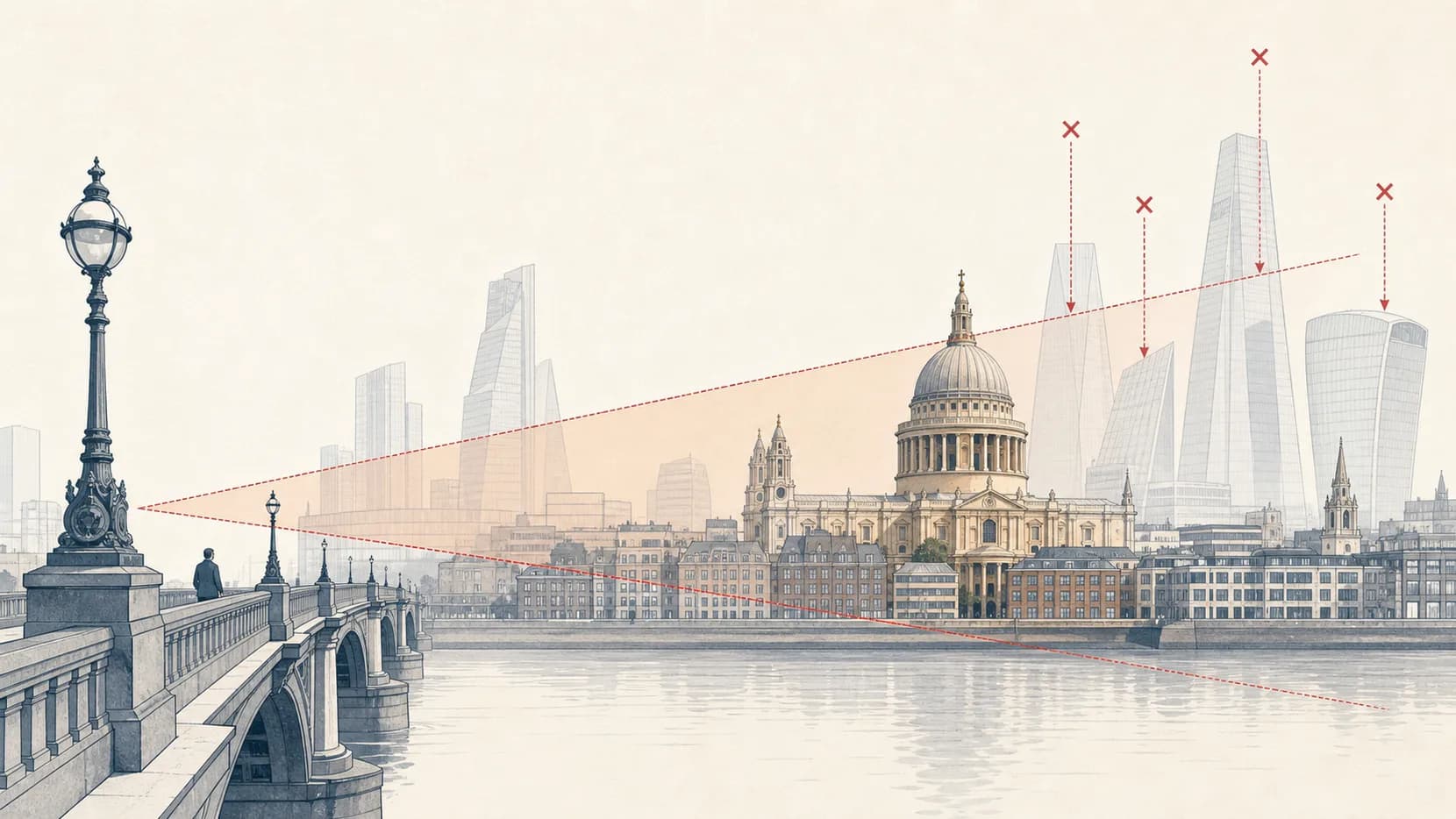
St Paul's became the skyline London agreed to protect because tall buildings could not be allowed to turn every view into a commercial office profile. The current planning framework still treats strategic and local views as constraints on where height should go.[4]
That matters for wall art because St Paul's is not just a landmark. It is the symbol of London's refusal to let the skyline become only commercial. A St Paul's print carries that weight: endurance, restraint, law, memory and skyline discipline.
For interiors, St Paul's works best when you want London to feel grounded. It is less city-break energy and more "this place has survived." Hang it in a study, formal office, hallway, reading room or heritage-inspired living room.
The rebuilt city
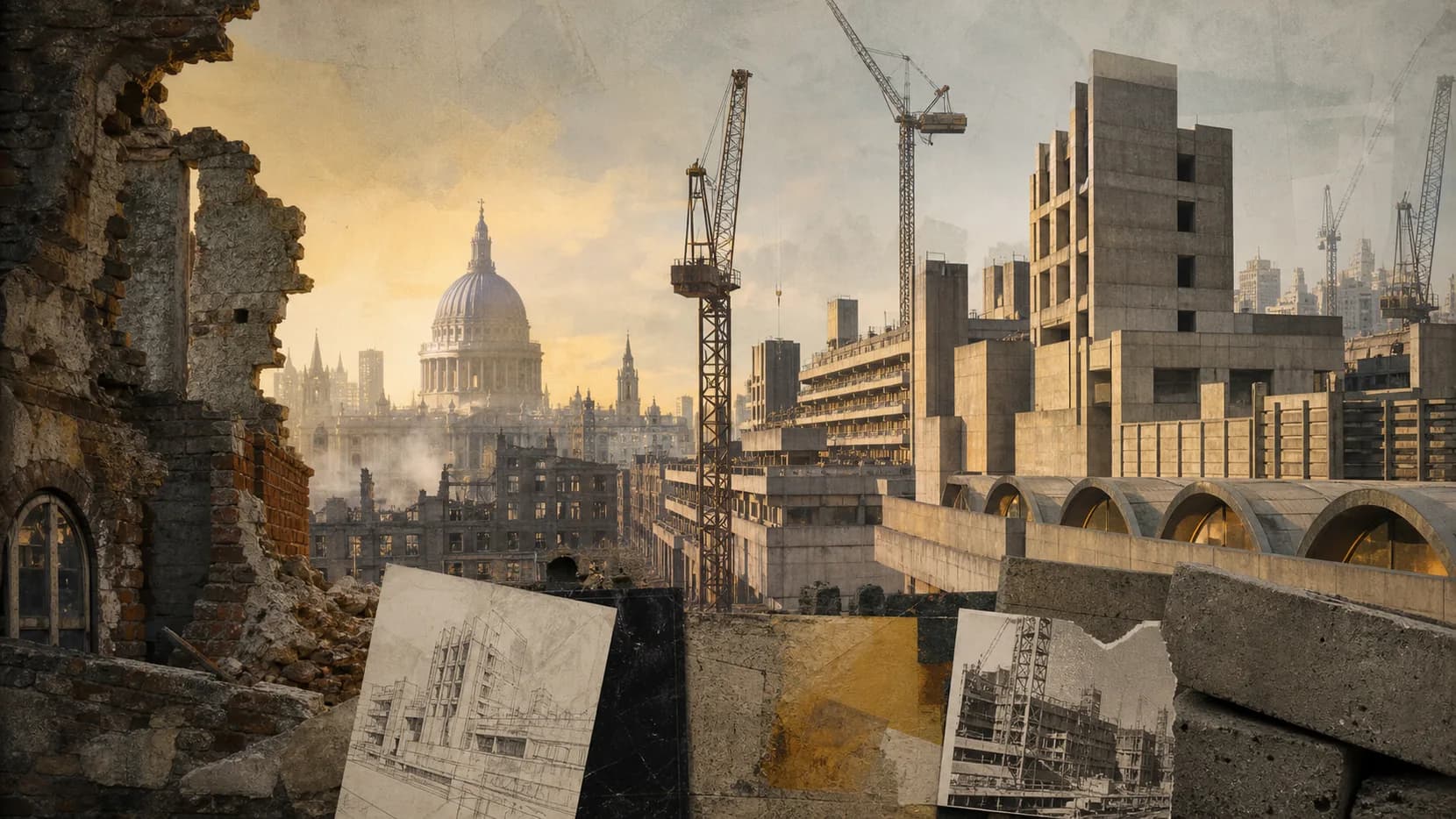
Post-war London rebuilt the skyline into a debate between memory and modernity. The Barbican emerged from wartime damage around Cripplegate and later became one of London's most important post-war architectural complexes. Historic England's list entry records its Grade II status and its role as a major work by Chamberlin, Powell and Bon.[5]
The Barbican matters because it proves that modern London did not begin with the Shard. Long before the glass towers, London was already asking whether modern architecture could sit beside old stone, churches, lanes and ruins. Brutalism made the skyline heavier, blockier and more defensive. The financial towers later made it shinier.
The glass city
The Gherkin, the Shard and the Walkie-Talkie changed the argument because they turned London's skyline into a public conversation about shape, height, symbolism and civic responsibility. Foster + Partners describes 30 St Mary Axe as London's first ecological tall building, with 40 storeys and 46,400 square metres of net office space.[6]
The Shard pushed the argument from office tower to vertical city. Renzo Piano Building Workshop describes it as a mixed-use vertical city, and the project record places the scheme in the 2000-2012 period.[7]
The Walkie-Talkie made the debate more uncomfortable. Its shape became famous not only as a skyline silhouette but also through glare, heat and public-realm criticism; it won the 2015 Carbuncle Cup, reported by Dezeen.[8]
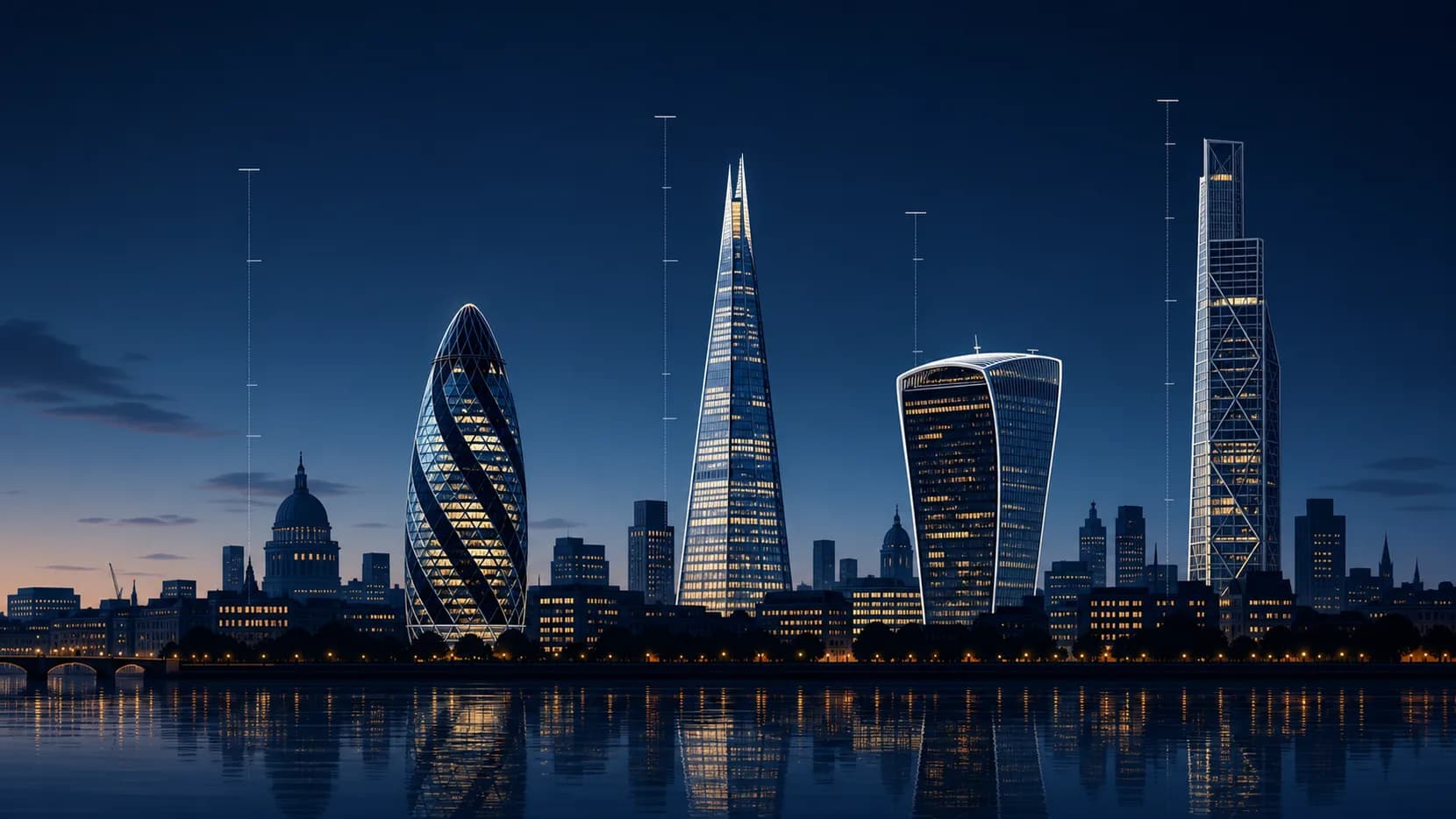
| Building | What it argues for | Why it became part of the debate | What it means in wall art |
|---|---|---|---|
| The Gherkin | Corporate London can be elegant, technical and recognisable. | Its rounded silhouette broke from rectangular office towers and became instantly legible. | Polished office art, architectural interiors and modern city energy. |
| The Shard | London can build vertically and globally without copying Manhattan. | It reframed London as a vertical city and changed views from both sides of the Thames. | Ambitious, contemporary, glass-and-light London prints. |
| The Walkie-Talkie | A skyline icon can become a public design problem. | Its glare, heat and shape made it a cultural controversy, not just a building. | Sharper, more ironic or high-contrast cityscape art. |
| 1 Undershaft | The argument is still expanding upward. | The approved tower is planned at 309.6 metres, matching the Shard in height. | Future London skyline art will increasingly show two peak towers, not one. |
The debate has not slowed down. The New London Architecture Tall Buildings Survey 2026 reports a decade of substantial tower completions in London, keeping the skyline question current rather than historical.[9]
Buying the argument
Choosing London cityscape wall art is really choosing a version of London. A Westminster print leans toward continuity. A Shard print leans toward modern ambition. A Tower Bridge print often reconciles both because the bridge, river and skyline can hold old and new London in one frame.
London's skyline is a living controversy, which gives cityscape wall art of the city an edge. Choosing the Shard over St Paul's, or the Thames at dusk over Parliament in daylight, is quietly taking a side in a debate Londoners never stop having.
For a room, this matters more than people think. Skyline art is usually large, horizontal and placed above sofas, beds, desks or console tables. That makes it a visual anchor. The London you choose becomes the room's argument.
Curated from Zellart
Choose the version of London that fits your room: heritage, modern, cinematic, monochrome or Thames-at-dusk. Product cards use live Zellart product data.
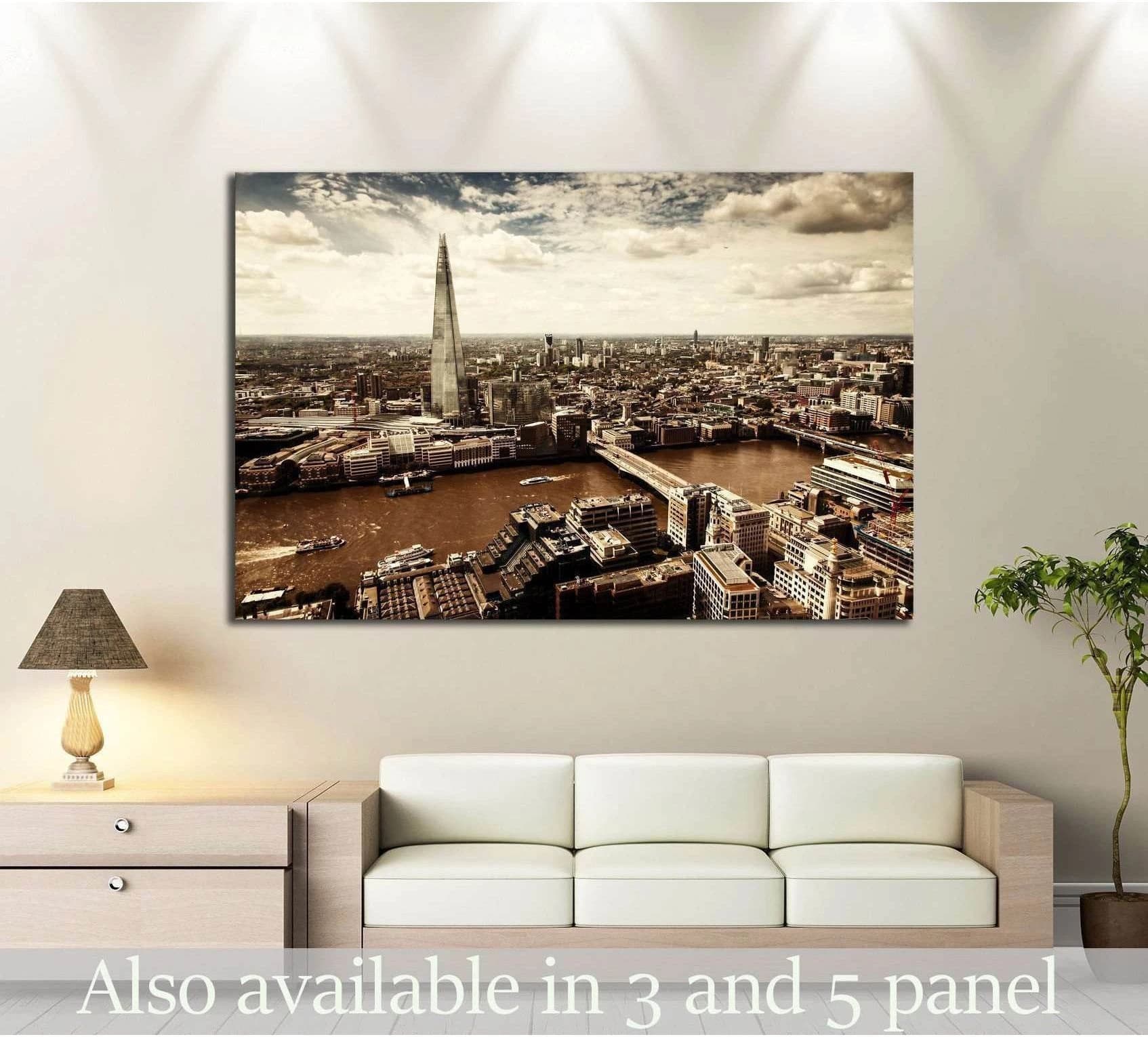
Modern London
£60.82
Available now
Best for: Office, contemporary flat or ambitious living room.
A panoramic London canvas print featuring the Shard and River Thames in warm sepia tones.
View print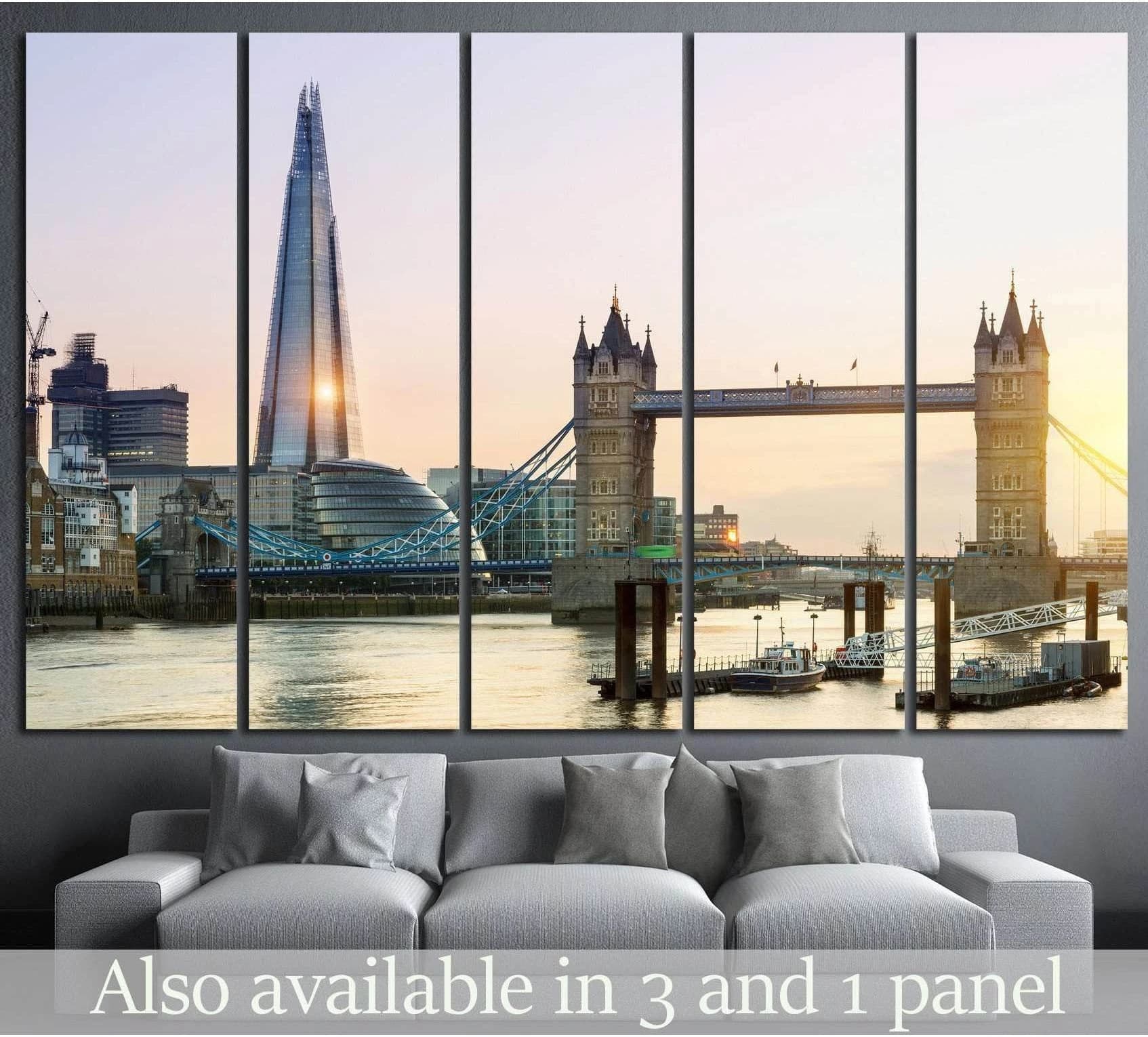
Old + New London
£60.82
Available now
Best for: Living room, hallway or hospitality wall.
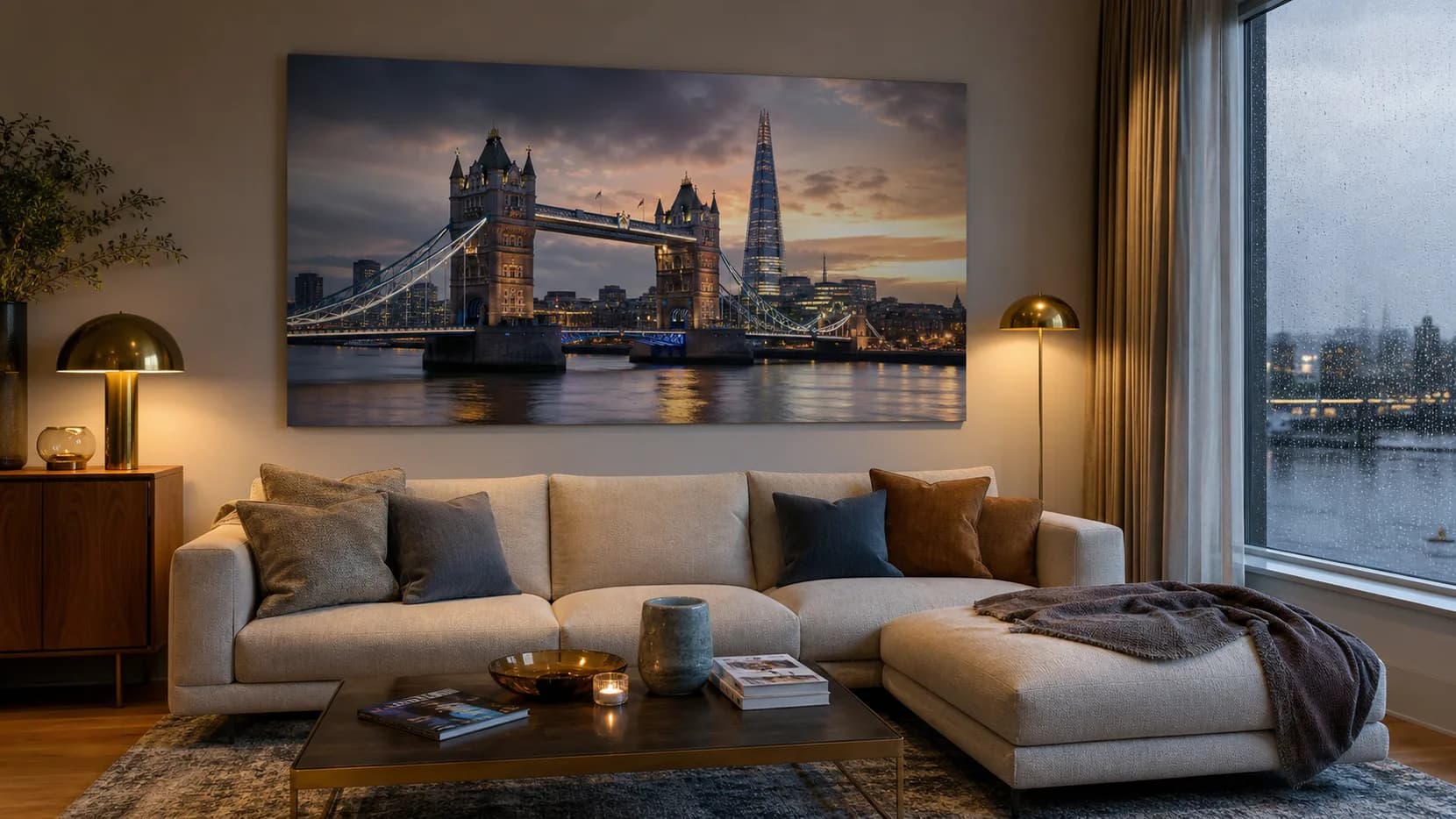
Tower Bridge spans the Thames while the Shard rises behind it, holding heritage and modern London in one frame.
View print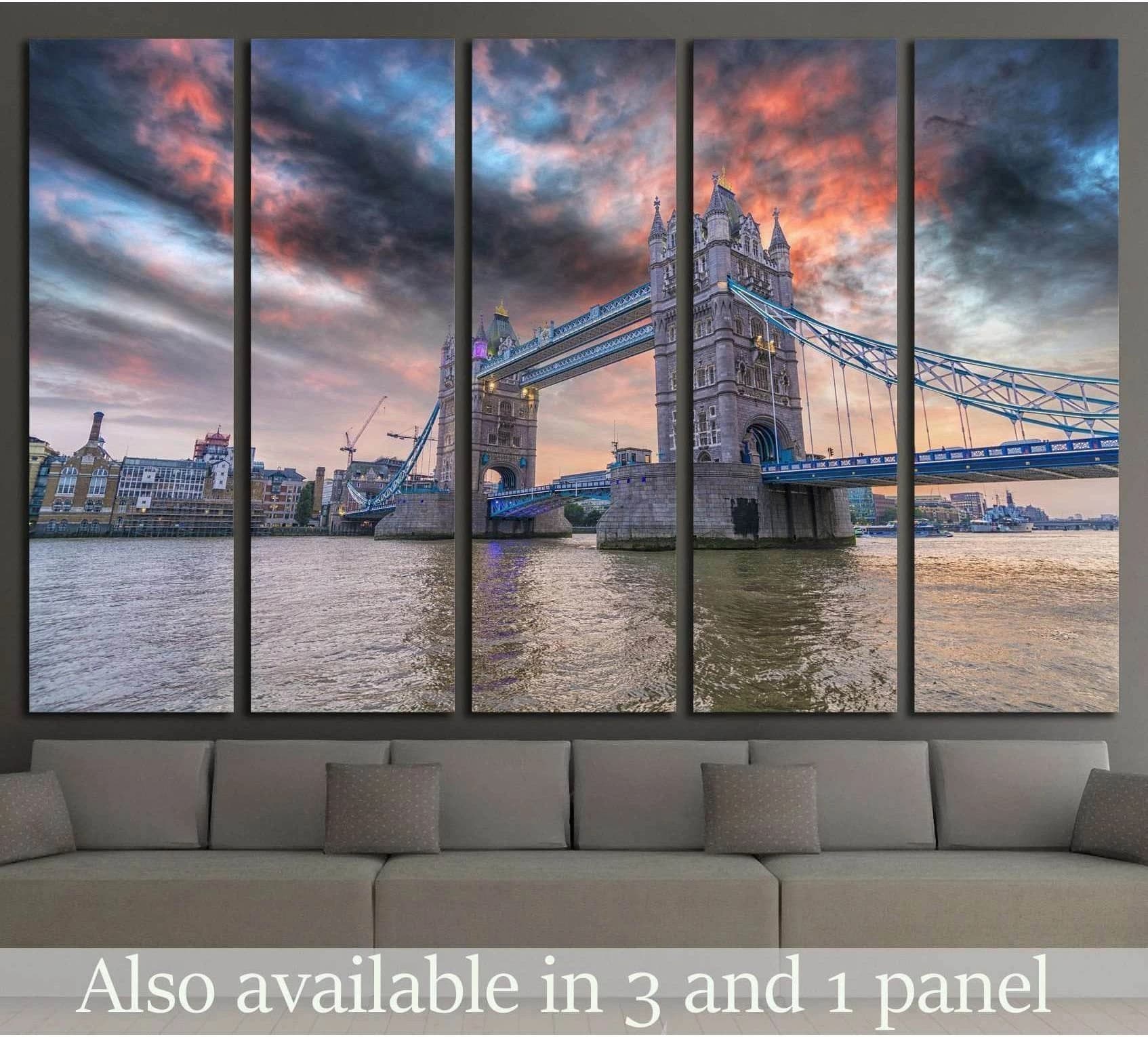
Cinematic Thames
£60.82
Available now
Best for: Dining room, bedroom or warm neutral interior.
Smoky blue, soft violet and sunset orange give the skyline warmth and atmosphere.
View print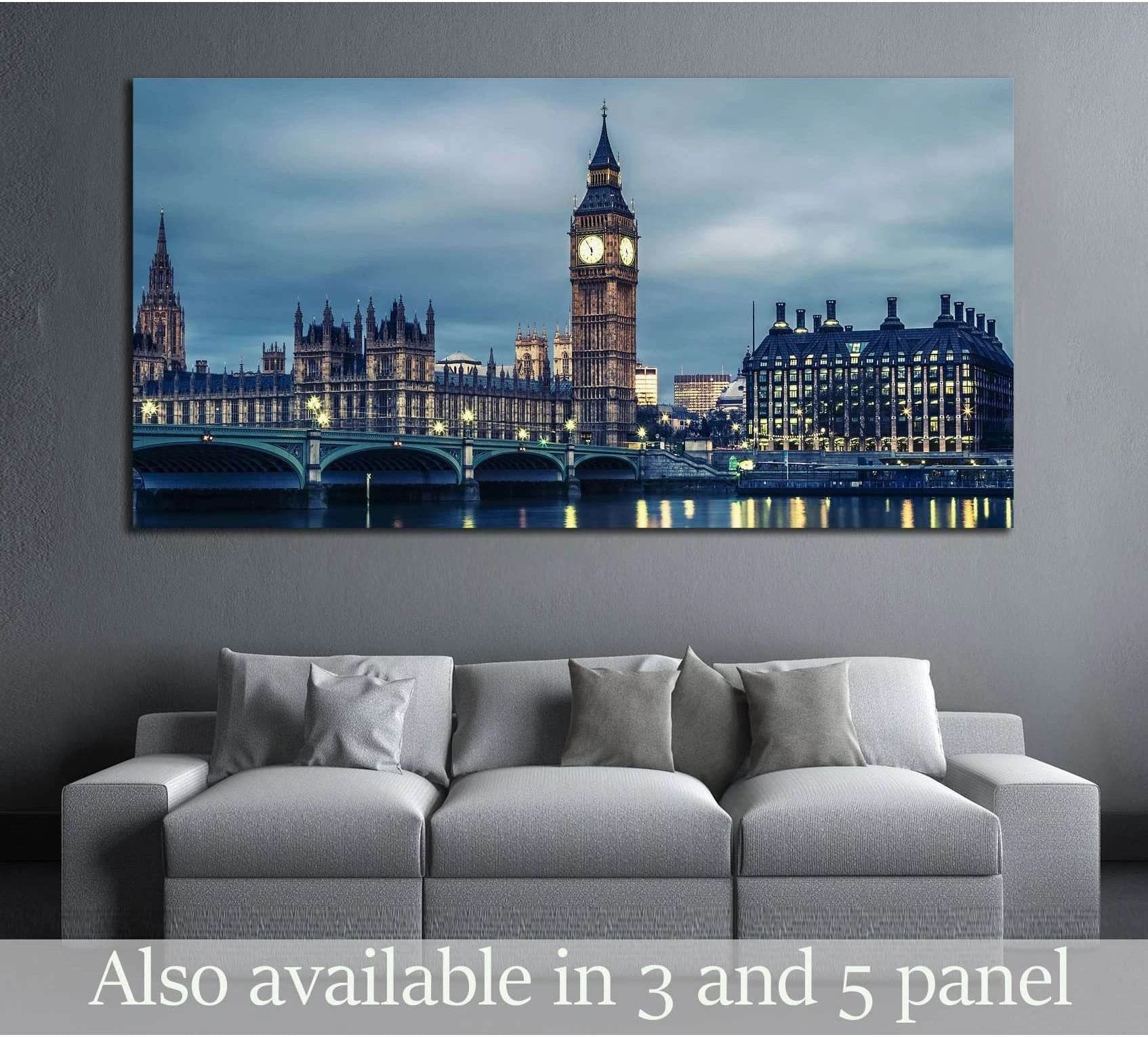
Heritage London
£79.78
Available now
Best for: Study, formal office or classic living room.
Big Ben and Parliament create a stable, ceremonial version of London for traditional rooms.
View print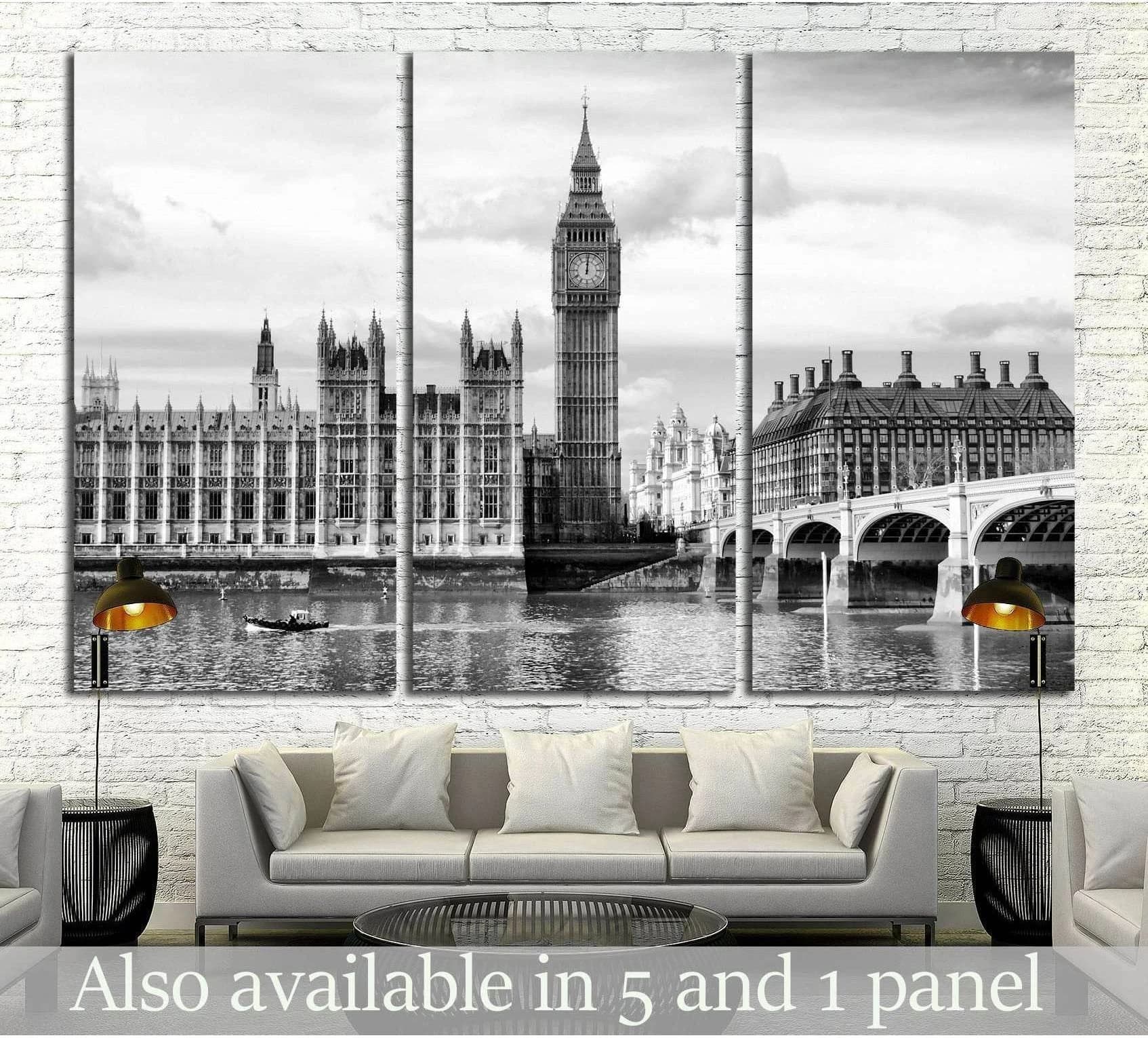
Monochrome Classic
£60.82
Available now
Best for: Office, hallway or monochrome gallery wall.
A black-and-white Westminster composition that turns a familiar landmark into architectural structure.
View print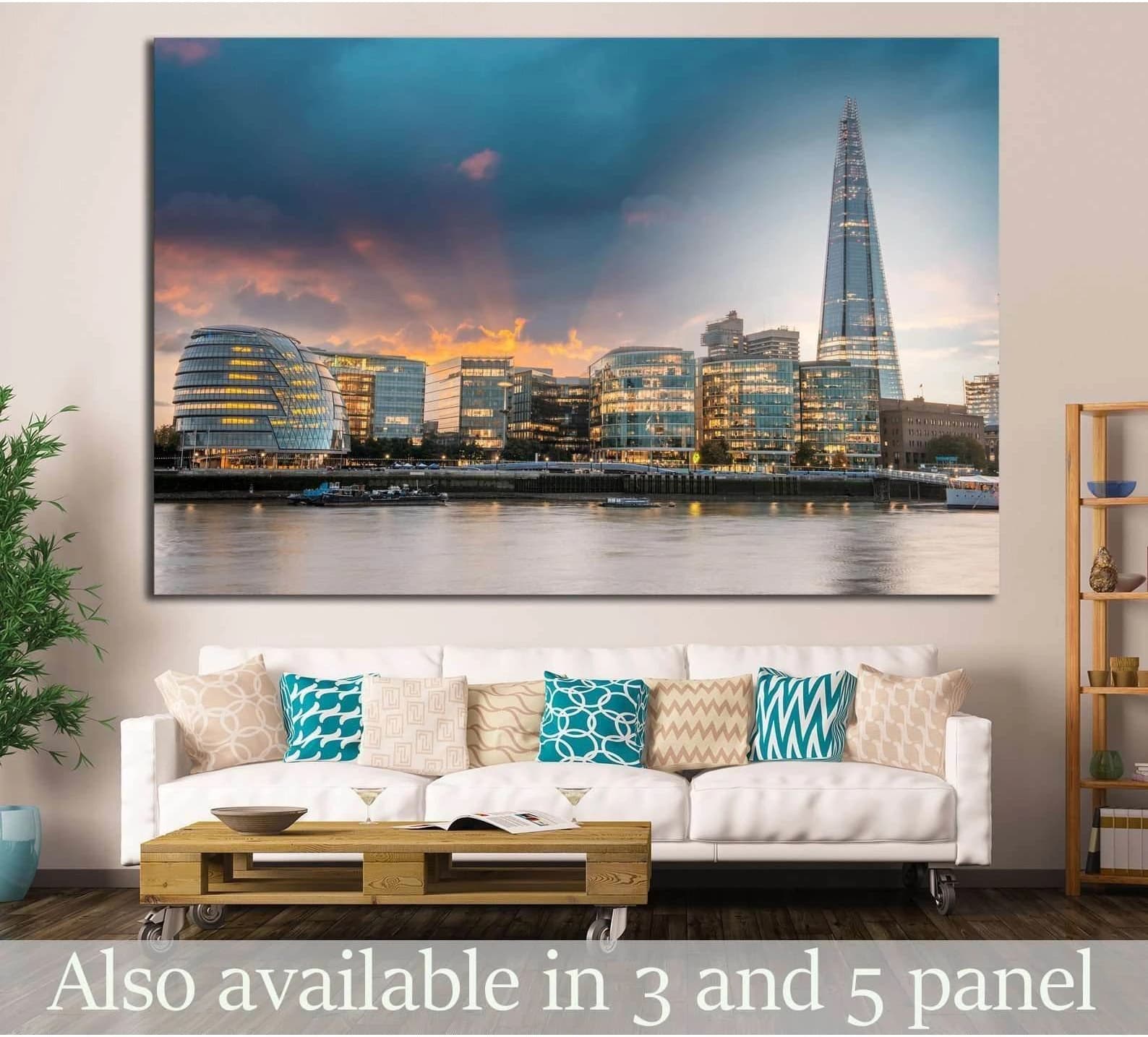
Contemporary Thames
£60.82
Available now
Best for: Modern lounge, office reception or city apartment.
The Shard and City Hall at sunset make London feel contemporary rather than purely historic.
View print
Skyline canvas prints, bridges, waterfronts, streets and architectural landmarks.
Explore
Architectural London without the colour noise, especially strong for offices.
Explore
Large London skyline canvas prints for sofas, offices and open-plan walls.
ExploreInterior use
London skyline prints work because they combine recognition with tension. A skyline gives a room a horizon, which can make a wall feel wider, while London's mixture of river, bridges, domes and towers adds architectural rhythm instead of flat decoration.
A wide Thames panorama works above a sofa because the river creates horizontal calm. A vertical Shard composition works in a hallway because the tower adds height. A black-and-white Westminster print works in an office because it turns tourist familiarity into architectural detail.
London skyline art is better in colour when the mood comes from weather, sunset, river reflections or warm city lights. It is better in black and white when the subject is architecture, silhouette, bridge structure or Westminster detail.
| Choice | Best for | Avoid when |
|---|---|---|
| Colour London skyline art | Warm living rooms, bedrooms, travel-inspired interiors and dusk themes. | The room already has too many bright accents. |
| Black-and-white London wall art | Offices, hallways, minimalist rooms, monochrome interiors and architectural schemes. | The room needs warmth or softness. |
| Sepia London prints | Classic studies, heritage interiors, warm neutrals, leather and wood. | Very cool grey rooms where sepia may look too brown. |
| Blue-hour London prints | Modern flats, evening rooms, calm lounges and cinematic spaces. | North-facing rooms that already feel cold. |
The best London skyline art for a living room is a wide Thames composition that includes water, recognisable architecture and enough open sky to breathe. Tower Bridge with the Shard behind it is especially strong because it holds old and new London in one image.
The best London skyline art for an office is sharper, more architectural and slightly more ambitious. The Shard, City cluster, Gherkin, bridges and black-and-white city views work well because they suggest focus, movement and structure.
The best London skyline art for a hallway is either a narrow panoramic Thames view or a vertical architectural composition. Hallways are transitional spaces, so the artwork should create direction, not clutter.
Put heritage London on your wall if you want the room to feel settled, classic and rooted. Put modern London on your wall if you want energy, ambition and a sharper architectural mood. Put Thames-at-dusk London on your wall if you want the argument softened into atmosphere.
London cityscape art works because the skyline has never stopped changing. Canaletto saw an ordered river city. Monet saw fog and light. Planners protected St Paul's. Post-war architects rebuilt from damage. Glass towers made the skyline global, controversial and unmistakably modern.
That is the reason London skyline art still carries force. It is not just a view. It is the city deciding what it wants to be.
For the broader version of that same argument, read Trouble on the Wall on Klimt, Ai Weiwei, Banksy and the old habit of turning forbidden art into the art everyone remembers.
London's skyline is controversial because historic landmarks, protected views and new commercial towers all compete in the same visual field. St Paul's Heights has protected cathedral views since 1937, while current City planning policy focuses tall buildings into selected areas such as the City Cluster.
The most iconic London skyline views usually include the Thames, Tower Bridge, St Paul's, Westminster or the Shard. A view becomes especially strong when it combines old and new London, such as Tower Bridge in the foreground with the Shard rising behind it.
Monet painted London in fog because fog transformed architecture into light, colour and atmosphere. His Parliament paintings are known for dissolving stone architecture into mist, reflection and changing light.
The Shard is strong for modern London wall art because it immediately signals contemporary London, vertical ambition and glass architecture. It works especially well in offices, modern flats, hallways and rooms with metal, stone, black frames, walnut or minimalist furniture.
Big Ben wall art is traditional, but not outdated. It works best when the room needs heritage, recognition and structure. In black and white, Westminster and Big Ben can feel more architectural and refined.
The best London wall art for a living room is usually a wide Thames skyline print with water, bridge structure and warm dusk light. Tower Bridge, Westminster or the Shard can all work, but the strongest living room pieces have enough open sky or river space to avoid visual clutter.
This article compares museum records for Canaletto and Monet, official planning documents, architect/project records for modern towers, and public debate around London tall buildings. Product links use verified local Zellart handles and corrected UK collection slugs.
Zellart editorial
Three related Zellart essays to keep the thread going.

Art & Design
How Airbnb, staging and ecommerce taught rooms to look the same, and why walls still need to argue for someone.
Read article
Interior Design
What hotel lobbies understand about scale, mood, local reference and first impressions.
Read article
Art & Design
Rome, surrealism, Dubai and deepfakes show how spectacle became a technology of belief.
Read article