
There is a ski slope in the desert. You have heard about it even if you have never been: five runs, real snow, penguins, inside a shopping mall in a city where the outdoor temperature routinely passes 40 degrees Celsius. It is routinely described as absurd, which misses the point spectacularly. The indoor ski slope is not a folly. It is a statement, engineered with total precision, and the statement is: we can do this.
If that logic sounds novel, it is one of the oldest technologies civilisation possesses. Building the impossible in a difficult place, then making sure everyone hears about it, is how power has advertised itself since antiquity. The Romans perfected it. The surrealists painted its inner workings. Dubai industrialised it. And, in the way of all powerful technologies, it has now been miniaturised, democratised and handed to criminals.
This is the story of spectacle as a craft: who invented it, where it works best, and the small, honest version of it that ends up, as everything in this magazine eventually does, on a wall.

Ancient propaganda
The First Influencer State
Begin with the man who wrote the manual. When Augustus took control of Rome after decades of civil war, he faced the eternal problem of illegitimate power: how do you make people believe? His answer, recorded by Suetonius and still quoted because it does the job so efficiently, was construction: he found Rome brick and left it marble. UCLA scholar Diane Favro's Augustan Rome work asks how that claim behaved inside the real city, while the University of Melbourne's account of Augustan imagery shows why monuments, portraits and coinage mattered to the politics of belief.
Because most of the empire would never see Rome, the spectacle needed a distribution system. Coins supplied it. A denarius was a post: image on the front, caption on the reverse, distribution network built into the economy itself. The emperor's face, victories and divine claims passed hand to hand across three continents. Alongside it, the Res Gestae worked like a press release cut into stone.
That is why the classical vocabulary never stopped meaning authority. The column, the laurel, the profile, the marble figure: these are not just old shapes. They are the most successful advertising system Europe ever built, which is precisely the charge that makes classical and statue wall art feel weightier than its subject matter alone explains. You are not hanging a sculpture. You are hanging a technology of belief.
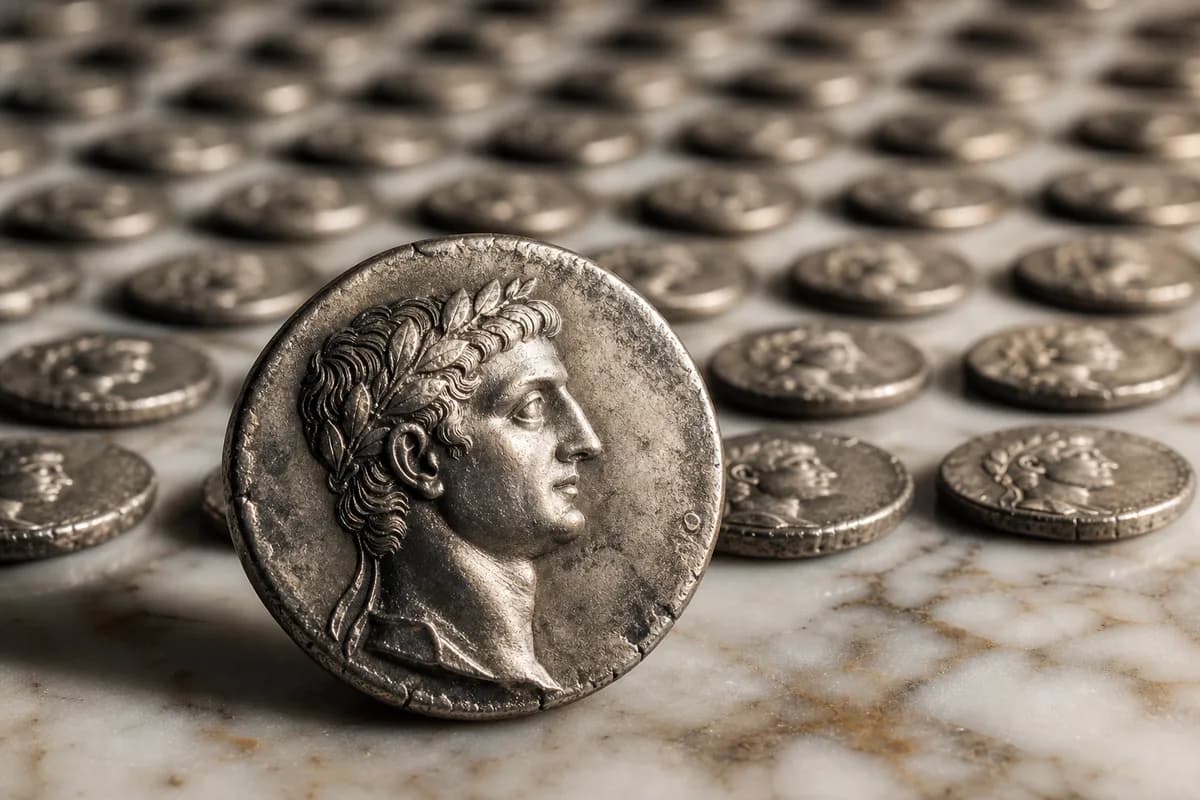
Coin
Authority made portable
Marble
Power made visible
Skyline
Capital made plausible
Deepfake
Belief stripped of substance
Quiet engineering
What Rome Actually Engineered While the Marble Did the Talking
Here is the twist the marble was hiding: Rome's real technical miracle was the cheap grey material underneath. MIT reported in 2023 that researchers studying Roman concrete had identified lime clasts and hot mixing as a source of self-healing behaviour. In their tests, deliberately cracked hot-mixed concrete healed within two weeks, and water could no longer flow through the crack.
The Pantheon's dome is still, after nearly two millennia, the largest unreinforced concrete dome on Earth. The headline spectacle is the oculus, the coffers, the beam of light. The deeper spectacle is that the material still does its job. Rome's press releases were marble. Its actual genius was self-repairing infrastructure.
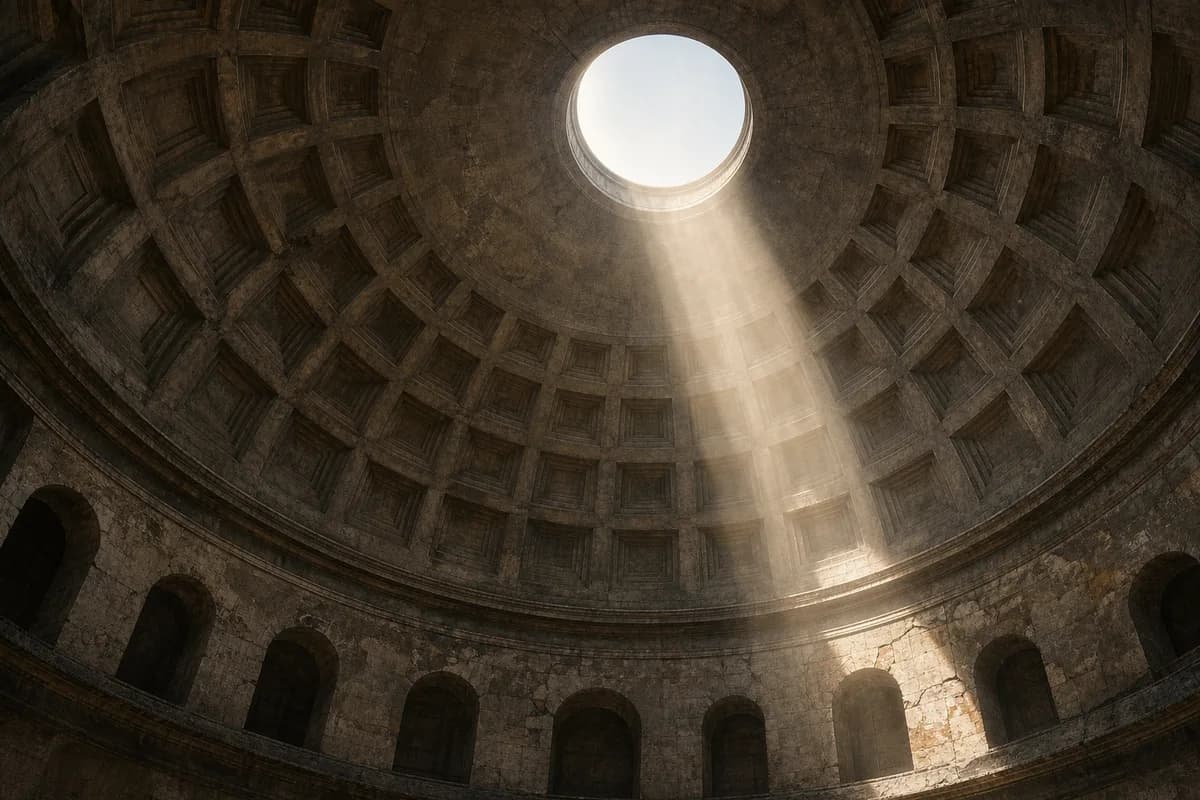
"The empire's press releases were marble; its actual genius was concrete that healed itself. In any spectacle, that is where to look: for the thing that will still be standing.
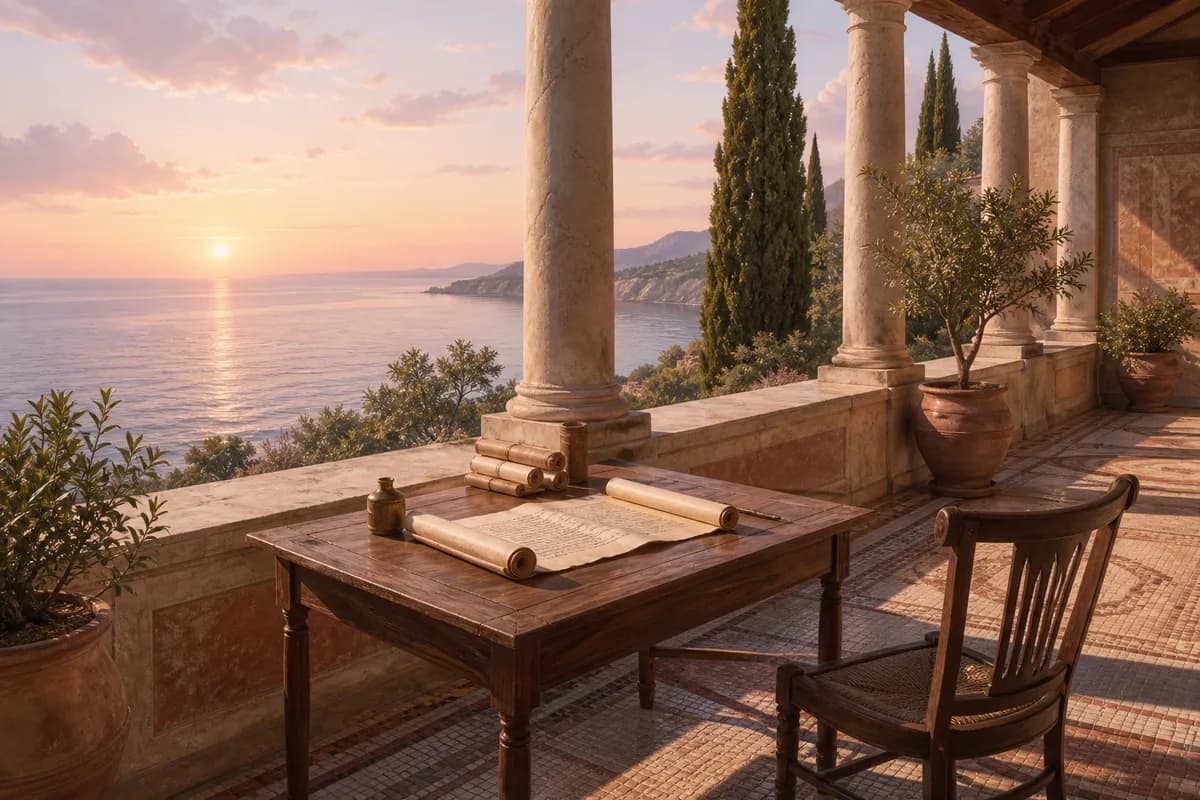
Rome also invented one more modern institution while it was at it. Pliny the Younger described his Laurentine villa as close enough to reach after business in town and far enough for the noise of Rome not to follow; the surviving letter on his seaside villa is, in every useful sense, the original work-from-home literature. The remote worker with a sea view is not a pandemic invention. He is a Roman one, and he too could not stop telling everyone about it.
Desert projection
The Desert of the Mind
The surrealists understood why spectacle works because they understood projection. In 1941, Max Ernst crossed Arizona after escaping occupied Europe and recognised, in the red-rock desert around Sedona, a landscape that felt like one he had already been painting. He and Dorothea Tanning later settled there, and the desert became an unlikely extension of European surrealism: an empty stage where rocks could become bodies, shadows could become evidence, and the mind could do the rest.
The desert is the natural habitat of the impossible. It removes visual clutter and gives the viewer a horizon large enough to project onto. That is why a desert landscape print and the dreamlike edge of Zellart's abstract collection belong in the same argument. A room hangs a desert or a surreal composition for the same reason Ernst drove into one: space for the projector.

Planning permission
Dubai Gave the Impossible Planning Permission
Dubai is what happens when the Augustan playbook and the surrealist canvas merge and acquire a sovereign wealth fund. The world's tallest tower rises out of the sand like a needle. Islands are shaped for the satellite view. A mountain of snow sits inside a mall. Hospitality becomes statecraft: hotels ambitious enough to generate mythology around themselves.
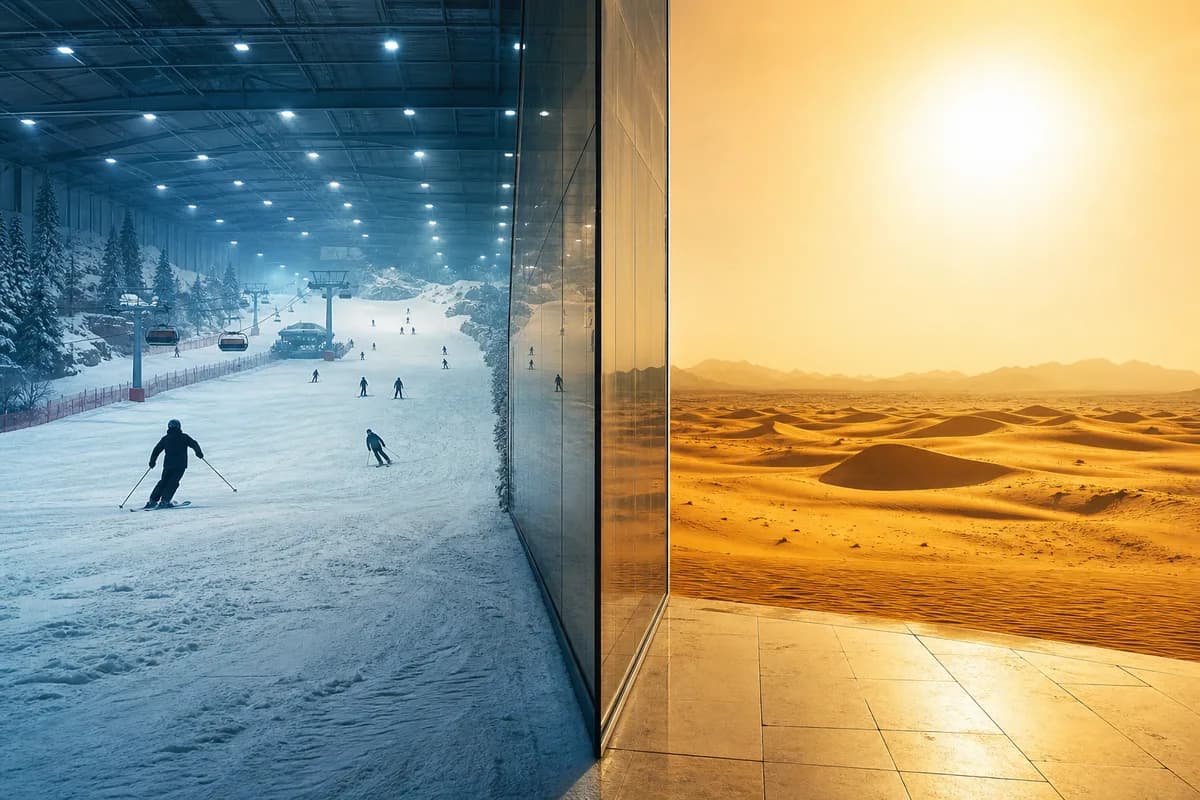
None of this is decoration. Like the marble, it is a message with load-bearing intent: we can do this. Henley's 2026 report says the UAE remains the Gulf's clearest wealth-mobility story, giving the Emirates a Wealth Mobility Competitiveness Score of 85.3 and describing the country as the leading destination for millionaire migration over the previous two years. Henley's 2025 migration report separately projected the UAE would attract a net inflow of about 9,800 millionaires in 2025, a useful reminder that the mirage has receipts.
The state also understands distribution. Creators HQ says the UAE Golden Visa lets successful content creators live and create in the UAE without a sponsor. That is not a quirky visa footnote; it is Augustus' coinage updated for the ring light. Dubai is not merely attracting investors. It is attracting the people who make the spectacle travel.
And under the loud skyline, the quieter engineering keeps returning. The Gulf's traditional wind-catcher towers solved extreme heat with air pressure and shade long before net-zero decks discovered passive cooling. The modern city's climate commitments, electric vehicles, district cooling and post-oil planning are image management, yes. But image management has never meant that the engineering underneath is not real. Ask the Pantheon.
Even the family dimension is policy. The UAE Government's page for Dubai Social Agenda 33 states that the programme has a budget of AED 208 billion and is built around Dubai's community to 2033. Generational wealth is no longer just something a city houses. In Dubai, it is something a city competes for.
Cybercrime
The Same Craft, Miniaturised
Every powerful technology eventually gets a criminal build. Spectacle's arrived in 2024, and it is worth studying because it is this article's thesis with the ethics removed. The World Economic Forum's interview with Arup's Rob Greig says fraudsters stole $25 million from Arup using a digitally cloned senior manager. In a later Forum article, Greig described the attack as technology-enhanced social engineering, not a conventional cyberattack.
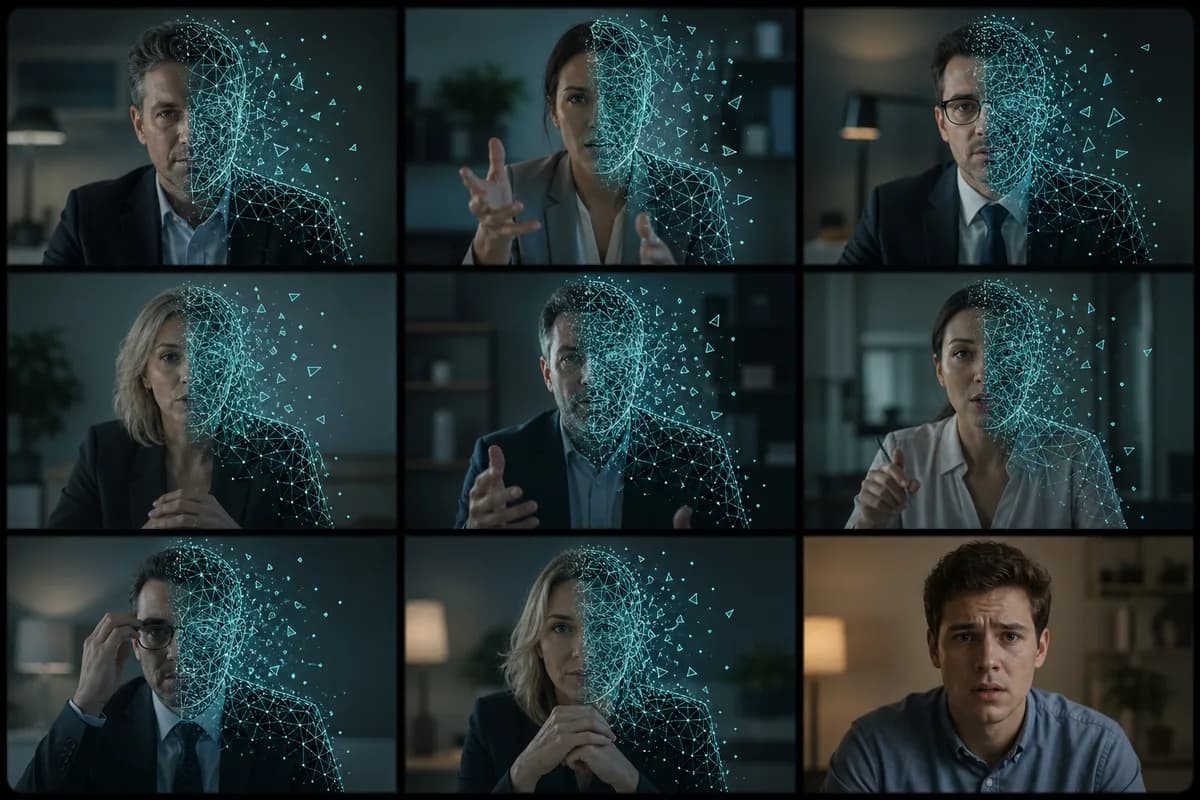
Look at the anatomy and you will recognise every component from the last few thousand words. The authority of familiar faces: the emperor's portrait on the coin. The staged consensus: the marble forum, built so doubt feels like the outlier. The impossible thing rendered plausible: the surrealist craft, inverted. Cybercrime of this kind is propaganda for an audience of one.
The difference between the emperor, the developer and the scammer was never the technique. It is what the belief, once built, is for, and whether anything real is standing underneath it. Augustus had the concrete. Dubai has engineering. The deepfake has five bank accounts and a void.
Domestic scale
Trimalchio's Wall
Rome, inevitably, produced the first satire of all this. In Petronius' Satyricon, the freedman Trimalchio hosts the most famous dinner party in literature: courses engineered as spectacles, wealth performed out loud, his own tomb described mid-meal. It is the ur-text of new money doing its best emperor impression. Generational wealth's oldest lesson, filed under comedy: the spectacle you buy reads differently from the spectacle you are.
Because here is what survived Rome. Not most of the triumphal ephemera. Not most of the propaganda paintings. Precious little of the gold. What survived is the self-healing dome, the letters of a man describing his mornings by the sea and, from Pompeii, the frescoes of private houses: walls painted with gardens, myths, deserts and impossible architecture.
The domestic wall turns out to be spectacle's one honest scale. It builds belief for an audience with a right to the truth of it: the people who actually live there. It needs no empire, no sovereign fund and no deception, only the same raw move every actor in this story used: put an image where reality was not, and mean it.
That is a surreal desert horizon over a sofa in Croydon. It is a classical profile lending a hallway two thousand borrowed years. It is an impossible skyline or a molten sunset doing at proper scale what the ski slope does for an emirate. The wall is where the mirage is allowed to be honest about being one, which is the moral difference we traced in The Honesty Racket and the reason suppression or fakery keeps failing in the history of art behaving badly. When spectacle becomes memory and memory starts quietly cutting the difficult parts, that is the next story in The Editing Suite.
Augustus needed an empire's quarries to make people believe in a version of the world. You need a hook and a spirit level. The craft is the same age either way. Just make sure, unlike the video call, there is something real standing underneath. In your case, that part is easy. It is your living room.
Zellart editorial
Read more
Three related Zellart essays to keep the thread going.

Art & Design
The Beige International
How Airbnb, staging and ecommerce taught rooms to look the same, and why walls still need to argue for someone.
Read article
Interior Design
What Hotel Lobbies Know About Art
What hotel lobbies understand about scale, mood, local reference and first impressions.
Read article
Art & Design
The Room That Stares Back
A case for dark, human maximalism through AI images, deep-ocean life, Medusa, protest graphics and Tokyo vintage.
Read article