
In 1688, a Swiss medical student named Johannes Hofer noticed that soldiers posted far from their Alpine valleys were dying, not of wounds and not of fever, but of longing. He gave the condition a name, welding together homecoming and pain: nostalgia. For the next two centuries it was a genuine medical category. The medical history is stranger than the word now sounds: insomnia, wasting, palpitations, hallucinations of home, and cures that included bloodletting, opium, mercury and, when medicine ran out of theatre, sending the patient home.
The Union Army recorded nostalgia cases during the American Civil War, and Proto Magazine describes its wartime lethality with the brutal plainness of a hospital ledger. Men lay in beds saying they wanted to go home, and then they did not get better.
The emotion that now sells record players, typeface revivals, streaming reboots and holiday cottages was, within institutional memory, treated as a notifiable cause of death. Nostalgia did not stop being dangerous. It got monetised. And while it was being monetised, something important about it got forgotten, which is fitting, because forgetting is what nostalgia does best.
Here is the claim this piece will hold to the end: nostalgia is not memory. It is an editing suite. It cuts the famine and keeps the sunset. It cuts the strike and keeps the beach. It cuts the panic and keeps the saxophone. The question is not whether the edit is real. The question is whether we admit we are making one.

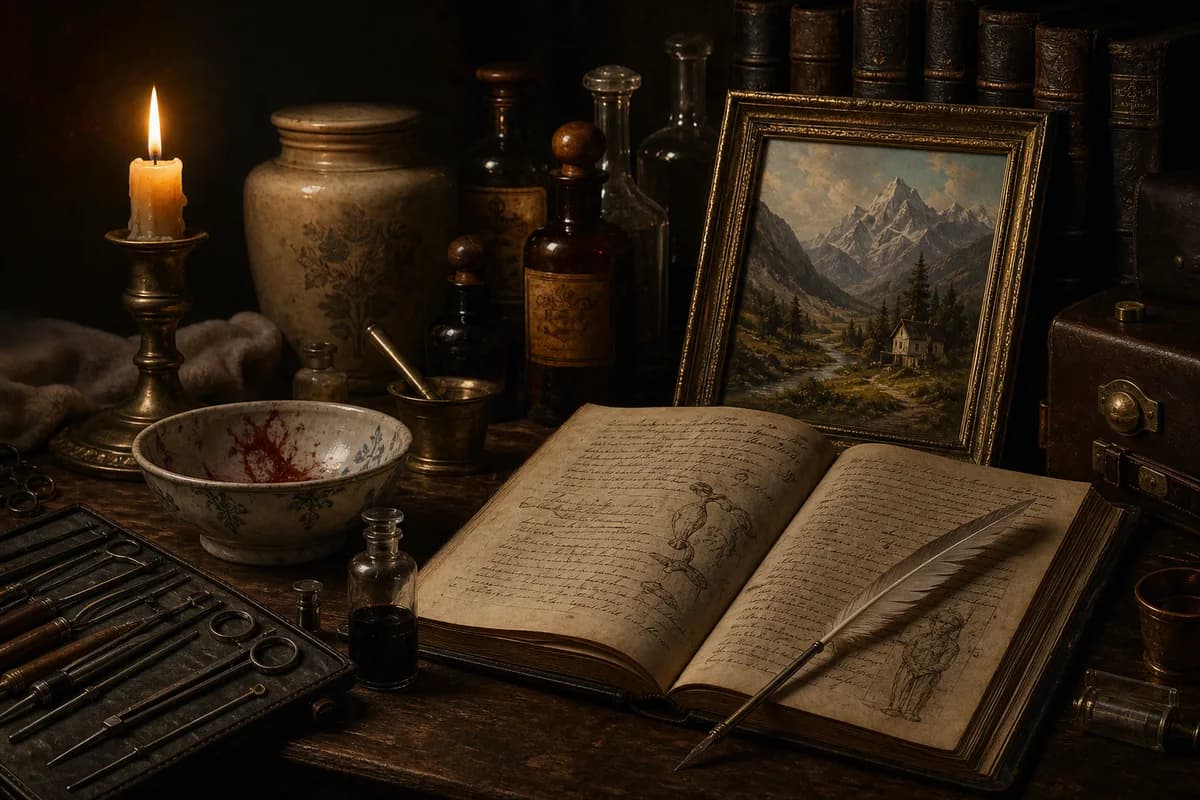
Retroactive glamour
The Forty-Year Machine
Start with the most elegant exhibit: the most glamorous design style of the twentieth century did not have its famous name until the style was already an artefact. What we call Art Deco was called moderne, jazz modern, zig-zag and several other things while it was happening. The 1925 Paris Exposition Internationale des Arts Decoratifs et Industriels Modernes drew a vast public and let France stage itself as the centre of taste; Lyon & Turnbull's centenary account of the Exposition captures the scale of that moment. But the clean name came later.
The point is not trivia. It is mechanism. A later generation found the look dated, then found it charming, then gave it a label strong enough to sell it back to the present. By the late 1960s, roughly forty years after the Paris Exposition, Art Deco could be rediscovered because it had become distant enough to look coherent. The scandal of one generation becomes the heritage of the next on a timer. Jazz, once presented as a moral disturbance, becomes museum programming. The cinema foyer your grandparents thought old-fashioned becomes a mood board. The age just before you were born becomes the party you were not invited to, and therefore the one you can most safely desire.
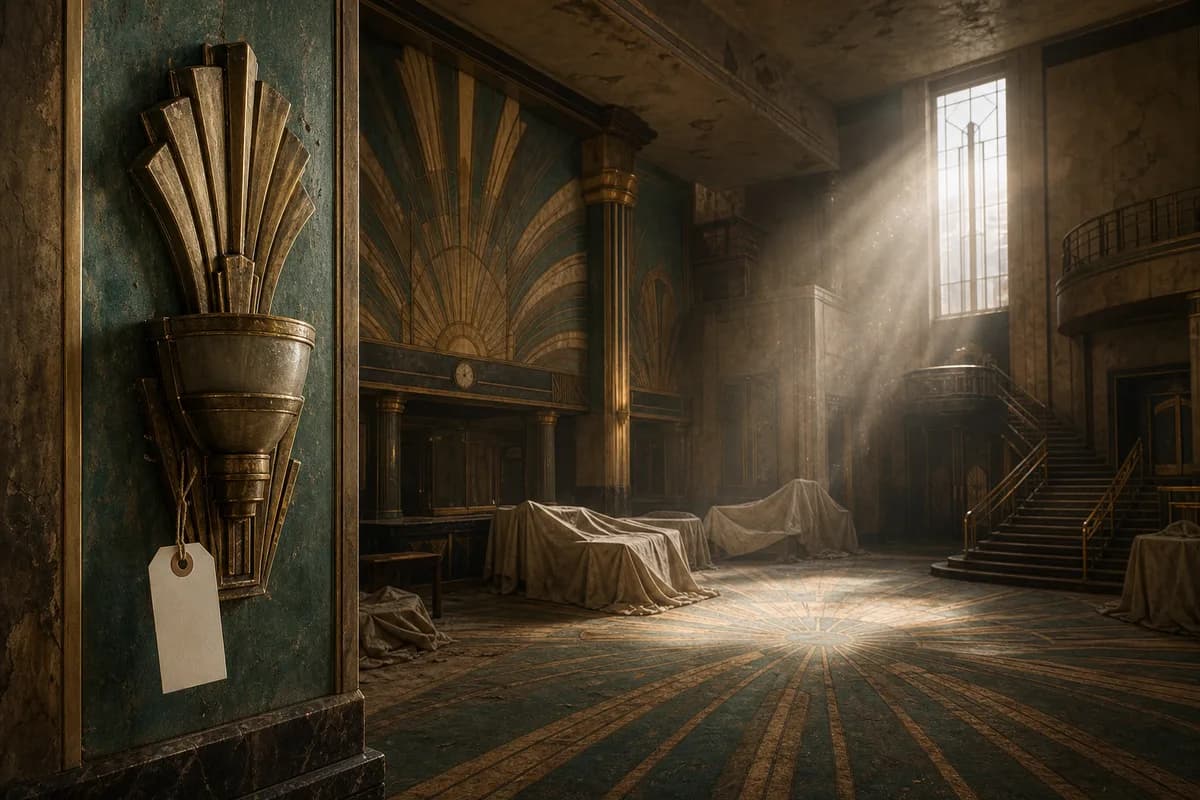
That is why the current Art Deco revival on walls is more poignant than it first looks. Those confident fan motifs and sunbursts were not made by people calmly certain of the future. They were made by people surrounded by machine speed, jazz panic, economic instability and post-war nerves. The edit keeps the geometry and throws away the dread.
Cut
The famine, panic or strike leaves the frame.
Grade
The light warms, the grain softens, the decade glows.
Name
A later generation gives the era a sellable label.
Hang
The honest version admits the edit and keeps the ache.
Romantic light
The Sky Was Fallout
Case file two concerns the most romanticised visual in Western art: the blazing nineteenth-century sunset. In April 1815, Mount Tambora produced the largest volcanic eruption in recorded history, throwing ash and sulphur into the stratosphere. Smithsonian Magazine's account of Tambora follows the catastrophe into the Year Without a Summer, when crops failed, weather broke and the sky itself seemed to misbehave.
The same event gave painters extraordinary light. Volcanic aerosols scatter sunlight, making sunsets redder and stranger. Atmospheric researchers later treated paintings as evidence, comparing red-to-green ratios in historical sunsets with known volcanic activity; Discover Magazine summarises the volcanic-sunset research clearly. The point is not to spoil Turner. It is to notice the edit.
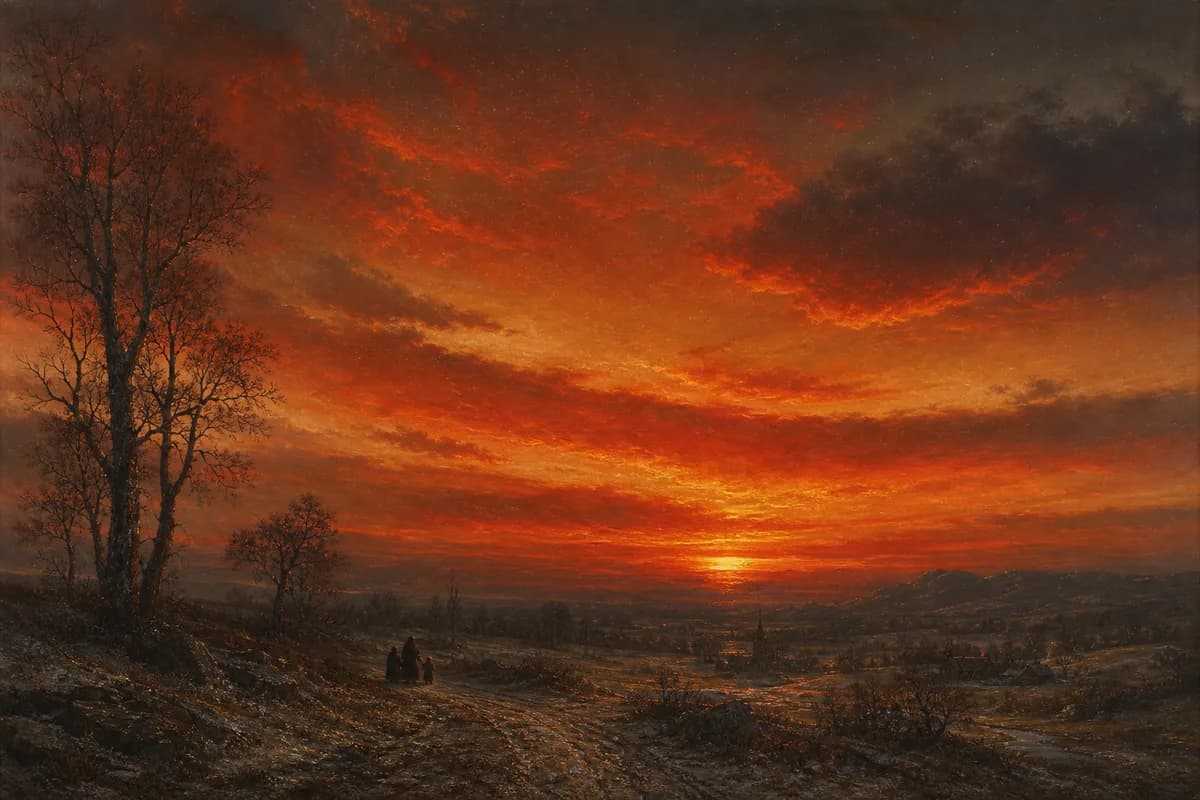
"The same event produced the famine and the light. Memory kept the light. That is not remembering. That is editing.
Every molten sunset print in the Romantic tradition inherits that contradiction. Beauty and disaster were one object. Nostalgia separated them, warmed the prettier half and hung it where it could glow without explaining itself.
The holiday edit
The Beach Was a Strike
Case file three is French, sunlit and now sold in poster form as pure charm: the seaside holiday. Until 1936, many French workers had never taken a paid holiday. Then the Popular Front won the election and a wave of factory occupations pushed paid leave to the centre of political life. Herodote's account of 20 June 1936 records the law that generalised paid holidays, while Magnum's Henri Cartier-Bresson feature shows what the first departures looked like from the ground.
Those first beaches were not an innocent postcard. They were the trophy of a labour movement, an election and a strike wave. The poster does not usually show the occupied factory, the anxieties of the resort owners or the social panic around working-class bodies on formerly private-feeling beaches. The edit keeps the parasols.
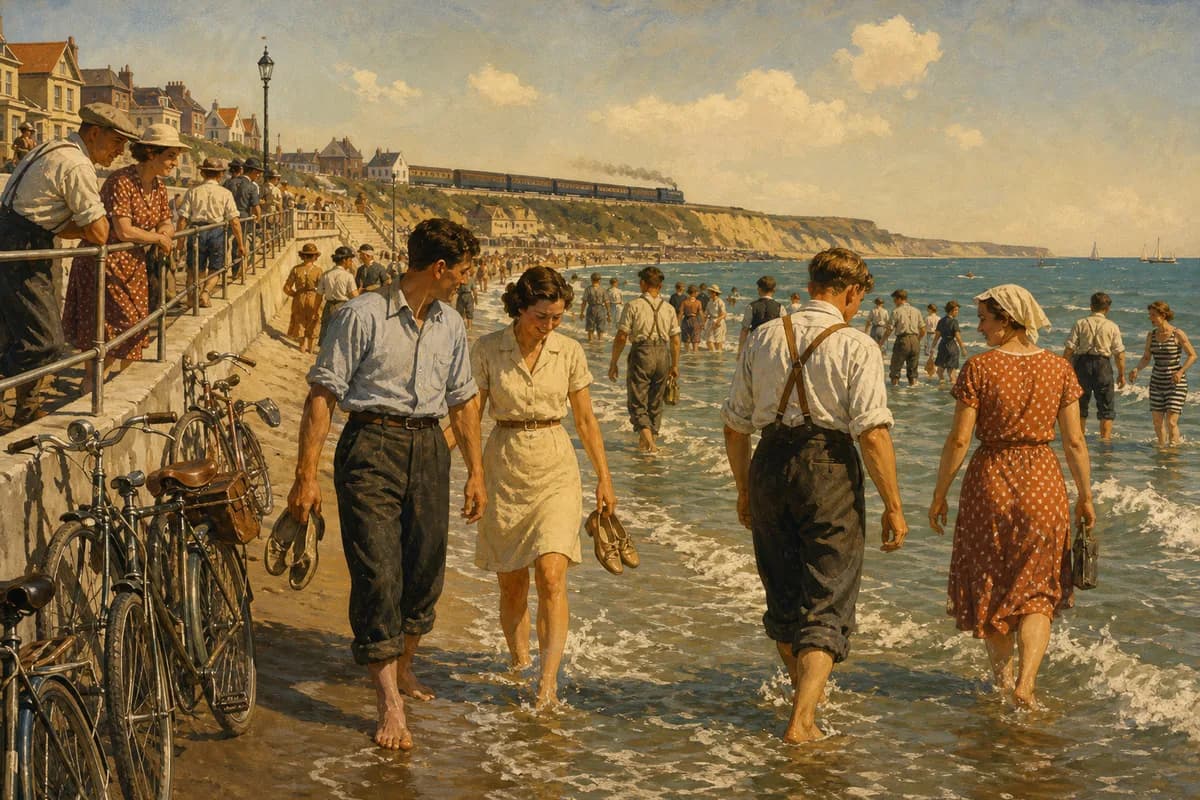
This is no reason not to hang the parasols. It is a reason to hang them honestly. Zellart's vintage and retro travel art and the coastal collection carry that light better than most genres, and Britain's own weather-beaten version is a story we have told in the great democratic seaside. Just know what the image is keeping quiet. It is not an escape from politics. It is a victory lap.
Paris case files
Paris, Two Small Cases: the Plaque and the Pixel
First, the wine bars. The beloved Paris story says the word bistro comes from Russian Cossacks in 1814 shouting bystro, quickly, at impatient tables. There is even a plaque for the story at La Mere Catherine. The trouble is that the etymology does not behave.Luxus Plus's history of the bistro gives the plaque its due, but the later printed appearance of the word makes the Cossack origin look much more like a charming myth than a reliable origin.
That is the editing suite with a screwdriver: a fake memory, cast in bronze, fixed to a wall and loved into semi-official reality. Nostalgia does not always preserve the past. Sometimes it manufactures one good enough to become heritage.
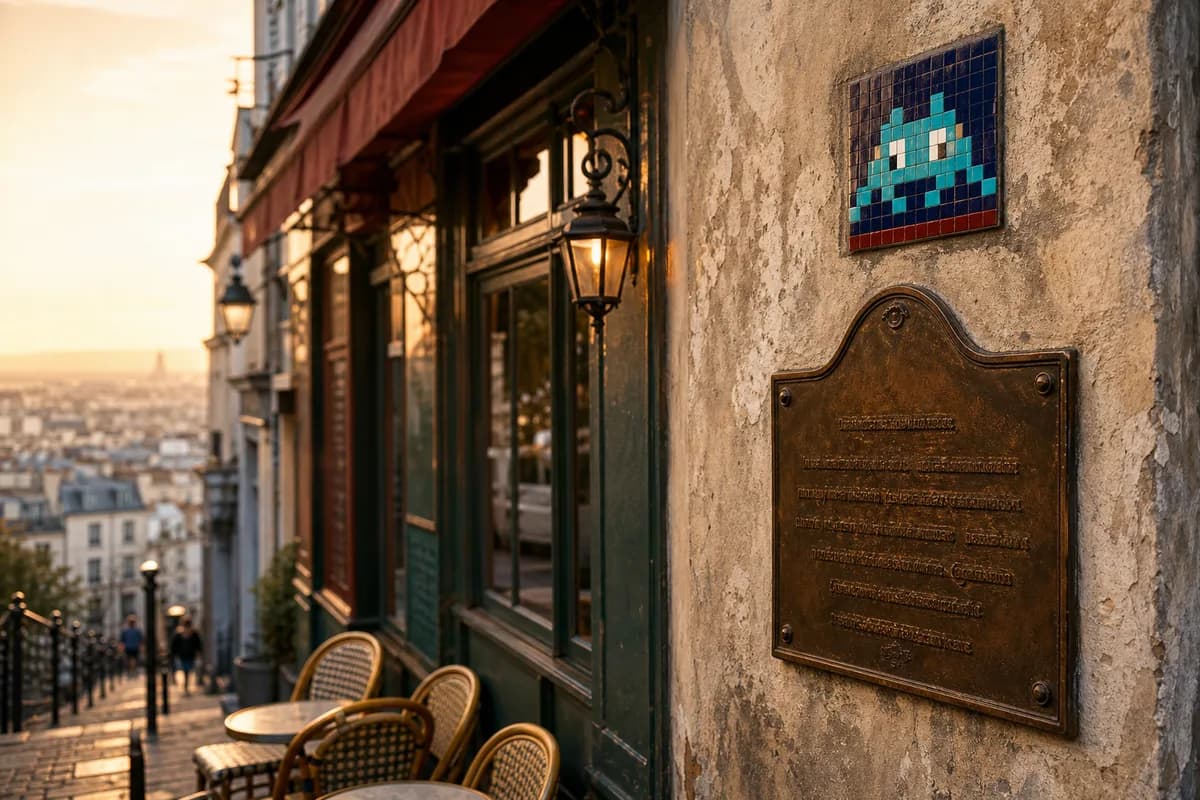
Second, the graffiti. For nearly three decades, the anonymous Parisian artist Invader has been gluing ceramic-tile mosaics of arcade aliens to walls around the world. Artnet's interview around the 4,000th invasion shows how a childhood screen language became a global street-art system, complete with an app and a mosaic that went to the International Space Station. The nostalgia is precise: antiquity's mosaic method remembering the arcade's pixels.
Its market afterlife is just as revealing. Stolen mosaics, auction disputes and removal crews turn street memory into commodity, a crime-to-display pipeline close to the one we mapped in our history of art behaving badly. Even orbit becomes part of the edit. A space-station mosaic turns 1970s arcade memory into actual low-Earth orbit, while space tourism sells 1969 back to people who were not born for it.
Manufactured longing
The Anemoia Economy
Nostalgia for a time you never lived now has a name: anemoia. It is not a diagnosis in Hofer's sense, but it describes a live consumer emotion unusually well. The creator economy runs on it: cottagecore without the farm labour, film grain without the chemical darkroom, vinyl hiss without the original decade, dark academia built by people whose universities have Wi-Fi and rent stress.
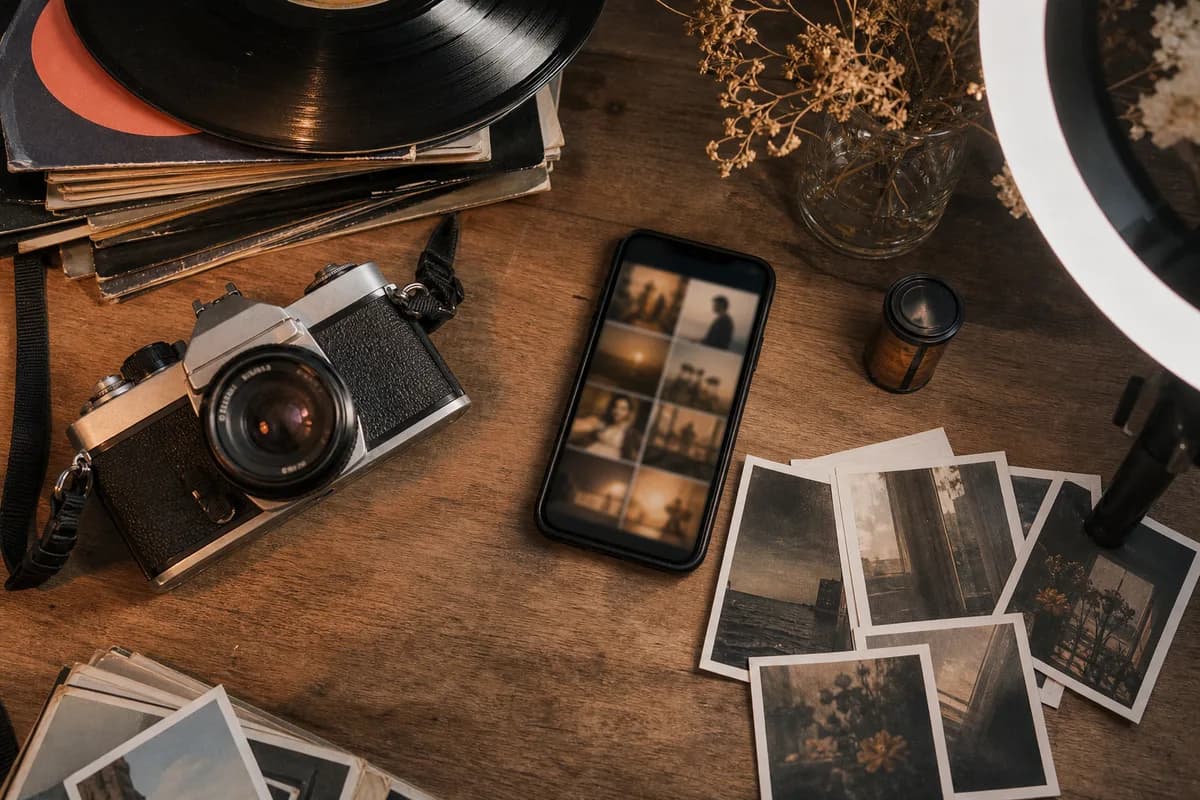
Automation is quietly setting the prices. The more perfectly machines can render, retouch and generate the present, the higher the premium rises on evidence of imperfect process: grain, hiss, brush texture, worn edges, hand-set type. That is the scarcity migration we anatomised in The Honesty Racket. When polish becomes cheap, trace gets expensive.
Home staging, meanwhile, runs the edit backwards. It strips a house of its actual past so a buyer can install an imagined one. That is manufactured anemoia by the square metre: a present made empty so another person's future can be projected onto it.
Honest ache
The Reflective Wall
So nostalgia, the disease that could not be cured with leeches, mercury or mountain air, turned out not to need curing. It needed honesty. Hofer's soldiers had no photographs of home to hold. You do.
A wall is the reflective mode practised domestically. Nobody hanging a Deco sunburst believes 1925 was paradise. They are keeping the geometry and consciously letting the panic go. A volcanic sunset, hung knowing it was fallout, becomes more moving, not less. A seaside poster, hung knowing it was a strike's trophy, gains a spine. The 8-bit ghost, the molten sky and the parasols are allowed the moment you know they are an edit and hang them anyway.
The impulse deserves better than a bare wall's abstention, which, as we have argued, is a statement too. It also explains why the most cheering story in this whole file might be the London lamplighters' victory we covered in The Nine-Foot Problem: reflective nostalgia, organised, winning a planning fight for an atmosphere everyone admitted was impractical and loved anyway.
The soldiers died of a home they could not reach. We get to hang ours, edited, glowing and honestly labelled, seventeen inches above the sofa. As cures go, art is gentler than mercury, and it has the singular advantage of actually working.
Zellart editorial
Read more
Three related Zellart essays to keep the thread going.

Art & Design
The Beige International
How Airbnb, staging and ecommerce taught rooms to look the same, and why walls still need to argue for someone.
Read article
Art & Design
The Great British Seaside
The decline and return of the British seaside, from piers and postcards to contemporary coastal art.
Read article
Wall Art
Painting for Grey
A practical guide to choosing warm, steady art for north-facing British rooms and winter light.
Read article